

Upstairs, Downstairs, and a Lifetime of Making: Sylvia Montero and Tony Ortega’s Shared Creative Life
Teaching and community have been part of Tony’s career for years, and that connection shows up in his work as much as in the life he has built around it. He is currently organizing Día de Muertos: A Celebration of Remembrance at Regis University’s Dayton Memorial Library with his students. The exhibition brings together current students, alumni, and invited artists around Día de Muertos and the theme of “Bringing Memory Home.”
His recent profile in Western Art & Architecture, A Study in Contrasts, gets into some of the ideas behind this long career, including Chicanismo, cultural hybridity, Nepantla, Mexican and American identity, and the artistic traditions of Colorado and New Mexico. It also looks at the relationship between his studio practice, teaching, and community engagement. For anyone interested in the experiences and ideas that shape an artist’s work over a lifetime, it’s a worthwhile read.
Sylvia came to contemporary art by a different route. Before becoming a visual artist, she worked as a professional modern dancer, bringing a history of movement and physical expression into her practice. And then there is Cipriano, whose work adds another perspective to the family’s creative life.
I wanted to talk with Tony and Sylvia because I’m interested in what happens behind the work, too. How does an artist find a voice? What does it take to sustain a practice over decades? How does family shape the way we see, make, and understand art? And what can we learn from people who have spent their lives figuring it out?
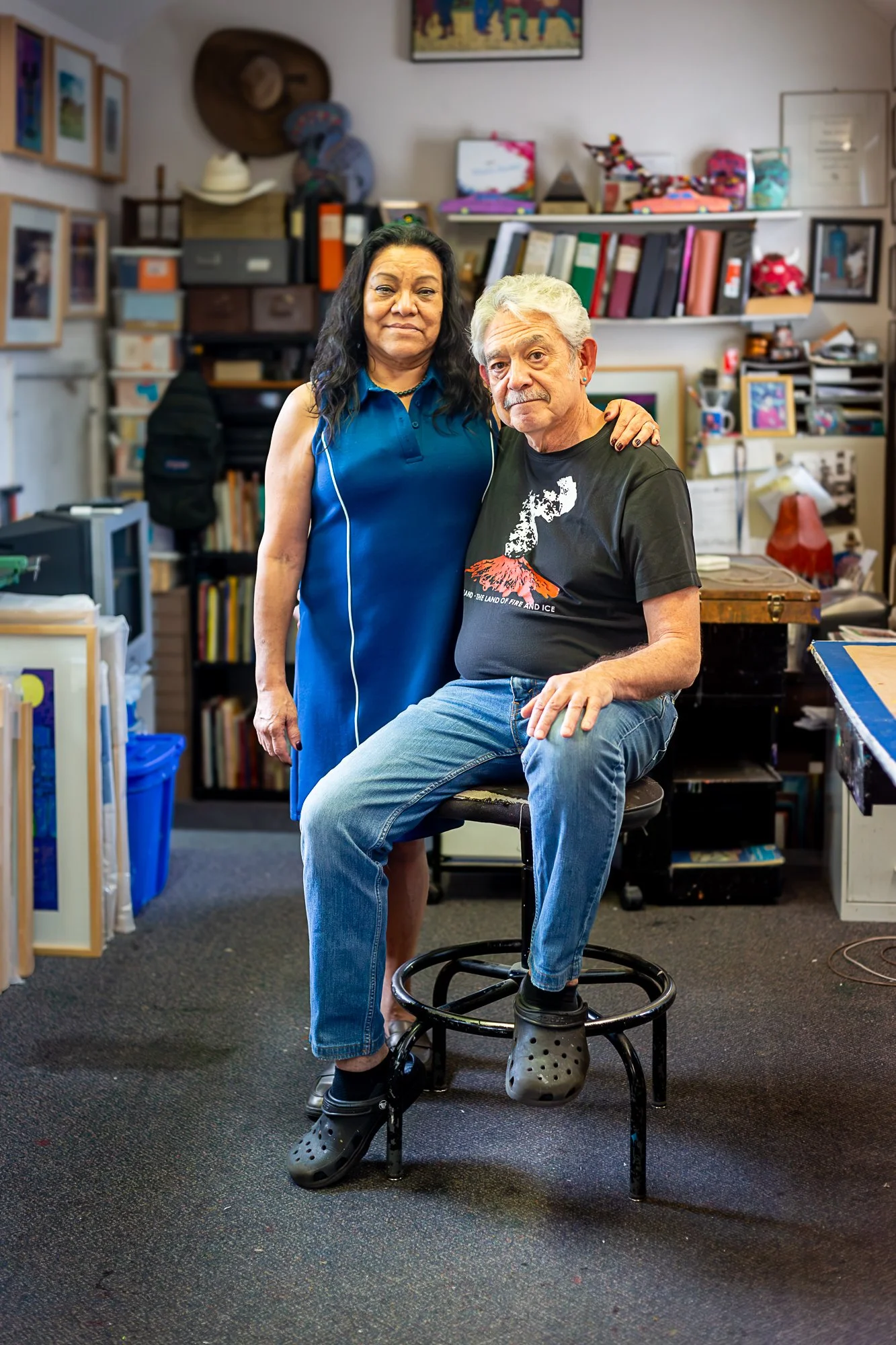
They were gracious enough to sit down with me in their studio. We talked about family, long careers, and finding your own way into the art world.
I first saw Tony Ortega’s work in the home of collectors Dale and Leslie. A little while later, I saw Tres Voces, Un Corazón at the Boulder Museum of Contemporary Art, an exhibition bringing together Tony, his wife, Sylvia Montero, and their son, Cipriano. I was interested in seeing how three artists from the same family could share a space while bringing such different experiences and perspectives to their work.
Tony has been making art for more than four decades, and his practice extends well beyond the studio, too. He has illustrated Day of the Dead: Aztec Adventures of Cholo, Vato, and Pano, a children’s book series written by his longtime friend and colleague, Professor Emeritus George Rivera. His original illustrations are currently on view at El Pueblo History Museum. He also has an upcoming exhibition at William Havu Gallery in Denver, opening November 13, 2026, and running through January 9, 2027.
Elizabeth: So what really started your art life? I’m interested in how someone builds and sustains a life in art, and it seems like you both have successfully created that.
Tony Ortega: The story I tell most people is that we met through the Chicano Humanities and Arts Council (CHAC) back in the 1980s. Sylvia was working part-time and going to school, and I was getting my art career started. I had rented a small studio space from them, and we started out as friends.
Sylvia’s background was in modern dance, but she also loved visual art, and obviously I was a visual artist. We were friends for a long time before we started dating.
I’m curious how working in the same space, with the studio upstairs and downstairs, shapes your work. Do you talk about your ideas? Is it a separate process? Where does that overlap?
I think it’s a little bit of both. We influence each other, but we work independently. Obviously, I do the framing for us, and we see what each other is making. It has also influenced our son because he either grew up around studios and workshops, or we were giving workshops ourselves. Art has always been a big part of our lives.
Sylvia Montero: Our work is also part of our daily life. We share space. He’s upstairs, I’m downstairs, and sometimes we have a dialogue, and sometimes we don’t. Sometimes we’re just working. It works out well, and it’s nice to have the space to do what we do in the house.
Sylvia, I’m especially curious about your transition from modern dance to visual art because dance is such a physical practice, and making art is physical in a different way. How do those two things connect?
I think everything is connected. The way we spend our lives and the things we do all influence each other.
I was a modern dancer for a long time. After I had my son, I had some difficulty with my hip, and I thought maybe I would shift into choreography. But within Denver’s dance community, it was almost impossible to do anything.
I don’t know if there’s a direct connection, but I have done some artwork based on dance. When I first started making art, people would tell me they could see a dance pattern in my work, which I probably did have.
Movement is something I think about in my own life and in my artwork, even just the movement that happens while I’m making a piece. But when you’re making art, you become completely concentrated on the work itself. There isn’t always room to think about dance unless the piece is specifically about dance.
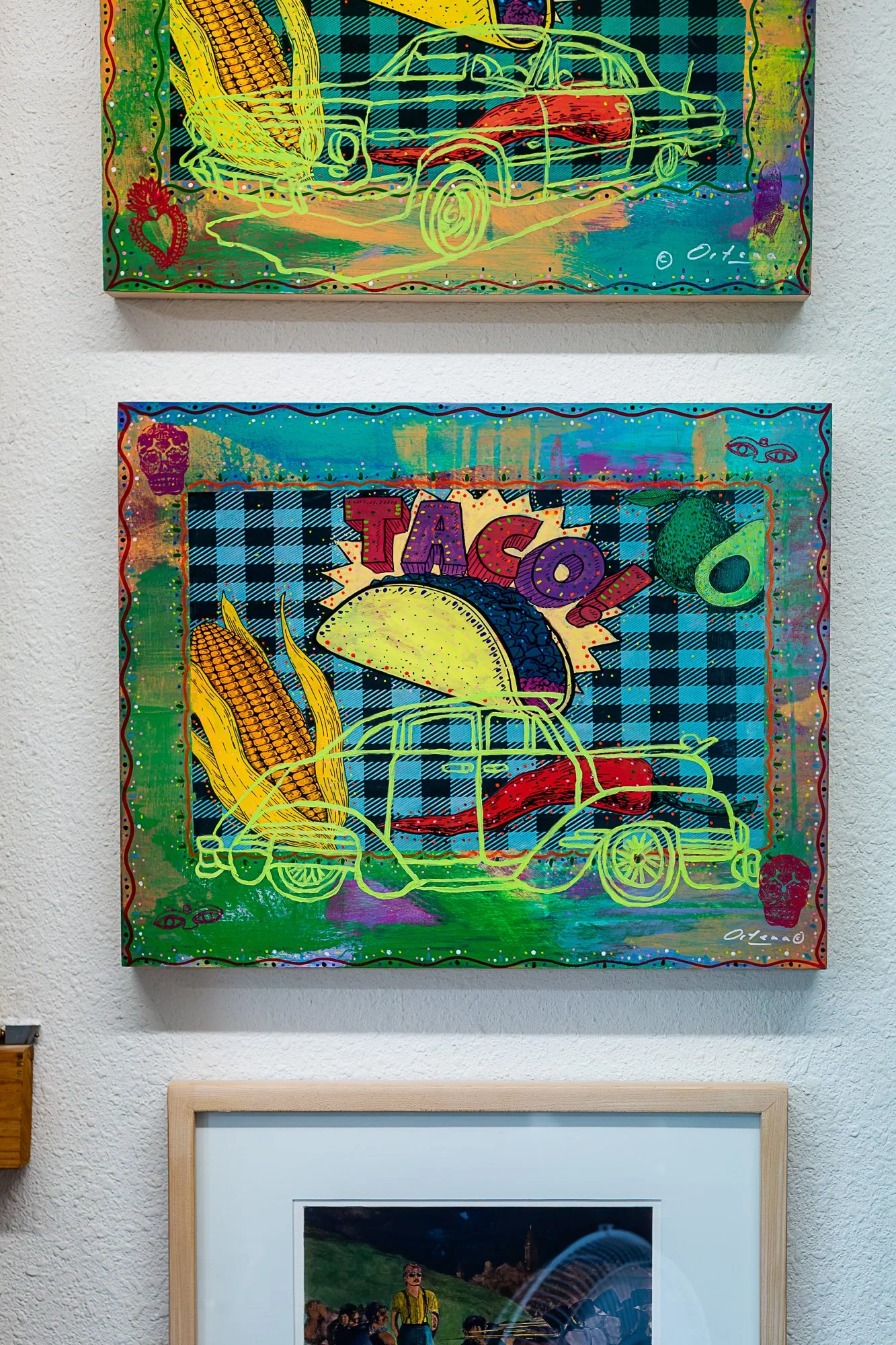
Cursing Taco, acrylic and toner transfer on panel, 16” x 20”
So there are echoes of it, or a pattern of it? I’m curious because I used to be a ballet dancer.
Wow, really?
Yeah, for a long time. I always joke that I was the worst of the best. I knew I probably wasn’t going to make it professionally, but I had a great teacher. Still, walking away from something where I had invested my entire life felt really difficult. After leaving it, I felt blindsided and a little lost. I kept trying different things, wondering, “How do I fill this gap?”
Did you feel something similar, or did motherhood change that transition for you?
Motherhood consumes everything. It takes over your whole psyche because you're constantly thinking about your child.
But another part of it was that, as a woman of color and a Latina, it was extremely difficult to get into a dance company in Denver. It just wasn't going to happen. Coming to terms with that was very hard because I wasn't ready to let go of that dream.
Eventually, I accepted that it wasn't going to happen. I started making dance videos, which was fine, although I wasn't especially passionate about it. Then I thought, "Maybe I'll just go back and teach." So I taught modern dance for a while.
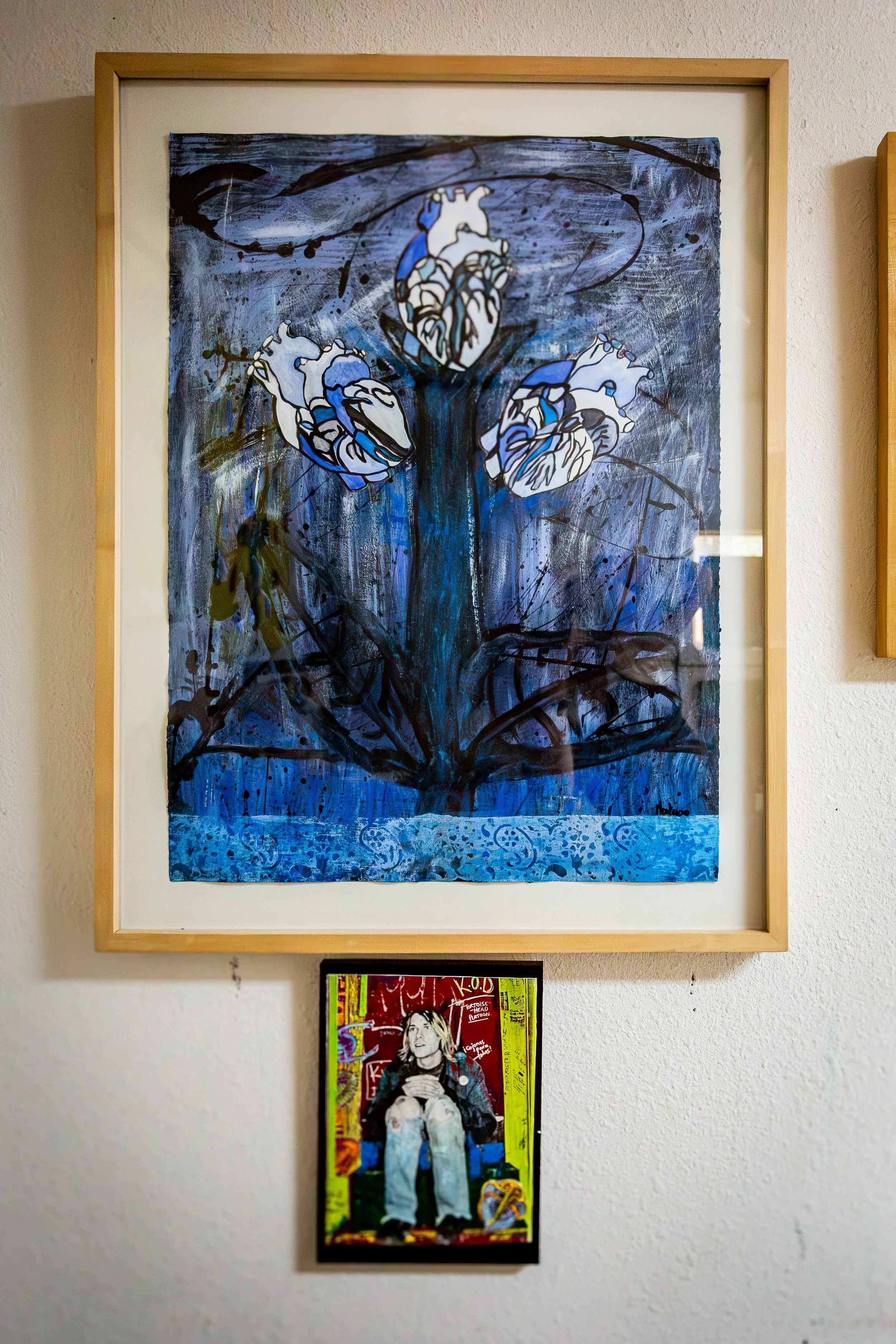
Botanical Blues, acrylic and collage, 30” x 22”
Keith, collage on panel, 12” x 9”
At the same time, Tony was making his artwork, and I had already started making some work of my own and participating in a few small exhibitions. Little by little, I realized I was ready to move away from dance.
Fortunately, I began making artwork pretty quickly afterward. Getting into art was really nice because it allowed me to free myself from dance. Not having to rehearse all the time or be tied to that schedule gave me a different kind of freedom.
It sounds like it was a natural transition.
Yeah, basically. It was a natural shift.
Shifting gears a little bit, you both have had such long and prolific careers. I’m curious, when you look back at your early work, how do you see it differently now? What has time taught you about the work you made when you were starting out?
I think now I know how to paint. I know how to draw. I know how to make things.
That may sound funny, but after all these years of doing it over and over again, I feel like I have a better understanding of my craft. I’m also much more experimental now because of that experience. Sometimes I think, “I wish I had known this when I was younger.”
Teaching has also really influenced my creativity. I’ve been at Regis University for 23 years, and working with young artists, talking with them about their work and their process, keeps me aware of new ideas and different perspectives because each generation brings something different.
Teaching has also allowed me to receive small grants to take workshops, experiment, and learn new techniques. My work has evolved into being more multimedia and more experimental than it was when I was younger.
I feel like that comes back to craftsmanship. I don’t know if that’s the exact word, but the actual time spent developing technique eventually gives you freedom.
Yeah, it’s experience. For me, I think what has changed is continuing to explore multimedia: photography, collage, and painting. I’ve always loved painting, but I don’t do enough of it, so I’d like to spend more time with larger paintings.
I also love hand-coloring my etchings. It’s just an ongoing process of continuing to work and continuing to change.
I don’t think my work has changed dramatically. Do you?
I think it has. You weren’t as much of a printmaker back then, and combining your photography with the solar plate process really changed your work.
That’s true. That changed my work.
It’s one of the nice things about being an experienced artist. You learn from your mistakes, whether it’s with collaborators, curators, or the work itself.
Tony always says, “You’re a one-person band. You have to do everything.” You have to create the work, keep track of your imagery, archive everything, and manage all the details. As you get older, you realize your time is more precious. You want to spend it doing the things that really matter.
When you’re young, you say yes to everything. Someone asks, “Do you want to do a workshop?” and you say, “Sure.” You do everything because you have to.
But as you get older, you have more choices, and that’s a wonderful thing. I think it’s also about feeling confident in how we execute our mediums. For me, execution is a really important part of painting and creativity. It’s not just the idea, but how you bring that idea into the world.
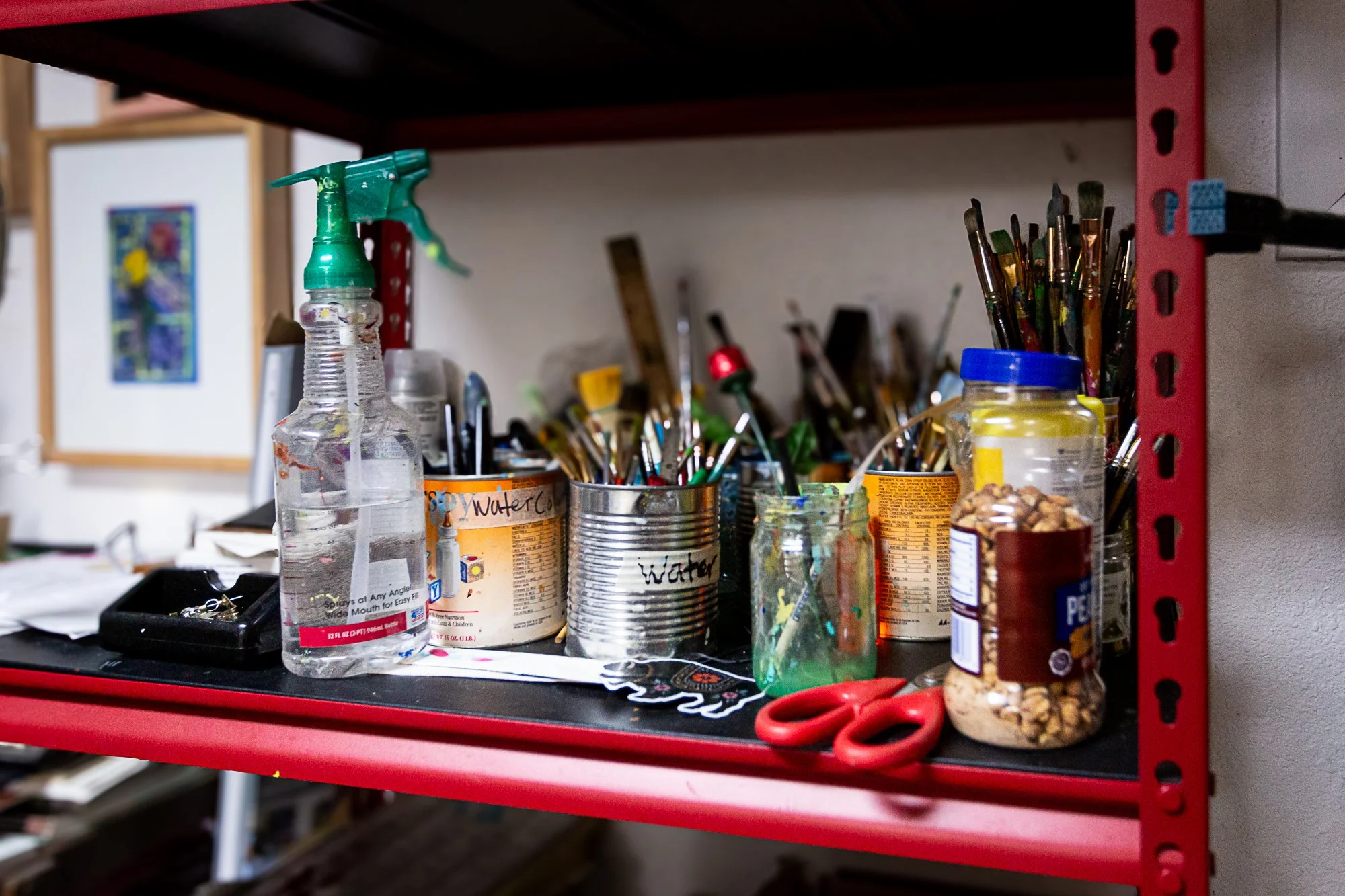
Supplies in Sylvia’s Studio
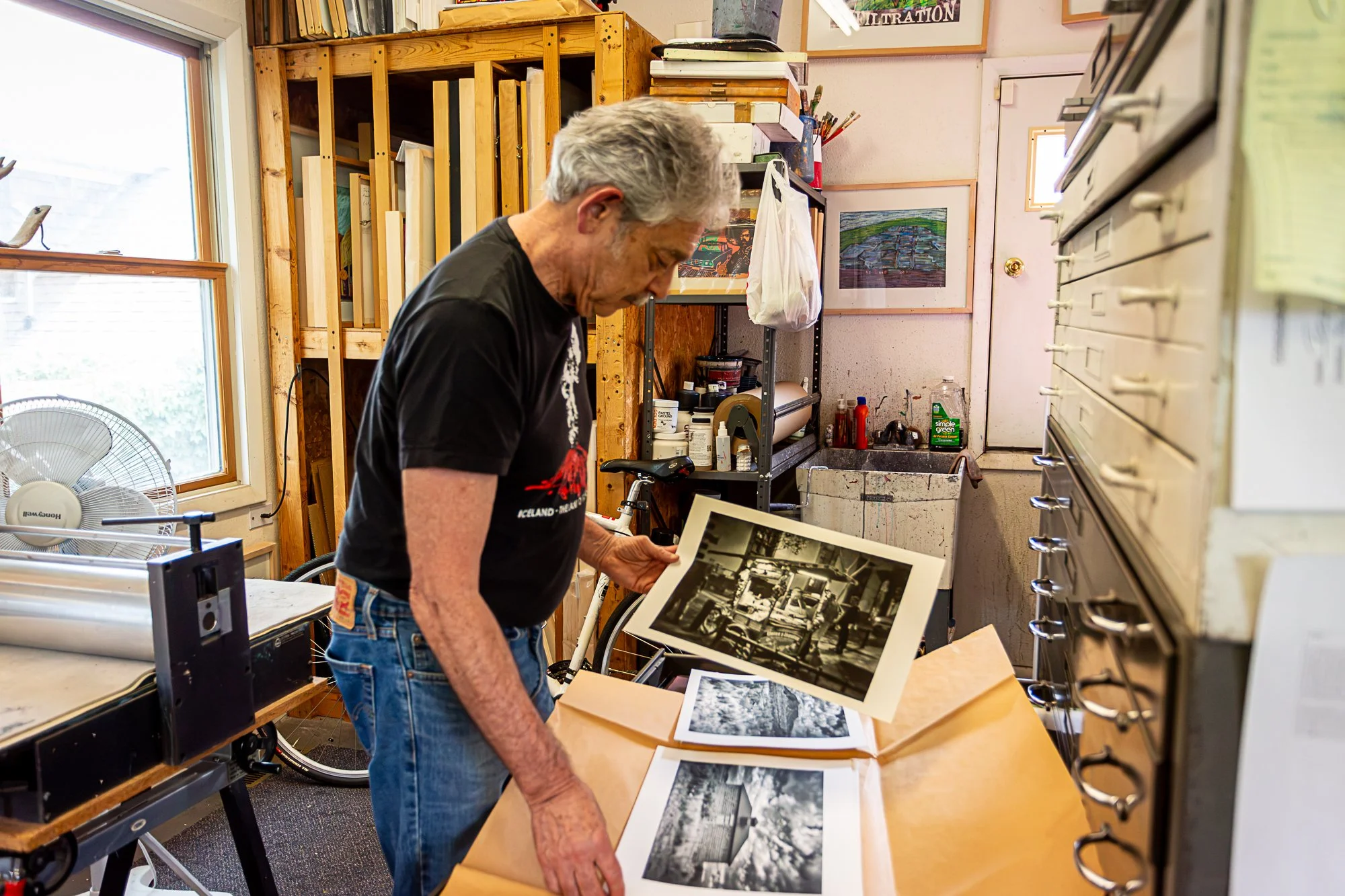
Tony looking at reference photographs for a pastel series he is working on.
From an artistic perspective, what questions are you still trying to answer?
Recently, I’ve been interested in combining traditional techniques, especially printmaking, with newer technologies. I’ve incorporated Photoshop, laser cutting, and experimented with video using the iPhone.
I’m interested in how I can keep my work relevant while incorporating new technology and finding ways to continue making work with it.
What about you, Sylvia?
For me, it’s working larger. That’s something I want to explore more. It takes me forever to make a piece because I’m really slow sometimes, but I want to expand and work on a larger scale.
The wooden panels we use now are lightweight and easier to move, so there’s less stress involved. I also want to paint more. I love painting abstractly, but I haven’t had as much time to explore that because of exhibitions and everything else happening.
Speaking of the exhibition, you are the first people I’ve talked to who have had an exhibition like this. I’m just curious: what is it like to put together a show as a family? It really feels like a family portrait when you’re there.
That’s a nice way to say it.
Tony is very easy to work with because he’s organized. He’s definitely more organized than me, and he takes on some of my responsibilities.
Sometimes she thinks I’m more organized than I am.
But he does help with that.
Originally, I thought it was going to be a one-person show in three years. That was what we had talked about. But when I found out Tony wanted to do a family exhibition, and it was going to happen sooner, I was actually happy about it. It felt like the right time because Cipriano had been creating such great work, and Tony had been working so much. When David Dadone approached us about the show, I said yes.
He asked who I wanted to curate it, and I chose Maruca Salazar, who you saw mentioned in the exhibition text. She’s a close friend, but also a colleague and someone I respect in the visual arts community. She agreed to do it, and I was so happy. Then we started meeting and talking about what the show would become. Tony came up with the title because I couldn’t think of one.
It didn’t really feel real to me until we had a dinner with people from the museum. We were there as the guests because of our exhibition, and I was sitting there watching Cipriano talk with Tony and looking at the work downstairs, and I thought, “Yeah. This is good. This is really good.”
Hopefully there will be another one someday, but it felt incredible to have that moment. I was very proud that we did it.
Sylvia became friends with the director, David. He lived nearby, and they would meet for coffee. Through her, he got to know me and Cipriano better, and they started having conversations.
Before I knew it, Sylvia told me David wanted to have an exhibition of our family.
We had done smaller exhibitions before, but when they told us they were giving us the whole museum, I thought, “That’s a lot of space to fill.”
That’s a huge project.
Exactly. We thought maybe we would get the front gallery or something like that. But it was wonderful to be able to share my work with Sylvia and Cipriano, and also share it with the museum and the people who come see it.
It made me reflect on how we raised our son and how we brought him up in this environment. When we traveled, the center of our trips was always either an exhibition we had, or museums, plays, and concerts.
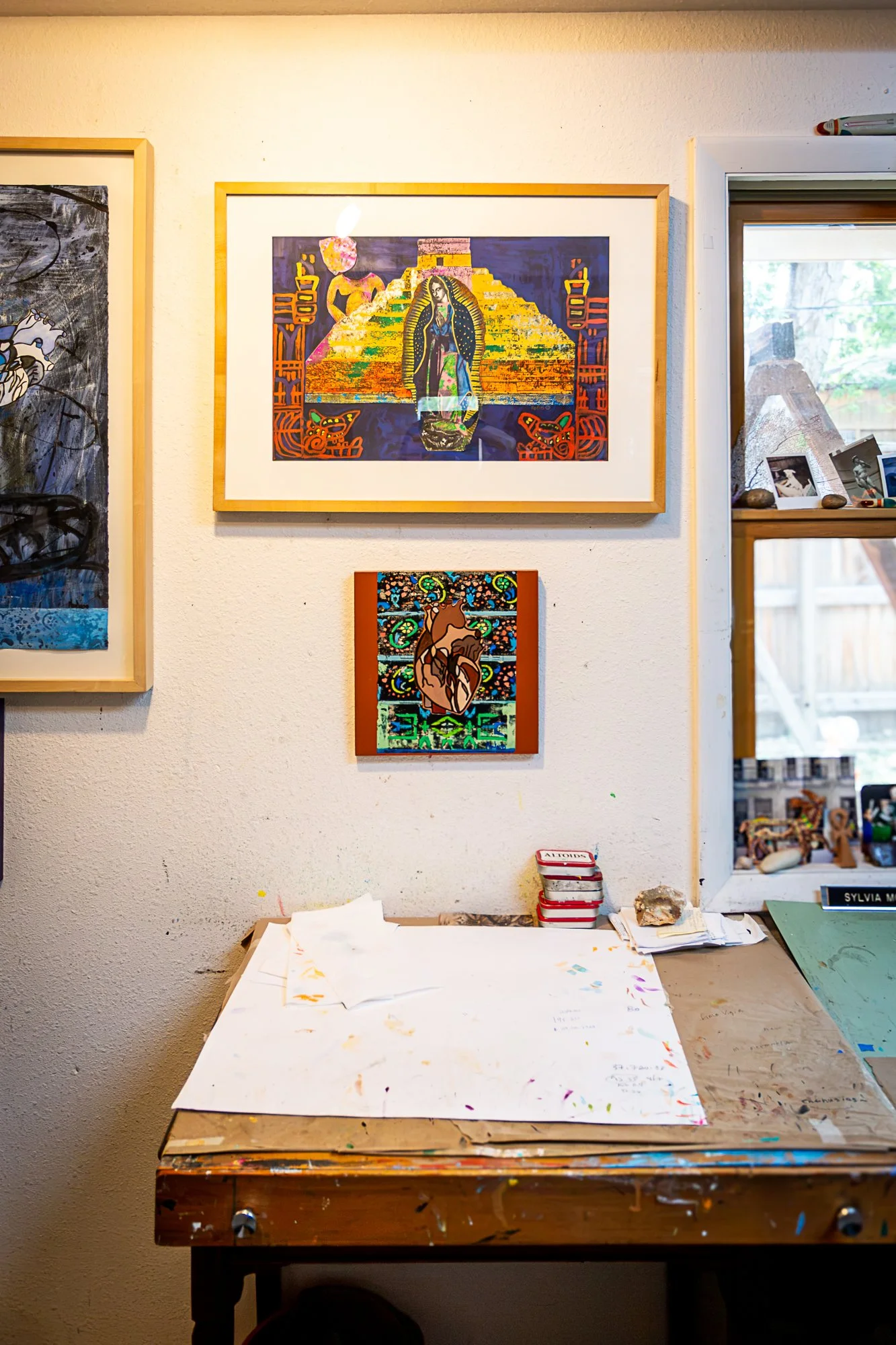
Part of Sylvia’s workspace in her studio with They Came in Ships, monotype and collage, 15” x 22”, Indigenous Beat, acrylic and collage, 12” x 12”.
That’s true. Even when we were dating, when we traveled, we always believed that if you wanted to understand a country or understand people, you went to the museums. That was always the first thing we did.
I think there is a certain kind of person who has to have creativity in their life, who has to have art as part of their existence. I don’t know how many people are like that, but I think that’s who we are. Art is intrinsic.
Times change, though. Being an artist is not as easy as it used to be, and I don’t think it’s as financially sustainable for many people.
I talk about this a lot in the collecting world: the K-shaped economy of art collecting. The upper end keeps growing, and the lower end keeps growing, but that middle space is starting to disappear.
A lot of galleries and organizations ask me, “How do we get your demographic involved? You’re young, you’re willing to spend on art, and you’re middle class.”
I think people who buy art are special. I know people who have purchased art who really couldn’t afford it, and they’ll say, “Can you put me on installments?” And I say, “Sure.”
But they’re people who genuinely want to support artists, and I think that’s amazing.
I recently had a great conversation with someone who approached me and said, “You’re an art collector. I collect art from thrift stores. Am I an art collector?”
And I said, “Absolutely. Yes.” To me, at any level, if you have art in your home, if it enriches your life, if you’re seeking it out and curious about it, you’re collecting.
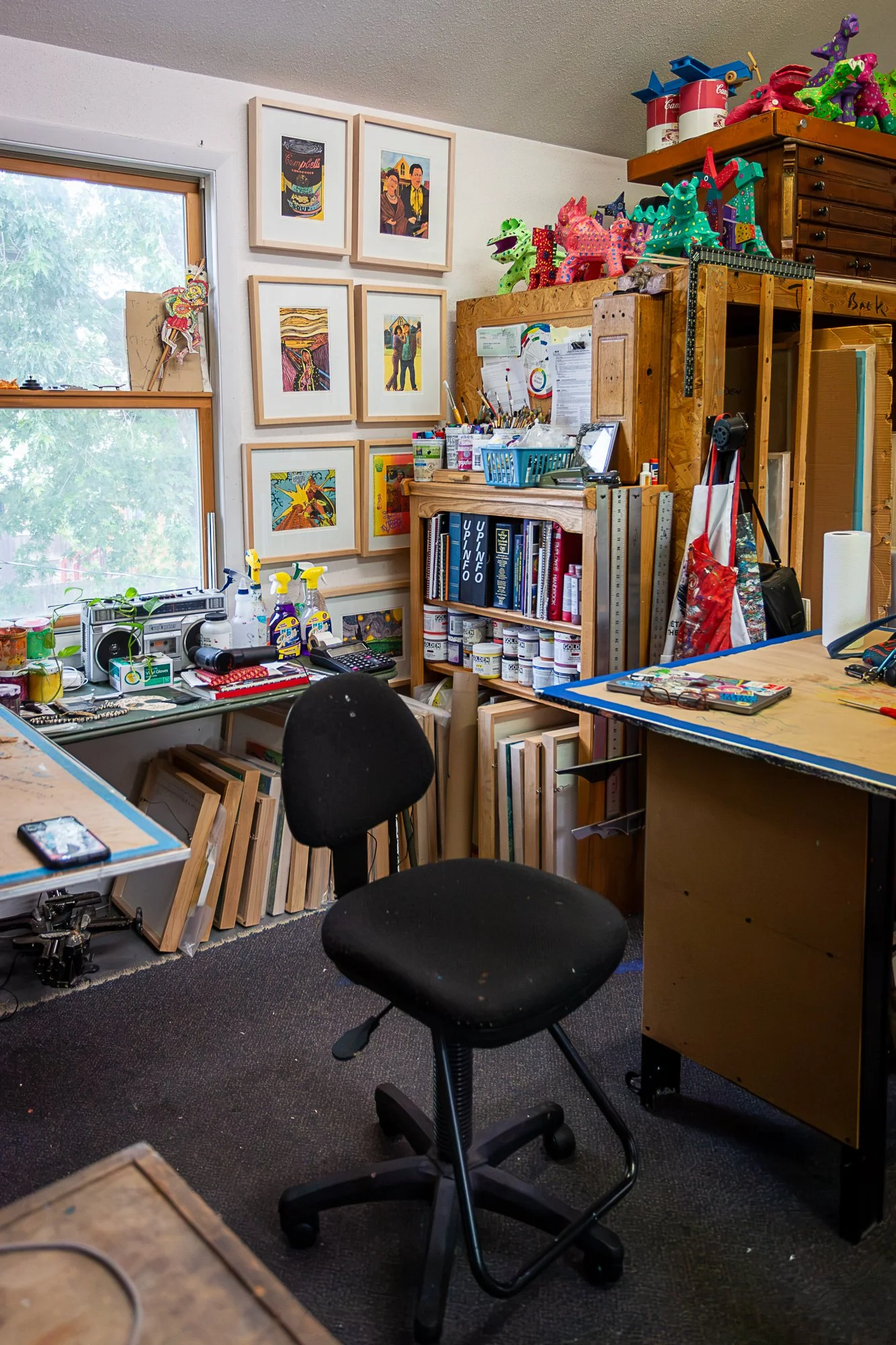
Tony’s studio with framed etchings and watercolor from the cultural hybrid series hanging on the wall.
It turns collecting into a competition instead of asking: What is the art? What is happening in the work? What stories are being told? What is being preserved?
That leads me to my next question. Do you feel a responsibility to preserve stories? I feel like there is such deep storytelling in both of your work. Are you exploring new questions about identity, or are you continuing old questions? How are these stories created, and do you feel responsible for them, or do they just emerge?
I remember being in art school and teachers telling us, “Create from what you know.”
Sylvia and I also grew up during the Chicano Movement, which was a Mexican-American civil rights movement. We were influenced by that, whether through school, participating in marches, or simply being part of that moment in history.
That movement shaped us as individuals and as artists. It influenced the way we think about identity, culture, traditions, and how culture changes and evolves.
At the time, that was somewhat contrary to what we were seeing in the art world. A lot of contemporary art history wasn’t engaging with those themes, so we were somewhat swimming against the current.
But times have changed, and there is much more understanding and appreciation for Chicano art now.
When I was 13 or 14, I lived within walking distance of a small art museum, and whenever I needed a break from my house, I would walk there. I remember being overwhelmed by all these voices and stories from lives I would never personally experience.
It felt almost like reading a biography. A visual piece became a doorway into someone else’s life, creating empathy and curiosity.
So when someone who doesn’t share your background encounters your work, what do you hope they discover?
With some of the work I have in Boulder, one way I try to engage people is through humor. I create pieces about cultural hybridity, combining iconography, symbols, Western history, and art history with Mexican icons and symbols.
For example, with pieces like Super Hombre or Speedy Gonzalez, people might initially recognize the American references. But then they might stop and ask, “Why is Super Hombre brown and wearing a mustache? Why isn’t he in a skyscraper?”
Hopefully, that invites them to look deeper and understand that the work is about overlapping cultures and identities. I want people to recognize the social and cultural layers underneath the surface.
That connects to collecting, too. [One of the reasons] people collect is because they connect with the story, the aesthetics, or the narrative behind the work.
I think those are probably three reasons people collect.
One is that they like the way it looks. Another is that they see it as an investment. And the third is that they appreciate the story, the meaning, or the narrative behind it.
I don’t know if there has ever been a real study on why people collect art, but those seem like the main reasons.
In the media, the dominant narrative is often that art is a place to park your money, or that you can discover an artist early and suddenly the value increases.
But I think most of the people in my audience belong to that third category. They want the story. They need the story. They’re curious about the story.
Maybe they don’t have a direct connection to it, but they recognize that the story matters.
I think people do connect with what they buy. That’s one reason they buy it.
People collect for different reasons, and sometimes something meaningful happens that brings the work and the person together.
That was actually some of the earliest advice I received when I started collecting. I felt like I had to elbow my way into the art world because nobody was saying, “Come on in.”
Someone told me, “You need to make sure you’re buying what you truly love and what you want to steward.” That word, “steward,” really stuck with me. As a collector, you’re taking care of something that will likely outlive you.
I think buying contemporary art becomes relational. That’s one of the things I’ve been pleasantly surprised by. Often, collecting leads to relationships with the artist, the gallerist, or the community around the work.
Exactly. It starts a relationship.
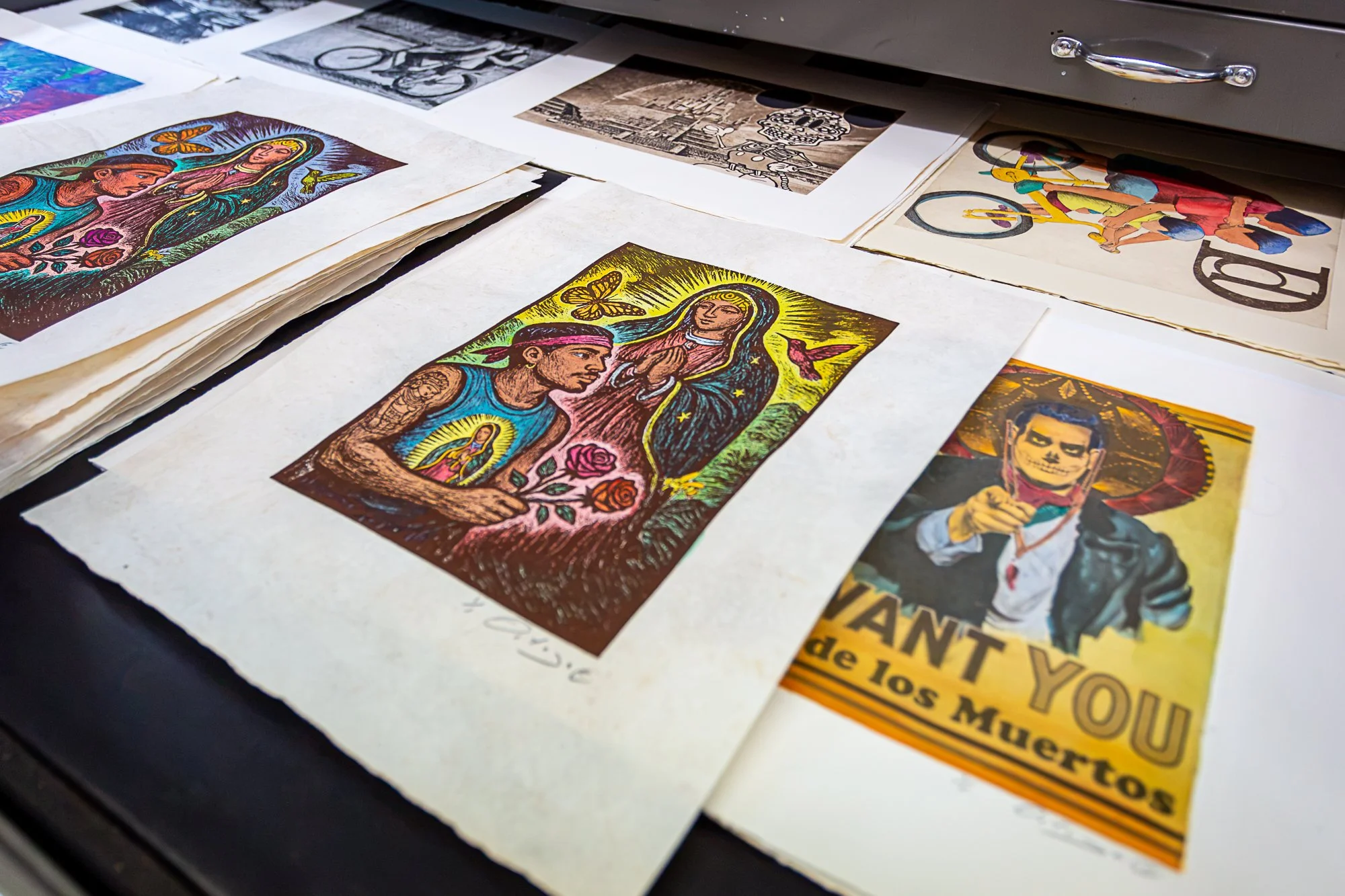
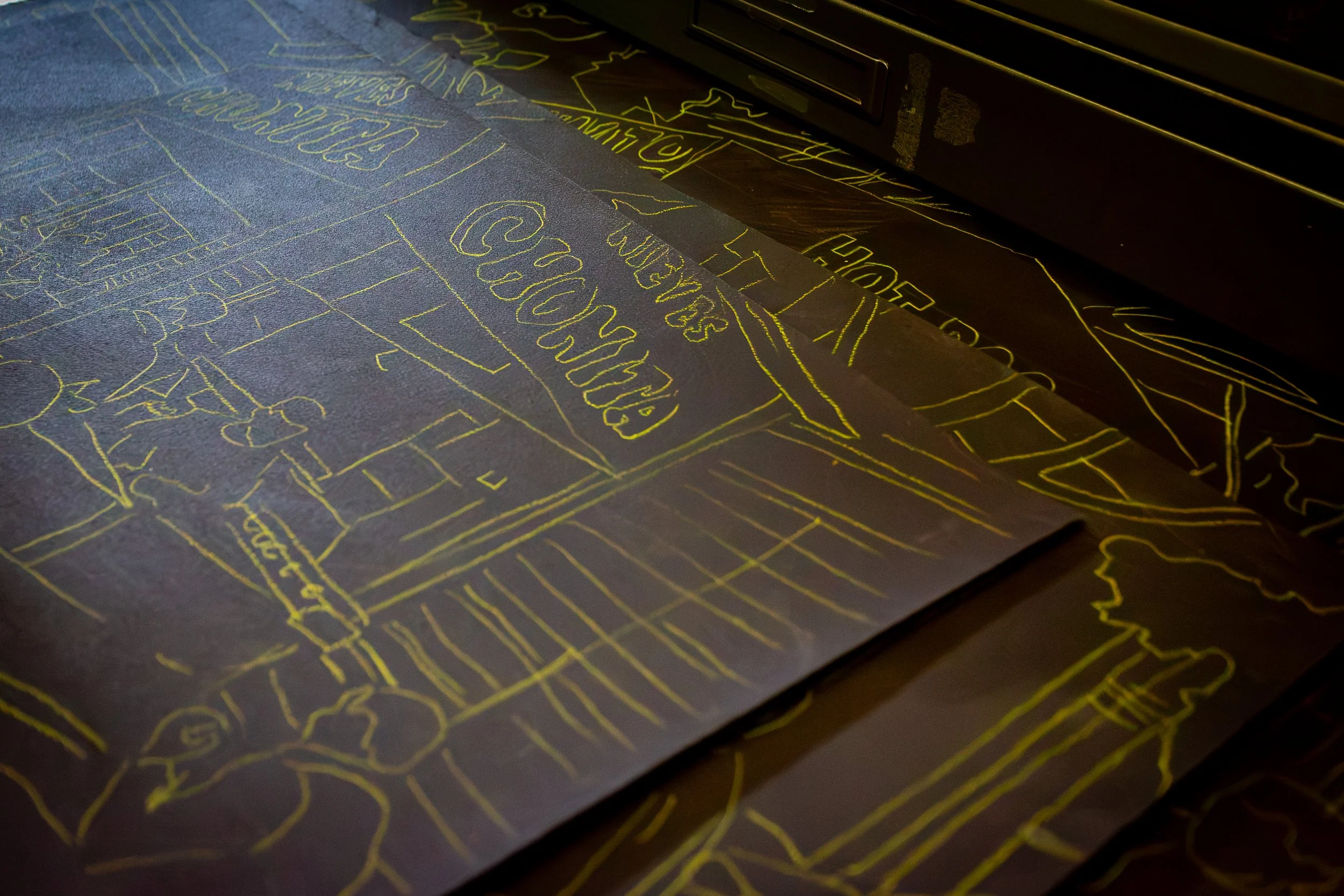
Tony’s prints for the Juan Diego y Tonantzin at Tepeyac on display at the William Havu Gallery from Nov 13, 2026 - Jan 9, 2027.
This interview has been edited for clarity and length.
Elizabeth Royal conducted the interview and took the photographs July 2026.
Thank you to Tony and Sylvia for agreeing to be interviewed, welcoming me into their studio, and being so generous with their space and time. You can find Tony’s work at William Havu Gallery, where he will be having a show in November.