

Art Collectors
Dale and Leslie: Collecting Latin American Art, Meeting Artists, and living in a gallery
English
I’ve always been interested in how regular people actually become art collectors. And of all the collectors out there, I’m most interested in the people who collect slowly, over time, and are motivated by personal interest, not prestige. Dale and Leslie, as collectors, are exactly that. Their collection has been shaped by instinct, relationships, their travels, and a lot of figuring things out as they go.
As I spoke with Dale and Leslie, what struck me wasn’t just the scale of what they’ve built, but how they live with it. There’s nothing overly precious about the way they describe their collection. Their home, while immaculate, isn’t a showroom. It’s something closer to a living archive of their lives. Work rotates in and out. Pieces are traded, stored, revisited. Some are deeply loved, others are let go or placed in the storage to come out at a later time.
Their story moves in a way that feels almost improbable, even though they assured me that it is still possible to have these experiences. They’ve knocked on an artist’s door just to introduce themselves. They’ve carried a sculpture onto a plane without really knowing how they would pay for it. They returned to Mexico year after year and became part of an artist’s orbit. Over time, what they have built started to feel less like a collection and more like a record of lives lived with curiosity, connection, and of learning to trust their own eye.
Elizabeth Royal: The first question I usually ask collectors is how did you start collecting art? What brought you to art collecting?
Dale: I think for me, being a young artist, just being around art, being an art major in college for a while — it just evolved. I just wanted to be around things that I wanted to live with... I wanted to live in a gallery and I guess I ended up building a gallery to live in. And I'm still enamored. I'm just blown away by being able to walk around and look at the pieces we've collected.
Leslie: And Dale, although I didn't know him then, was a master craftsman and had his own business building and designing furniture so he bartered quite a bit for the art that he collected. And as his small collection started growing, he would start borrowing pieces, trading with galleries. He would say 'I'm not enamored with this piece anymore, but I like that piece — what can we do?'
I think the couple aspect of collecting is so interesting. I'm married, I have a five-year-old, and my husband and I… collecting is very much a collaborative effort. We both have to live with these pieces, and we're both putting a big chunk of our income into them. Has there ever been a time there was a disagreement? How do you handle it when one person loves a piece and the other doesn't?
My impression is that we end up acquiring it. And because of our system, it gets rotated in and out. We've had pieces up that Leslie didn't like specifically — like the Cuevas — and I sort of thought they were pretty cool. So they'd be up for a couple of months, then we'd put them back in storage, and something else would come up.
Dale does a lot of research. He's really the one who says, 'I think this would be a good addition to our collection — what do you think?' He's checking out websites, reading a lot about the artists. And whenever possible, we've taken the time to meet the artist. It's been a really cool process.
That's something I feel super intimidated by, and I know a lot of people in my age group feel pretty intimidated by approaching artists. What has been your strategy? Maybe that's too strong of a word, but how do you do that?
I knock on the door.
Really? Just knock on the door?
Just knock on the door and say, 'We'd like to meet you. Will you entertain us?'
We used to go to Mazatlán in the wintertime for about ten years. Dale was reading one of the local periodicals, and it was about Antonio López Saenz. He was well known in Mazatlán — he had sculptures along the Malecón, and eventually one of his pieces became the logo for the city. So Dale read this article, and it said the artist lived on such-and-such street. We went down the street and asked a construction worker, 'Where does he live?' He pointed to a grey house down the way.
We found out where he lived and went and knocked on the door, and he opened up the blinds to the window and looked out.
He was a tall man, and he turned his head because the shade wasn't very open. And he said, 'I cannot receive you today.'
His English wasn't great, and our Spanish wasn't good enough. But we worked our way back in. We set up another time and sat down with him in his house. He always had a little gift - some paper, some publications, a little news item. He focused on the people of Mazatlán, especially the working class. His works portray the culture. Most of the time his figures have no features on the face, and large, powerful bodies. We ended up buying quite a few pieces from him. The first sculpture we bought was when we didn't have the cash with us at all.
We didn't have any money. This was early on in our relationship with him. And he just said, 'Take it home. I trust you. Send the money to my Texas account.' So we just carried it on the plane — we were terrified. This fragile, expensive sculpture.
We became good friends with him. Every time we went back, we'd make an appointment to see him. We met his family, became well acquainted with them. He passed away a few years ago.
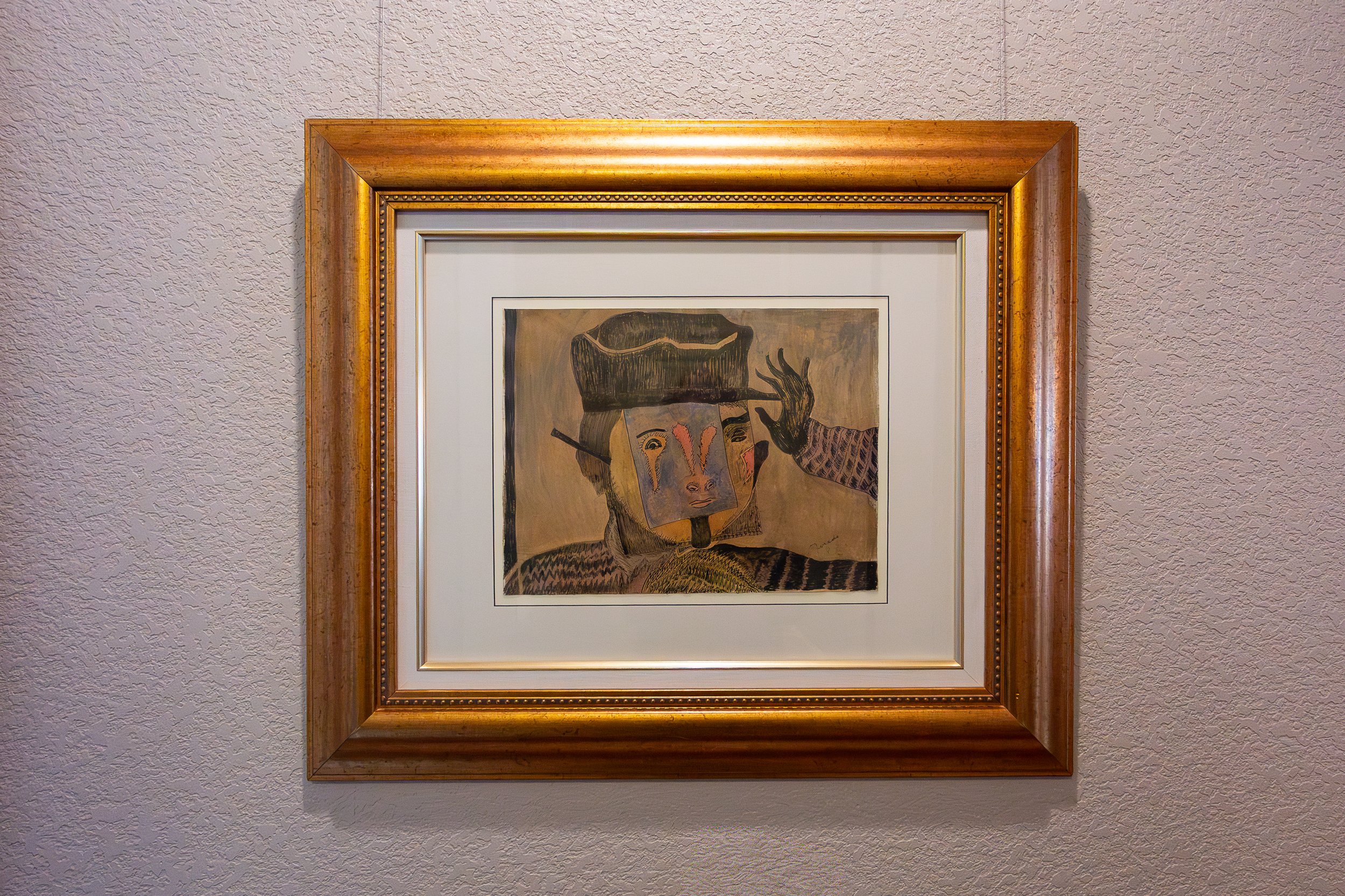
El Hombre Con un Sombrero Negro Etching by Francisco Toledo.
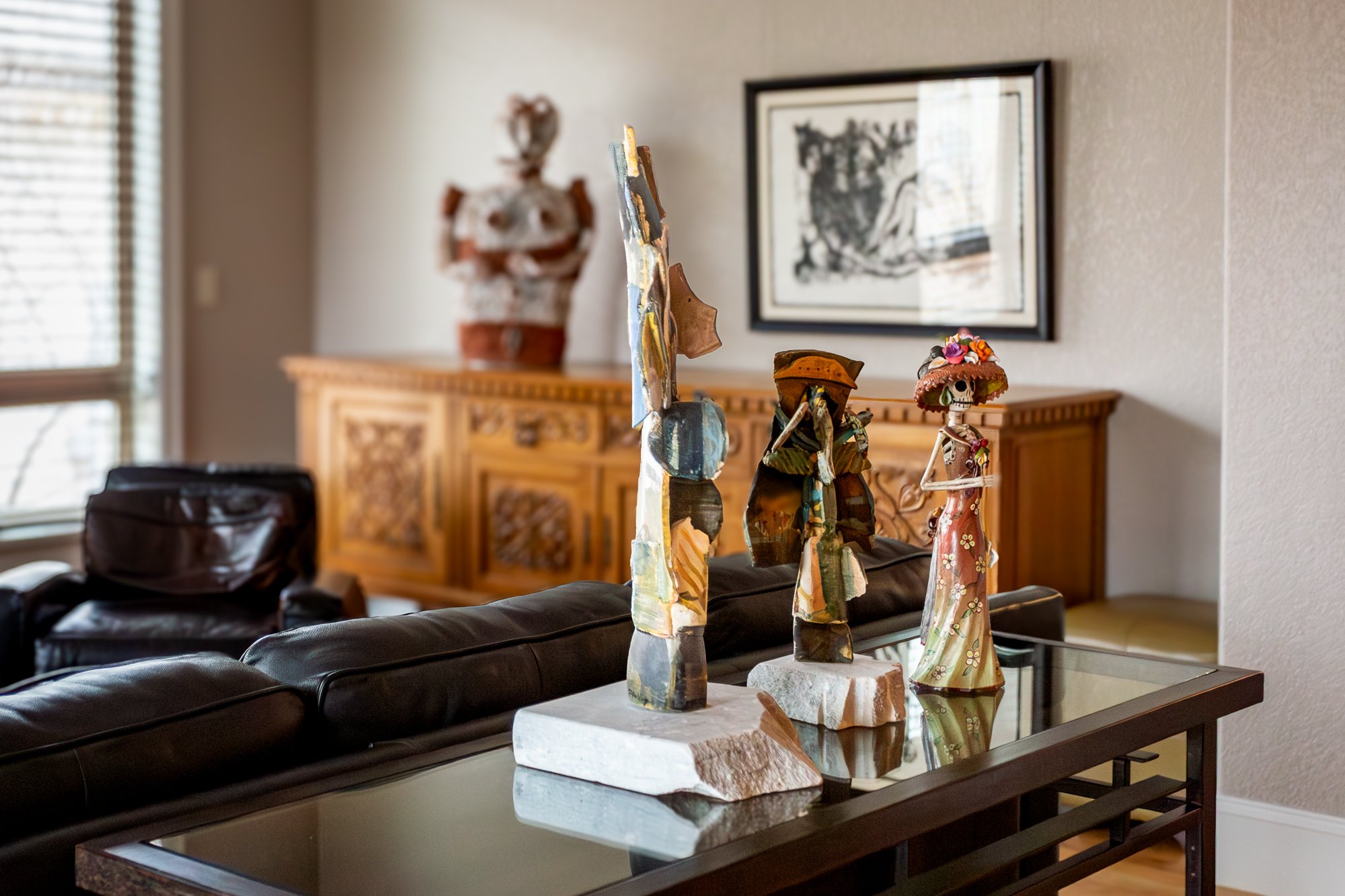
Na-Bolom by Gunter Gerzo sits in front of a Catrina from Tlaquepaque, Guadalajara.
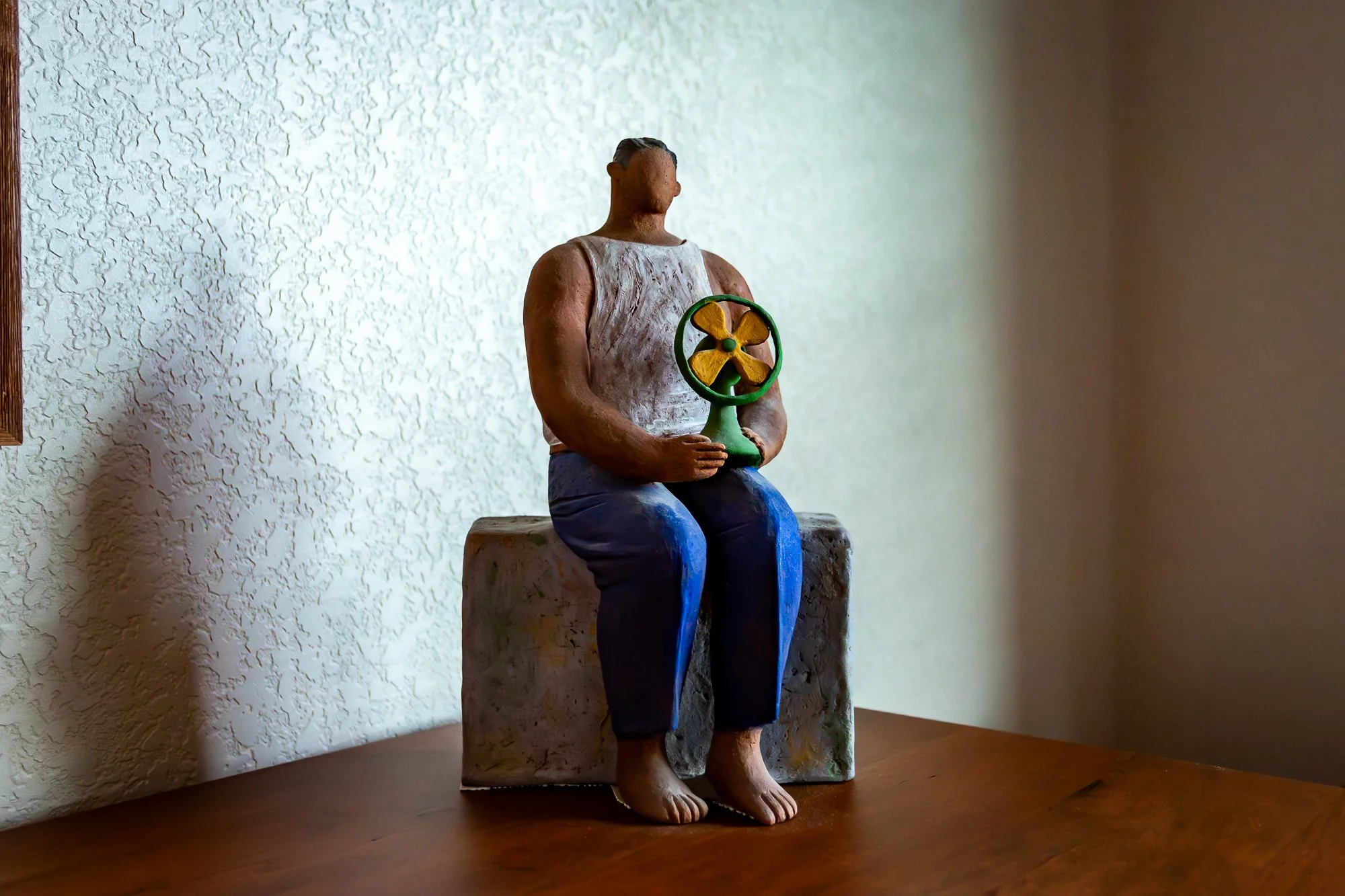
Sculptures by Antonio Lopez Sanez
You two are such cohesive collectors. How did Latin American art specifically become your focus?
I grew up — my formative years were in San Diego. I'd cross the border into Tijuana, surf down in Baja. I just fell in love with the culture, with the people. That stuck with me. We visited Mexico a lot, then bought a house in Mazatlán. It just kept evolving. 'Here's a little hole in our collection — let's see if we can fill it.'
I'm a newer collector — my husband and I have been at it for about seven years. We're like baby collectors. Latin American art is a real blind spot for me, so if I wanted to start collecting in that world — where would I start?
ZSONAMACO in Mexico City would be a great place to start. It has local artists who aren't yet widely known all the way up to multimillion-dollar pieces from major galleries. It's a fantastic place to go.
For me, because just about everything I do starts with reading — I would pick a genre and start reading about it. As you're reading you'll learn about other artists, and read about those. Pretty soon you'll have a partial expertise in one area and can start collecting there. Mexico City has so many galleries and museums. You'd have to spend months there, really, to go through the process. But even then, we still have artists we'd love to collect. Leonora Carrington. Romero de la Rosa. Remedios Varo.
Something that comes up every time I'm in a room with younger collectors is getting outside the algorithm. We're really beholden to what we're being fed visually. You like one picture of an artist, and suddenly that's all you see. People who started collecting pre-algorithm seem really good at getting visual and cultural input that exists beyond what a feed would serve up. What were you doing when you were building that visual vocabulary? What would you say to younger collectors?
Looking. Going to galleries. For me it was always: could I live with this piece? Could I look at it on a regular basis and really enjoy it? If not, move on. Is it just commercial, or is there some meaning — like the Tony Ortega — that I could really be interested in long term?
Hanging out with people, having coffee with them, getting to be friends with them. Building those relationships. And also being willing to be judgmental. I can go into a gallery and know right away: this is of interest to me, or it's not. Rather than spinning my wheels trying to understand what's going on, I just tend to move on. Go find something that grabs me.
I think it's easy to get caught up in feeling like you're supposed to like a particular artist.
There are famous artists that I don't really like their work. I would never want them in my house. But they're famous, and they're an investment… it’s gone up in value.
The peer pressure to like something that you really don't actually like... that's a trap.
So to summarize… to get outside the algorithm, visit art in person. Network… or maybe 'go make friends' is a better way to say it. Go to shows. Read. Set your path.
Exactly. Set your path, then explore: galleries, curators, lectures. The Museum of Art locally is a great resource.
I think we're on opposite ends of the collecting lifecycle. We're really brand new to the bigger art world — we just bought our first five-figure piece. But what is it like to be thinking about divesting?
It's just challenging. But once you decide that — where do you go? How do you get it done? How do you navigate capital gains? Packing, transporting. It's a work in progress.
Emotionally, I think there's enough. We rotate our exhibitions every three or four months — it might be a theme, it might be a particular artist. So we're always seeing things fresh. And we don't want it in the house if there isn't some reason we really love it.
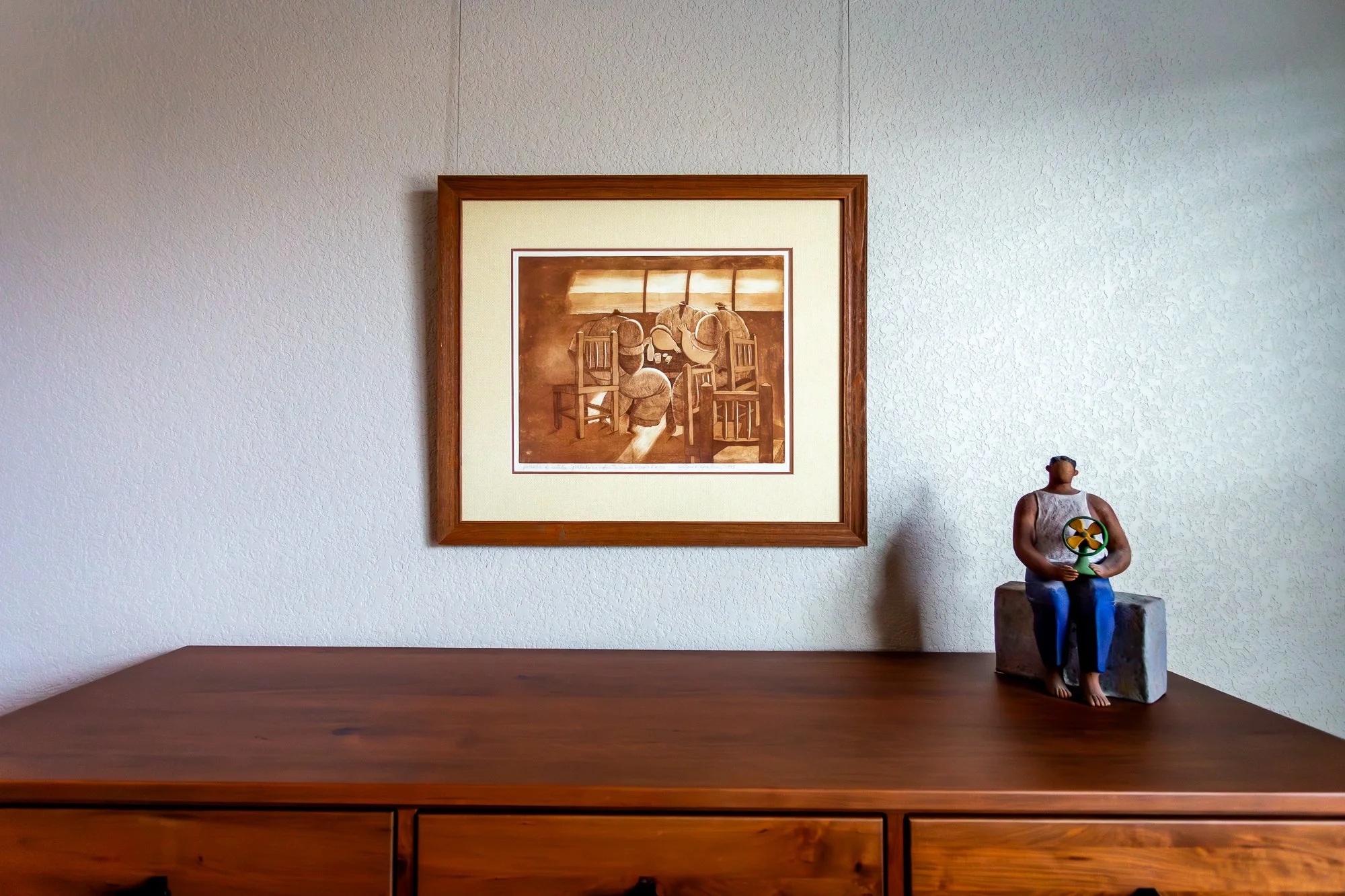
Two pieces by Antonio Lopez
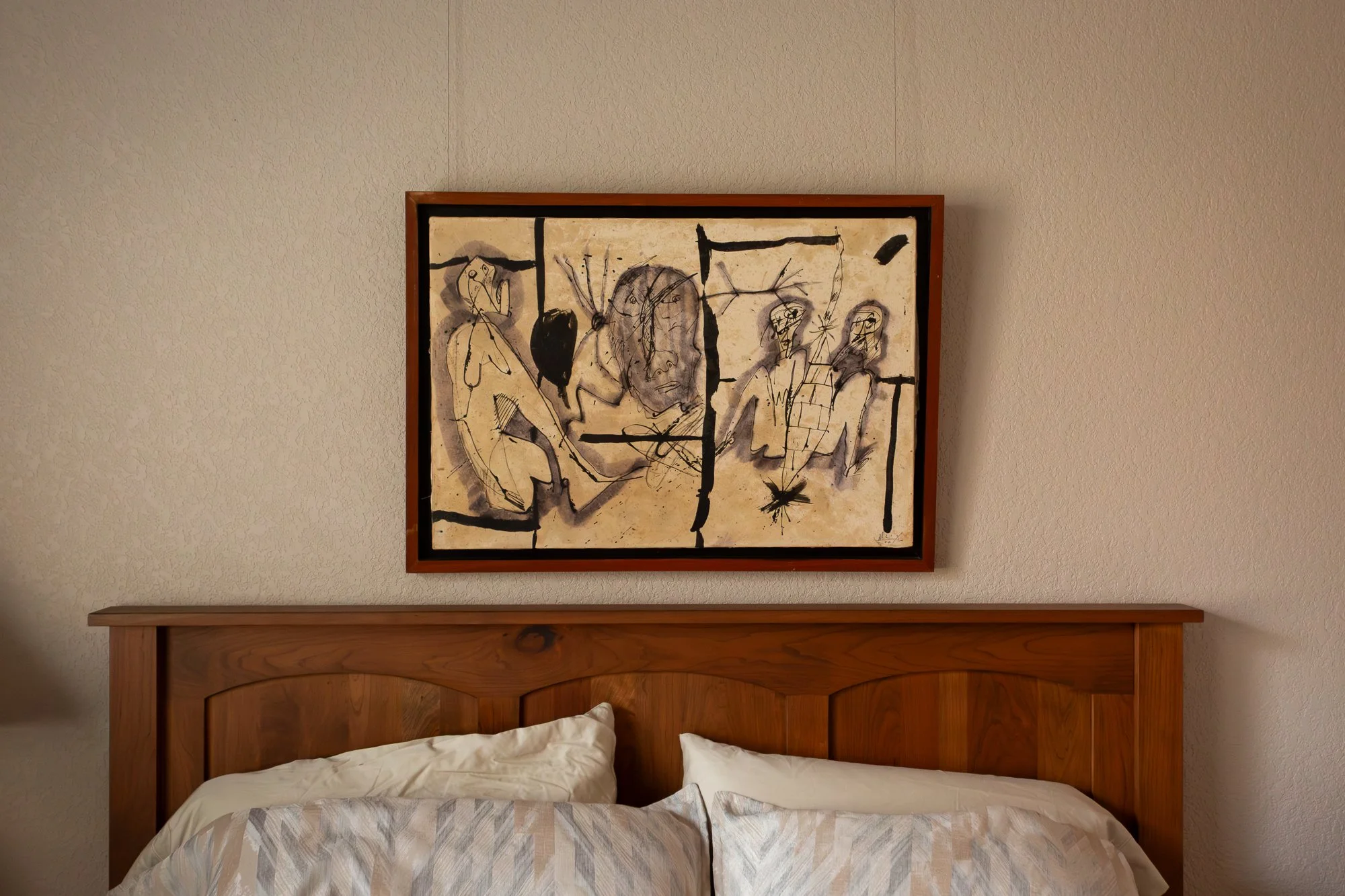
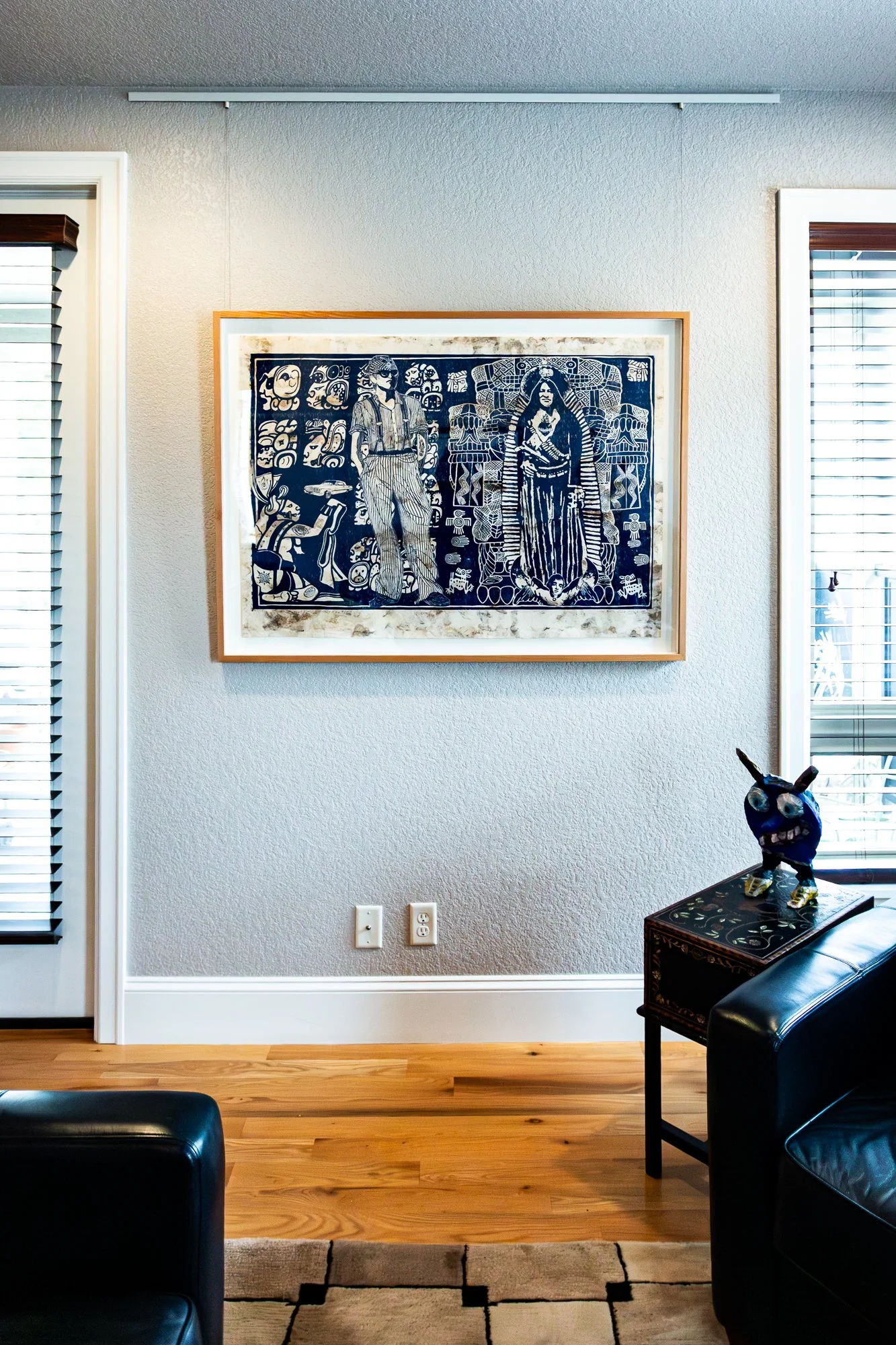
Alejandro Santiago
Nepantla by Denver-based artist Tony Ortega hangs behind a sculpture by an unknown artist found in San Miguel de Allende.
Do you collect mostly direct from artists then?
No, not exclusively. We have some [Rufino] Tamayo pieces, some [Rodolfo] Nieto. The ceramic piece we bought from a gallery in San Francisco, from Bond Latin Gallery, who was instrumental in promoting [Alejandro] Santiago. But we ended up going to Oaxaca, and walking past the contemporary art museum, there was an exhibit of these ceramic sculptures — small ones and life-size. We said, 'Wow, what's going on here?' So we went into the gallery, and Santiago was there.
I think Francisco Toledo was there too. People from all over the world had gathered. We didn't know what we'd walked into. It was the grand opening exhibition for his project.
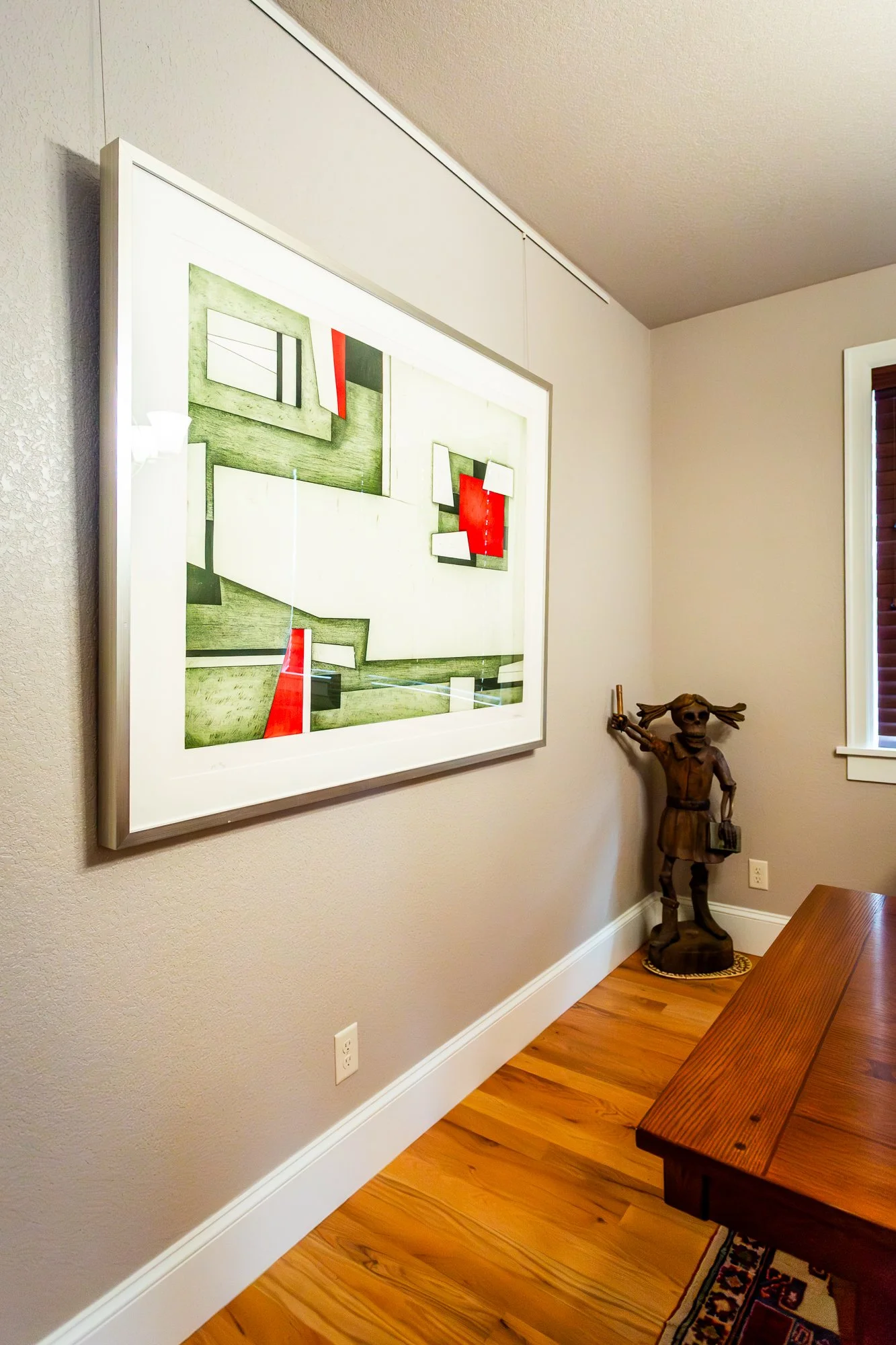
It was called 2501 Migrantés. He was going to make 2,501 of these figures — every single one unique. Each one represented a person who had left his community and crossed the border to find work so they could send money back to their families. He wanted to figure out: how can I keep these people here working? How can I support them so they don't have to cross the border? He got funded by the Rockefeller Foundation, had these giant kilns built. He didn't speak English, but people from around the world who spoke both Spanish and English helped facilitate introductions. We asked if we could visit his studio.
He said, 'Come tomorrow.' We asked where he lived, and he said, 'Just ask — they'll know.' So we grabbed a taxi, told the driver we needed to find the artist's studio, and he wasn’t sure exactly where it was. He drove several miles out of town, down dirt roads through fields.
The taxi driver mentioned he'd been robbed on that road once before.
[Laughing] Oh, great. Very reassuring.
But we arrived at this big ranchero — all these cars, people from all over the world. A grand fiesta. Traditional foods, bands playing. Santiago was huge into the skull imagery, so there was a lot of that. And then these giant warehouse facilities with his pieces stacked around the perimeter.
We asked if we could buy one. He said yes. That's the piece hanging in our bedroom.
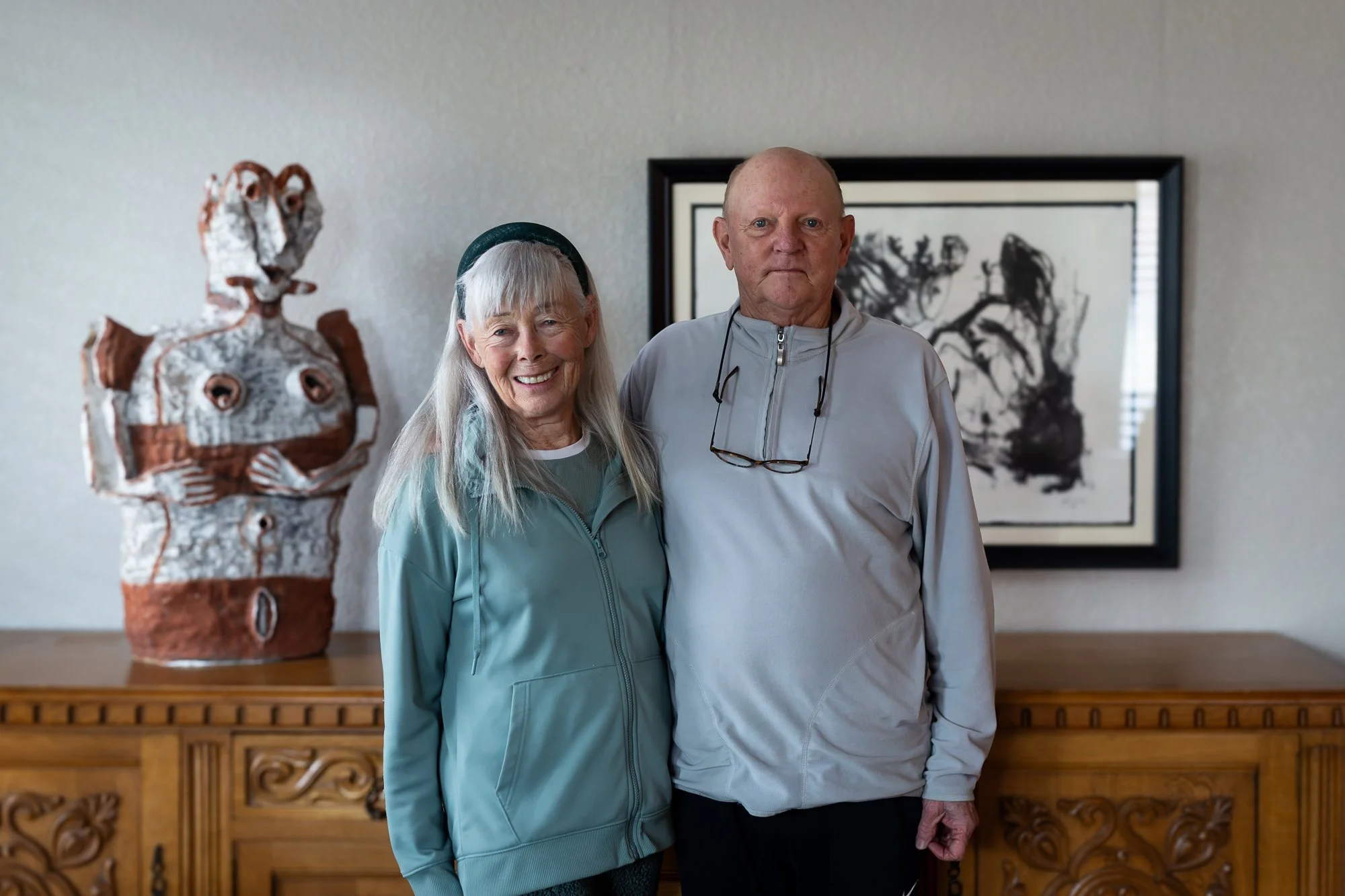
Dale and Leslie in front of a piece from the 2051 Migrantés series by Alejandro Santiago and a Santiago Lithograph.
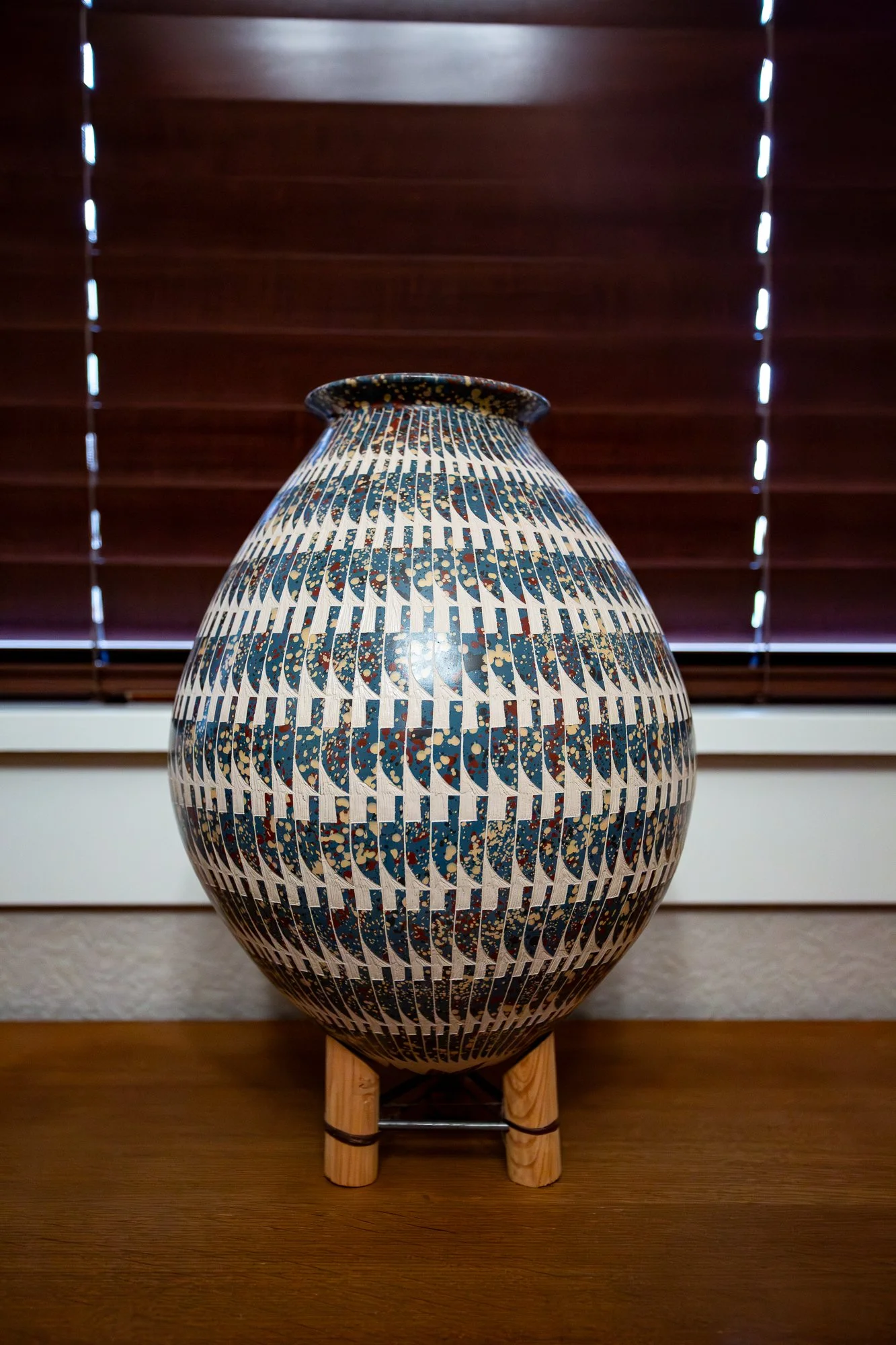
Mata Ortiz Vessel from Chihuahua, Mexico.
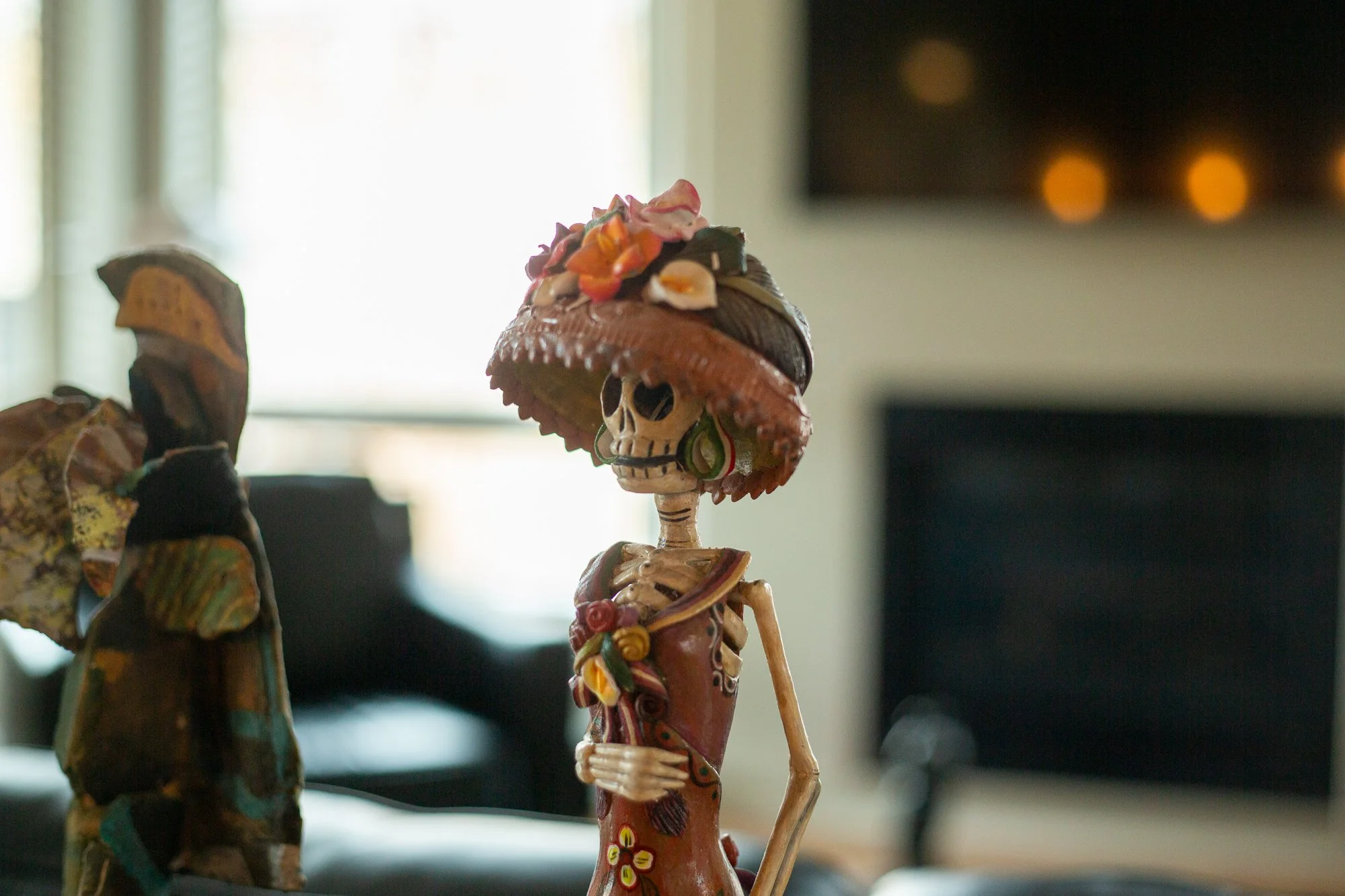
A La Catrina figurine from Mazatlán
That first piece I bought — a $1,000 piece in Detroit, where the Reddit community helped me do all the research on it — I have such a strong emotional connection to it. Every so often I take a finger and run it along the painting. I'm like, I can touch this painting because I own it. And the idea of divesting myself of that piece just feels impossible to fathom right now.
There's a long time between now and then [for you]. And we have a pretty extensive B-list. We're also 76 and 78 — at some point, we don't want to hassle with things. We don't want them knocked over because they're expensive. We don't want to stress about insurance. But there's plenty of collection left to enjoy.
Exactly. And at our age, it's all about prioritizing. When I sit here and look at the beautiful things around me, it's certainly worth it — it gives me so much joy to be surrounded by this much beauty.
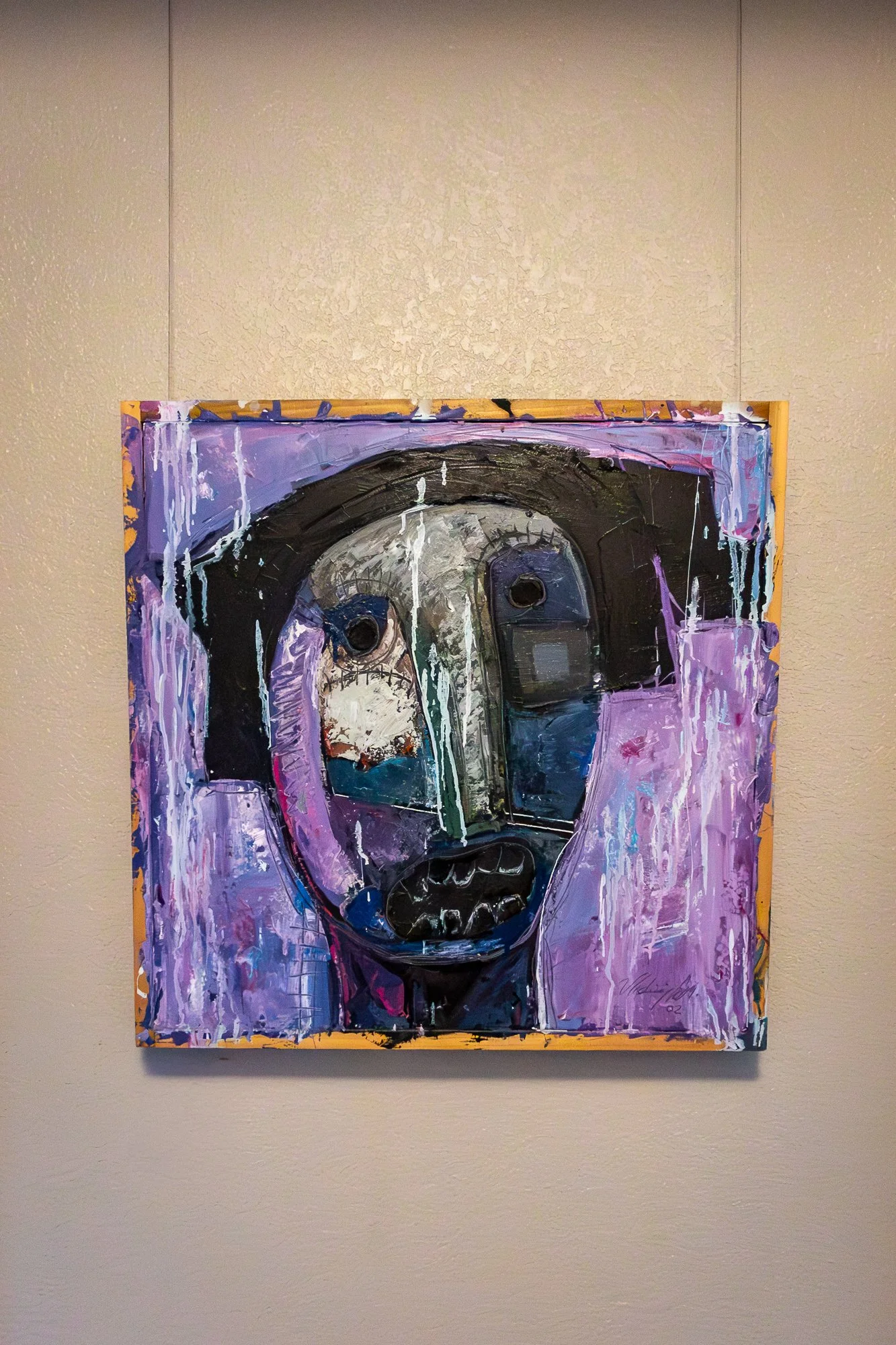
Vladimir Cora
This interview has been edited for clarity and length.
Elizabeth Royal conducted the interview and took the photographs March 2026.
Thank you to Dale and Leslie for agreeing to be interviewed, welcoming me into their home, and being so generous with their space and time.