

Curator and Gallerist
Shiprock Santa Fe’s Jed Foutz: Curiosity, Intention, and How young collectors are reshaping the art world
English
On Thanksgiving Weekend, Jed Foutz and I sat down for a conversation in his New Mexico gallery, Shiprock Santa Fe.
I first encountered Shiprock Santa Fe years ago when I was working in textile restoration. Curious about the company, I looked them up and discovered Jed’s curatorial eye, which became a huge influence on my own aesthetics. I later discovered the scope of his work and friendship also included helping Hiroki Nakamura source artisans and craftsmen for Visvim.
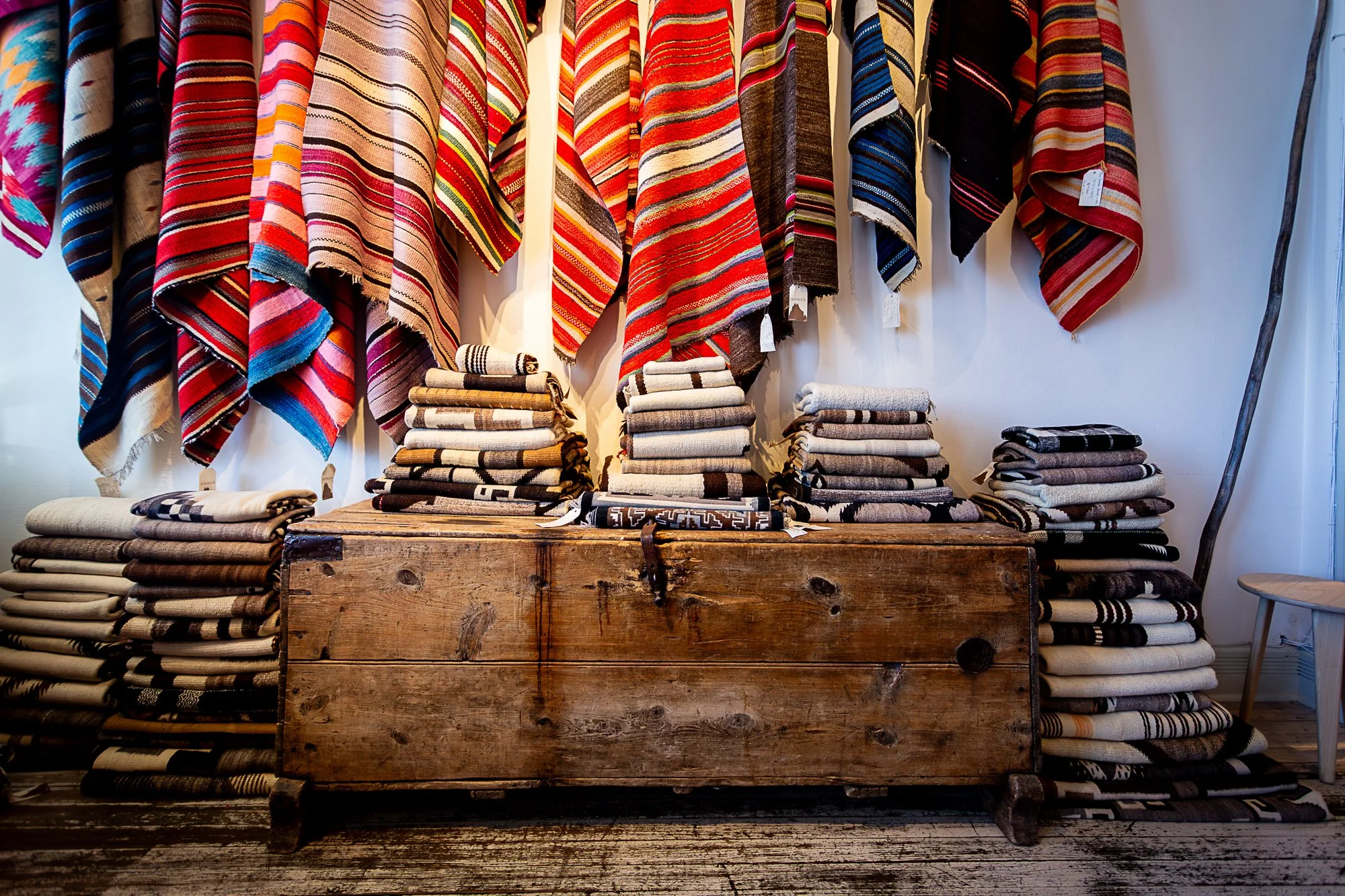
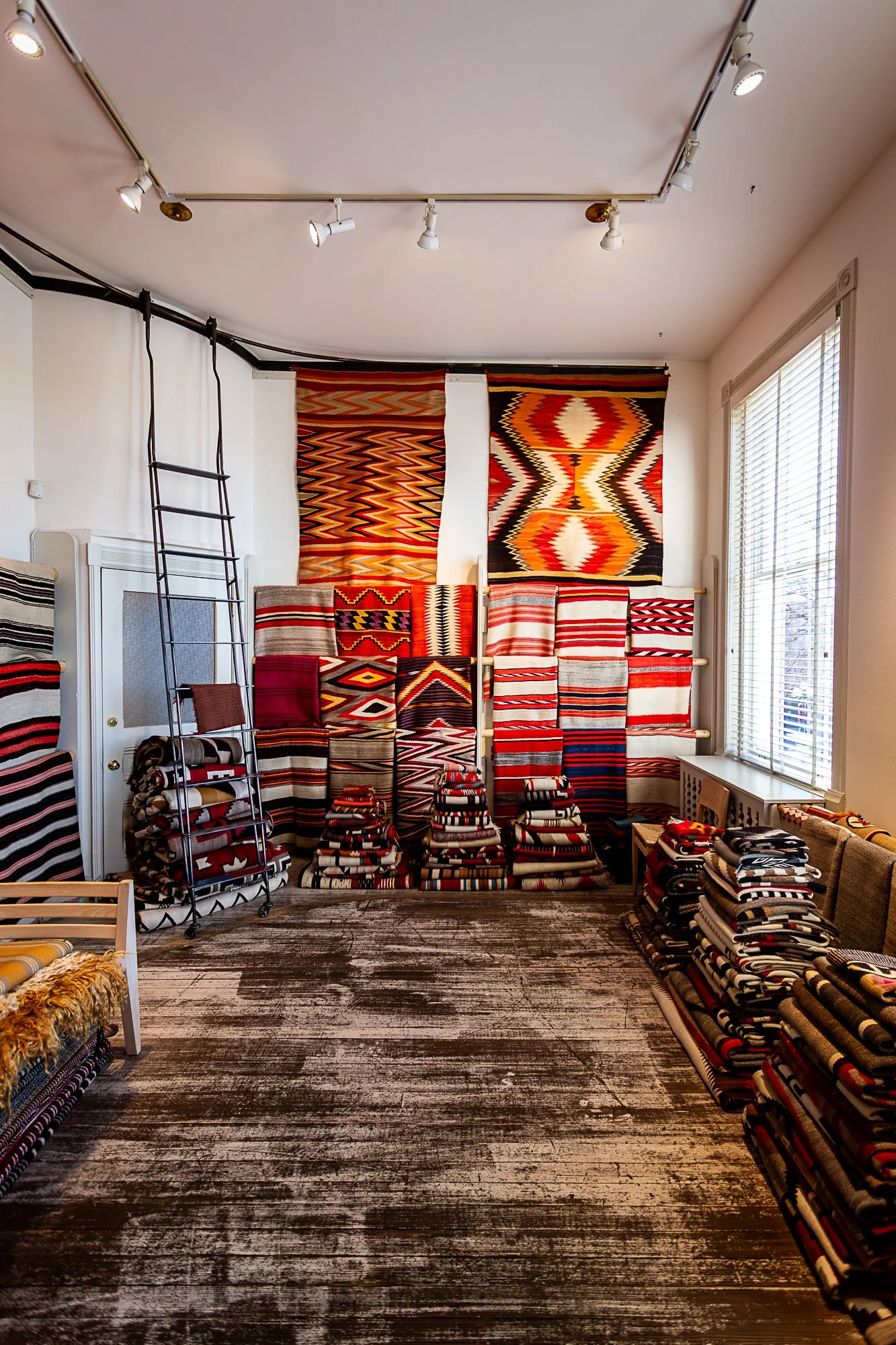
Shiprock Santa Fe has always felt more like an archive and sanctuary to me. Nakashima chairs and antique benches sit below Navajo textiles hung on the wall. Jewelry is lined up by shade of Turquoise in antique cases. Ancient Pottery and modern sculptures are presented with equal reverence and restraint.
Elizabeth Royal: I’m especially grateful that you agreed to be interviewed since Shiprock was sort of the beginning of art collecting for me. I sewed briefly in grad school for a textile restoration firm in Denver and some of things that came through were from Shiprock. I remember thinking “Someday I’m going to be able to go buy something from Shiprock…” and well…here we are. Can you introduce yourself to us?
Jed Foutz: Sure, I’m Jed Foutz. I've spent most of my life in Shiprock, New Mexico. For most of my life, I’ve lived and worked with thousands of Native artists. So, I'm not really trained in the art world, but I kind of grew up in it.
I'm not a gallerist per se, but I come from a world where everything was art. It felt as if every utilitarian thing mattered. [In the Navajo culture I grew up in,] there's so few possessions. Things come, things go. And I think it taught me a different way to look at beauty, art, and value.
And the beautiful thing about the world I was able to grow up in is that there's always something amazing and beautiful that can be attainable but not priceless in the monetary sense.
One of the things that differentiates the Gen Z and millennial collectors from our parents is that we want to live with art in an easy, functional way. We want art to be the “frosting” threaded into every day - I see a lot of people my age buying objects - clocks, dishes, furniture. We feel that we have to work hard in our spaces, so we may as well make them beautiful.
You’re known among my friends as having a really good curatorial eye for the useful and beautiful. What kind of advice would you have for those of us who are just starting to think about living with art?
I think it's my relationship to the pieces that I represent that makes me able to present them in a certain way and find beauty where other people may just see a utilitarian object.
I think a bit of advice I have is always reach for the highest level that you can. I know that some people are volume buyers - they want five of something - but in my experience, [what I see] holding true in collections and collectors is that the thing that you stretch for, that you think is unattainable becomes the most appreciated thing, and the thing that stays unique over time.
So it's almost like “fewer, better.”?
Yes… kind of. It makes it more special to the individual because it’s like “Do you remember when we could barely do this? We stretched, and 50 years later it's still a treasure.”
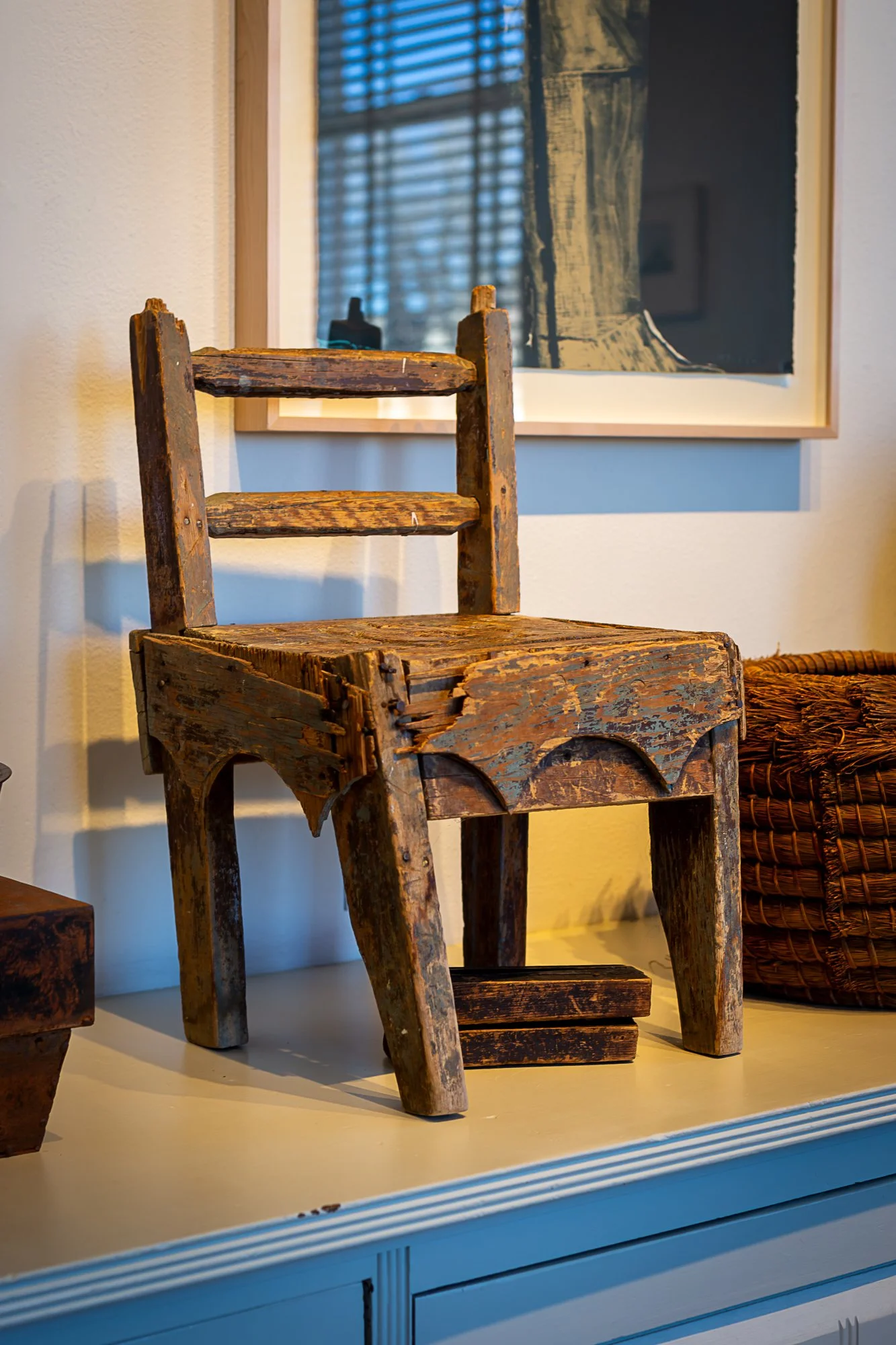
Antique child’s chair from the early 20th Century.
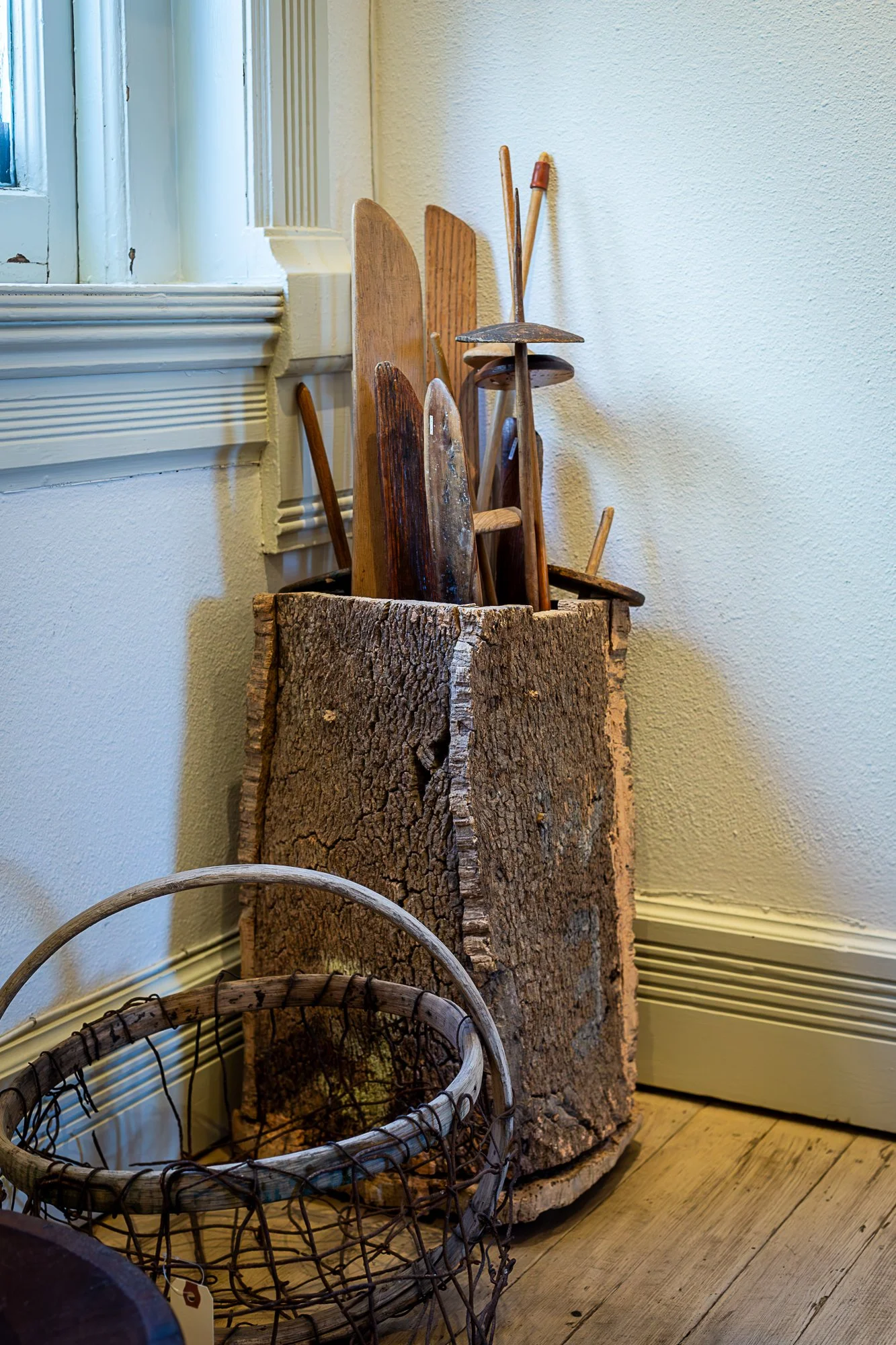
Spindles used for creating the yarn used to weave traditional blankets sit with waving battens inside of a cork vessel.
[Laughing] I see how you can exist in this space and not take it all home.
For me, it gives me so much more pleasure to be part of all of that coming in and going out and appreciation. I am also blessed with the opportunity to be surrounded by all of this every day, which kind of feeds that.
I think that's an interesting perspective. I’m wondering what you’ve learned from the collectors or artists that you’ve worked with over and over again. Sunik Kim alluded to a symbiotic relationship between artists and collectors - does that work the same way for you?
I think I’ve learned how unique we all are. I have collectors that are value-driven. They ask questions like “Is this gonna be worth more in five years? Where does this fit in the market?” And then I have others that don't give that a second thought, and it's all emotional and there’s a connection to the artist or the artist's story or the place. We all have such different bases and motivations that we work from, and such different opinions of beauty and what is meaningful and what drives us to collect or to be interested.
I think from a young collector's perspective, a lot of us who are less experienced are looking for galleries to teach us. Especially when we are doing things for the first time or branching into something new. For example, I just bought a piece [by contemporary photographer Koo Bohnchang] for our house. But I had no clue where to start. So I started cold-emailing all these photography galleries and only one person [shout out JHB Gallery] was willing to walk me through the process of getting it. That’s something that, as an entry-level collector, is really kind of challenging.
Do you think that asking galleries to teach is a reasonable expectation for a young person?
I think one of the things that makes Shiprock very different in our approach is that we’re extremely people driven. We have plenty of clients come and buy something and that’s the entire interaction, but if you're learning and interested, then I think we provide a way [to learn]. That's how this company works.
What I'm hearing is that, from a young collector's perspective, come in and ask questions…
Oh, for sure. I mean, it's the only way to learn it. Hopefully all of us find, like you during your photography search, the person that will be that person.I think it's [important for the collector] to ask questions. You have to be curious. And some of my most rewarding relationships over the years have been from kind, open people. I was nobody and they took the time to go, let us show you what this is or how this works.
I feel like a lot of us are very nervous to approach [galleries and artists].
Yeah, but there are the magic experiences where it's a connection those are priceless. They don't come as often as they should in our lives, but many times I think it's because we're the ones that are afraid to put ourselves out there.
I think that there are a lot of people who are my age who want to collect - a lot of us are kind of just getting to the point where we're financially able to start thinking about doing that. We haven't hit the point where our income stabilizes. We're saving for houses, weddings, cars, we have kids in daycare. I got a $15,500 a year raise after I sent my son to kindergarten this year and stopped paying for daycare [laughs]. What would you say to that person who's curious, who wants to play in the arena, but is still working on creating that financial pathway to be there?
One experience leads to the next one which leads to the next. You’re learning. "Oh, I don't like that, I do like this."
It's all formative and shaping us and leading in that direction where all of [those experiences become] gained information, whether it’s visual or not. Learning what moves you and what speaks to you, what doesn't — it will hone you a little more before you do get to the point [where you can purchase art]. So it's just kind of a natural progression.
Again, we are all so different that I find some people are just frustrated by the whole idea of it and just give up on the idea altogether, thinking “I can't afford that.”
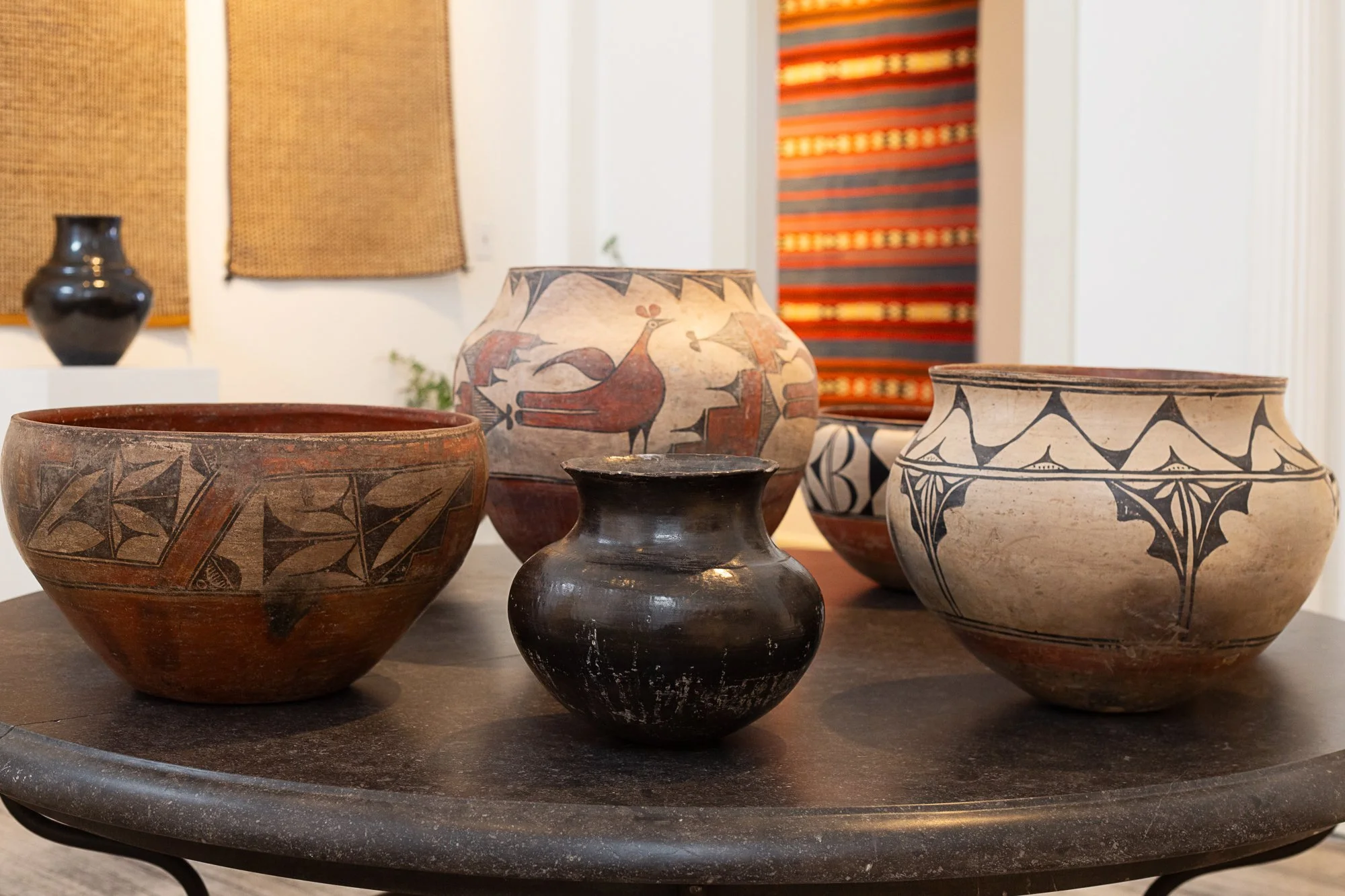
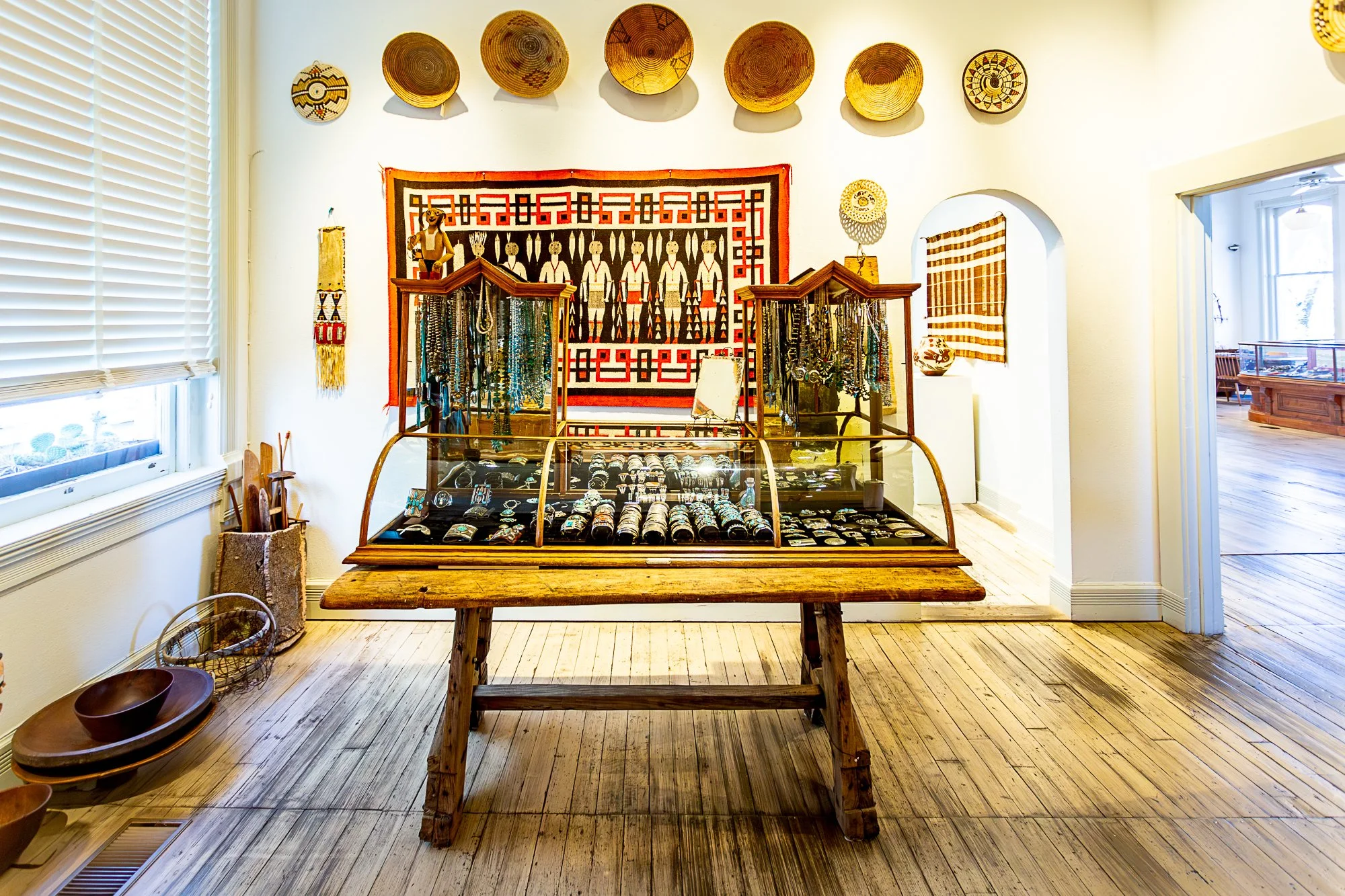
A group of antique Pueblo pots.
The Trading Post room at Shiprock Santa Fe.
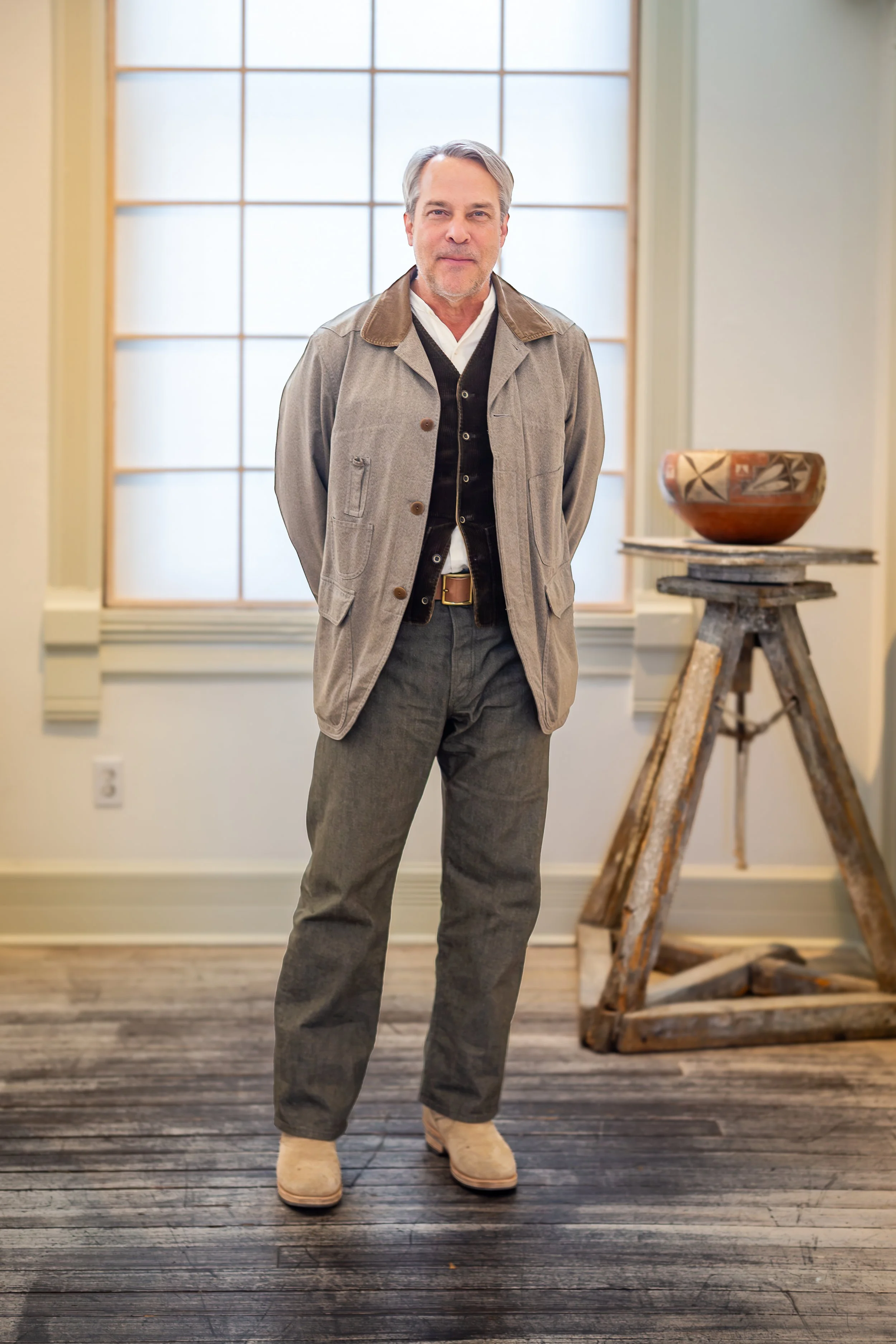
Jed Foutz, photographed November 2025. Behind him, a circa 1920 dough bowl is displayed on a sculpting tripod.
So it's a milestone purchase for the buyer.
Yes, in some ways. I mean, it's always good to stretch as far as we can. Obviously, we all have limitations, but the beautiful thing about the world of art is that there are amazing things at all levels.
I get that. The first rug that I ever bought, I bought from Shiprock, and it was $300. And that was the absolute max of what I could afford at the time. That piece is one of the least expensive in my collection, and it is hanging in a place of honor over my bed.
That’s what I’m saying — it isn’t monetary. Those things stand the test of time over time. I’ve worked with so many collectors in my life, and even in collections of hundreds or thousands of things, there are the 20 things that have sentimental value for whatever reason — they are the treasures. And it’s not always monetarily driven.
It’s that milestone - for me it was like “I used to fix the rugs, and now I can buy one.”
So much of collecting art is those experiences — with family, a partner, whatever that may be —they are defining. It isn’t just an object; it is a memory, a feeling.
It’s experiential. It’s like a walking diary of your collecting life.
So what did you collect? What's something that is in your personal collection that's a milestone piece?
[Laughing] I'm an awful example for this interview - my father was very adamant that I was not a collector. Growing up in the culture that I was blessed to grow up in [gave me a unique] perspective of items and experiences. There’s something in the Navajo culture that is very beautiful - something comes, it goes, it creates a memory, and connects you to whatever comes next. So honestly, I live with almost nothing.
Really?
There are treasures that were gifts. But as far as purchase… even the things that were a milestone for me… there always comes a time when someone appreciates it, and there's something inside of me that goes “yeah… it should go…”
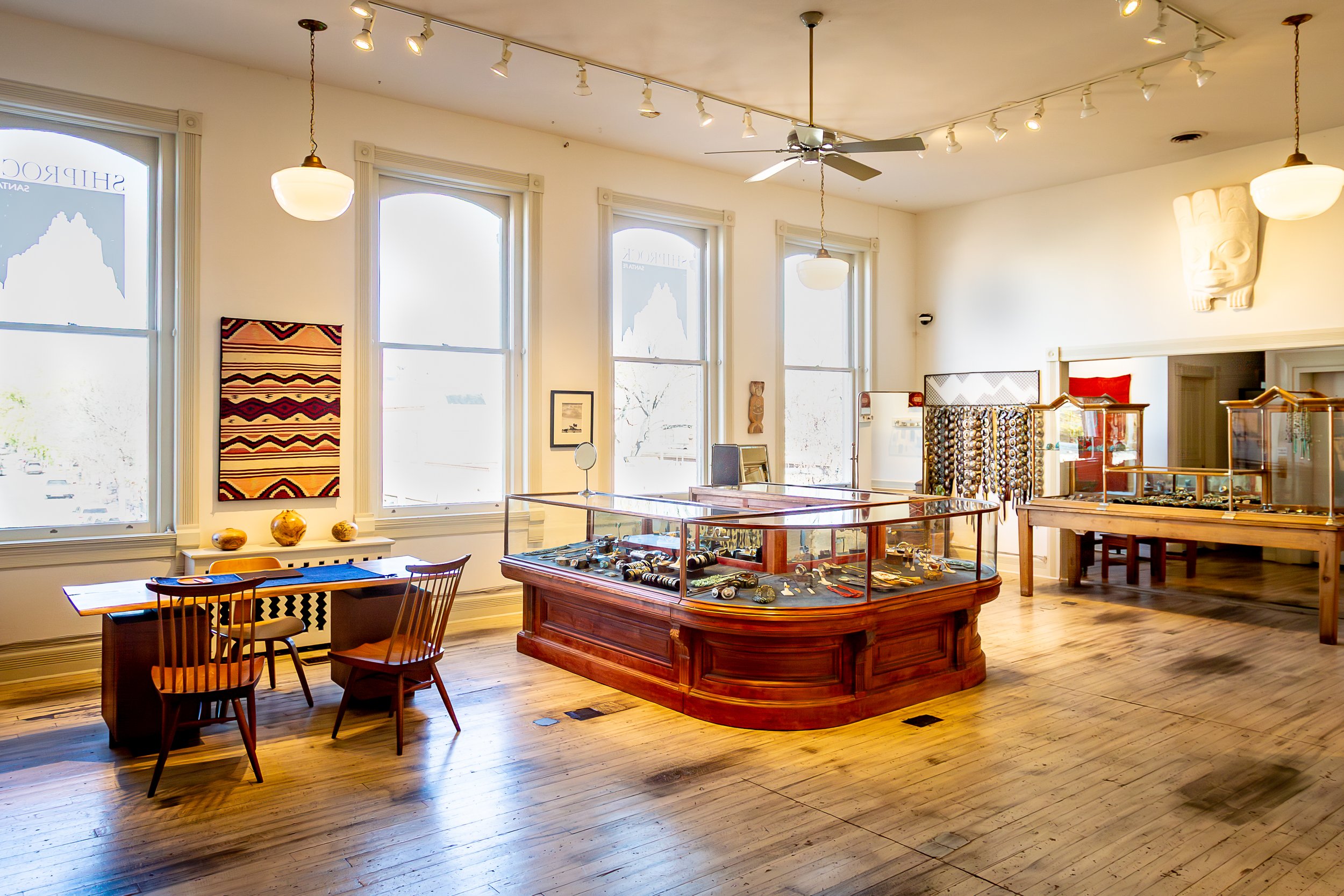
Nakashima side chairs sit in front of a Nakashima desk in the jewelry gallery. A 1880’s Navajo child’s blanket hangs on the wall.
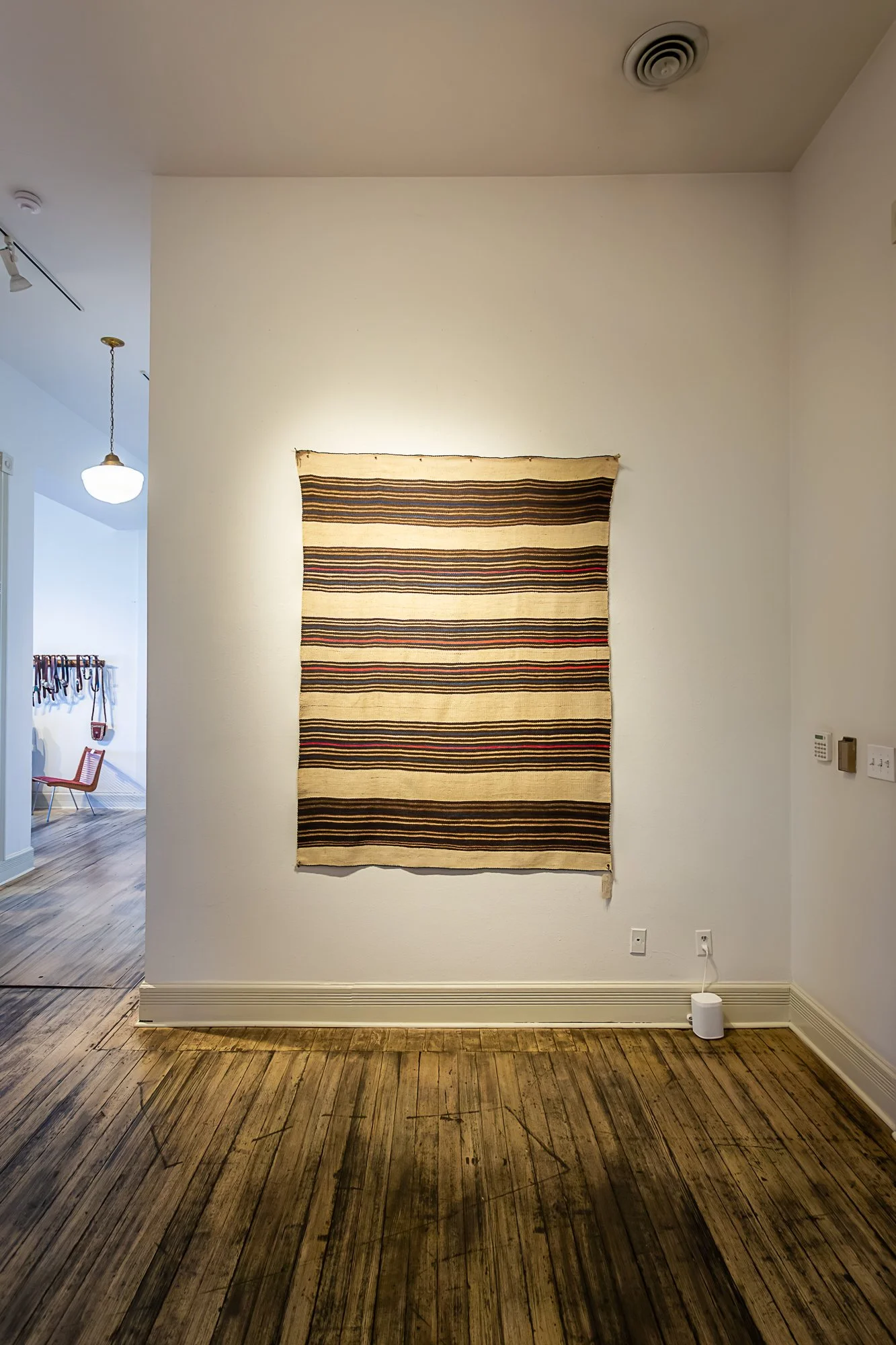
Pueblo banded blanket, circa 1870.
Yeah, yeah. [With Art Rookie] I'm trying to lower the
frustration…
And I will say, especially for your generation — the world moves so fast and [you connect to a large] amount of visual information every day. You used to have to come to Shiprock in the middle of nowhere. It was like a trek. Now everyone can push a few buttons and see all the dark corners of our planet.
[Young art collectors] are searching for that human connection and that stillness. And I'm just curious, if you're in my shoes and want to create these pockets of stillness. What should we be doing? What's been lost that we could bring back?
It's easy to say, but when it all gets moving so fast, we need to take a breath, be in a place, be in the moment, and just… not look at that phone for 10 minutes. Just letting it be and feeling something.
So…if someone comes in here and sits for 10 minutes quietly...
Yes. Doesn't talk, needs to reset, it’s all good.
Does it happen often?
I wish it happened more often. It doesn't. Nothing gives me greater joy than to watch somebody [do that].
We had a piece in the gallery… maybe one of the greatest pieces we had… it was an 11 foot by 11 foot textile and it covered the hall. People would just come in, and stand in front of it, wouldn’t move. And then after a while they'd go, "What is that thing?" I love that when that happens — between art and people and even a place.
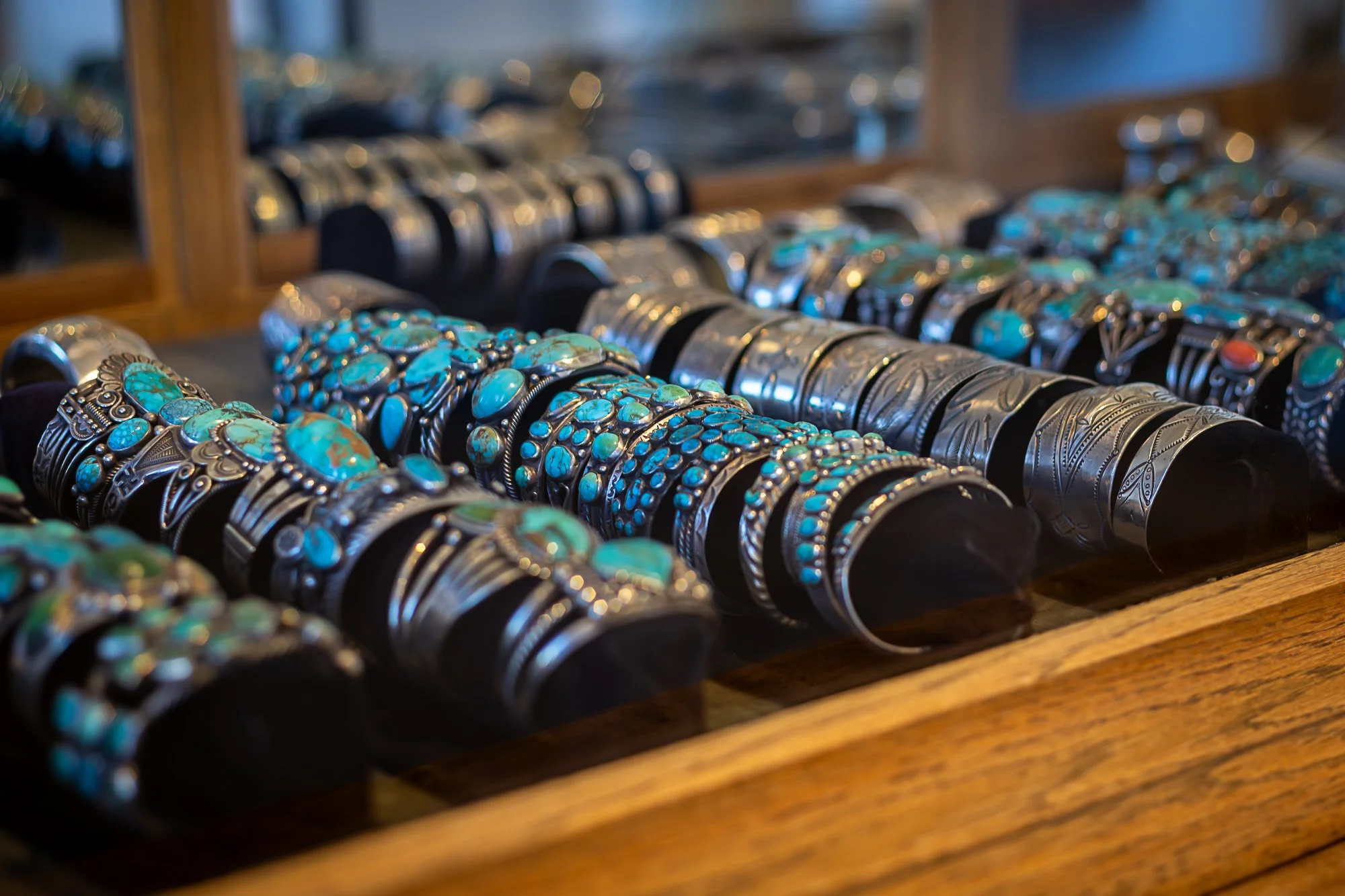
Silver bracelets lined up in an antique display case in the Jewelry Room.
I read an interview by a calligrapher a long time ago, and there's a line that always stuck out to me that says, "We're a generation that looks at everything and beholds nothing."
And that... that's well said.
I feel like that when I'm making decisions about what to buy, what to live with. It's a joint decision between my husband and I, and we pay close attention whenever we're awed by something. And I think that calibration of looking and looking and looking as young people before we could ever buy anything really helped now that we do have the ability to bring work in.
I have five children, and when they say, "Dad, how did you…?" And for me, that's not an easy answer, because one thing opened [the door to] this [other] thing. That is the way it makes the most sense and feels the best to me... and so I think it's really important to listen, and to feel what moves you.
And then find people that you enjoy, because if the process is — you know, doesn't feel rewarding and trusting, and it doesn't feel good — it warps the art in its own way. Hopefully, it's all a great experience. Find someone who's honest and knowledgeable and cares, and that changes everything.
I think we've gotten through everything and more... I just want to say thank you again for taking the time to speak to me!
This interview has been edited for clarity and length.
Elizabeth Royal conducted the interview and took the photographs November 2025.
Thank you to Jed, Zoila, and the rest of the Shiprock Santa Few crew for making this interview possible and being so generous with your space and time.
The Rug Room at Shiprock Santa Fe.