

On Artists, Archives, and Ecosystems: A Conversation with Sam Wilson of Klaus von Nichtssagend Gallery
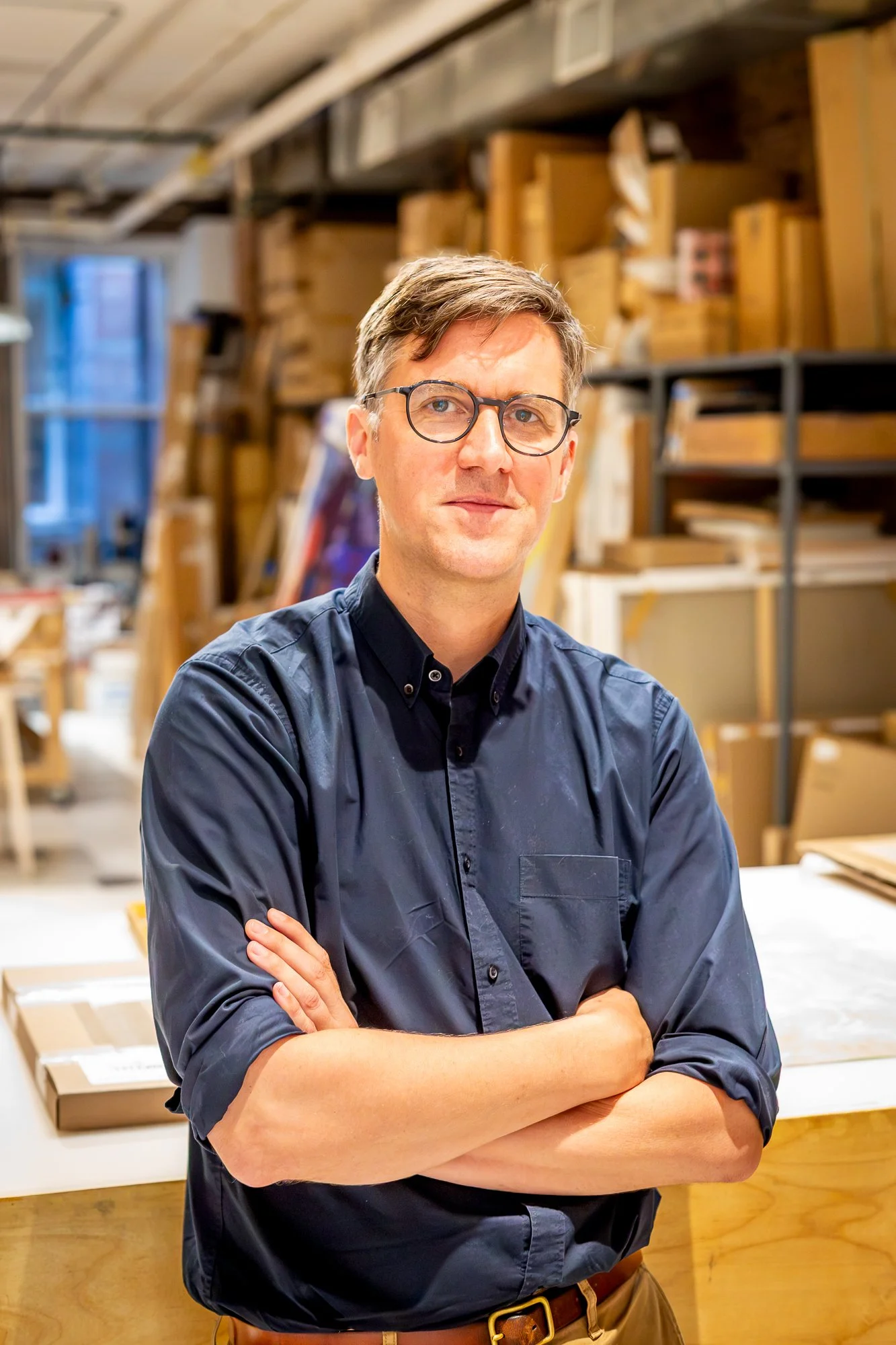
Sam Wilson in Klaus von Nichtssagend Gallery’s Storage Space
Sam Wilson is one of the three owner-directors of Klaus von Nichtssagend Gallery, which began as an artist-run project space in Brooklyn in 2004 and has since grown into a Tribeca gallery representing around twenty artists. I love that the gallery seems to retain something of that original spirit: curiosity first, commerce second, and a genuine interest in following where artists are going rather than deciding too quickly where they should end up.
Sam has spent more than two decades on the gallery side of the relationship between artists, collectors, and institutions, and in this conversation we talked about what galleries actually do, much of which I didn’t understand when I first started collecting. We talked about the relationship between a gallery and its artists, the almost archival role galleries play in keeping track of an artist’s work, and the many ways galleries act as a liaison between artists, collectors, museums, and the broader art world. We also talked about something I think new collectors need to hear more often: that galleries are not only places where art is sold. They can also be places where you learn how to look.
Elizabeth: First, thank you so much for sitting down with me here at the gallery. Would you introduce yourself?
Sam Wilson: My name is Sam. I'm one of three owner/directors of Klaus von Nichtssagend Gallery here in Tribeca in New York. We're a gallery that started as an artist-run project space in Brooklyn in 2004, so 22 years ago at this point. It was a passion project for us as working artists, showing other artists that we loved in a small space. We've always had the ethos of meeting our artists where they need us to be, so as their careers grew, the gallery grew, and as the gallery grew, their careers grew, and we started taking on more artists.
So, is there a person named Klaus?
No. So there is nobody named Klaus von Nichtssagend. [When we started] we had no idea that the gallery would last 3 months, let alone 22 years. So we wanted to have a tongue in cheek, pretentious-sounding proprietor name. Von Nichtssagend came from a German-speaking friend of ours. It's sort of a colloquial way of saying, "Don't worry about it. It's meaningless. Don't even give it another thought."
I feel like I'm in good company with people who just take a joke way too far!
Yeah, we've taken it very far. It's been our weight to carry for 22 years [laughing]. We just have stubbornly stuck with it. Most people just call us Klaus Gallery - our website is klausgallery.com. All of our social media is @klausgallery and 99.9% of people never even try to pronounce von Nichtssagend, which is fine.
How would you describe the gallery's point of view? What connects the artists you represent?
First of all, we were showing artists that we knew. We were in our 20s at the time, so the artists that we knew were pretty much people we'd gone to art school with.
Rob [Hult]] and I went to RISD. Ingrid [Bromberg Kennedy] went to CalArts. We showed a lot of RISD classmates and CalArts classmates. And of course, that started to expand as we had this public space. We were in an artist neighborhood. Williamsburg was full of artist studios at the time.
Artists were coming to us, and we were meeting them, and we were doing studio visits. The artists we were showing knew other artists that they were recommending, so it really branched out - we're not medium-specific. We show painting, photography... we're showing a film in the fall. We're showing a sound art piece. We've done a lot of performance work here…
So it really is kind of whatever the three of us are interested in and also what the three of us agree on, because there are certainly things that, if it was one of us, we would be showing, but we have a democracy here.
Within that, we've discovered that we definitely believe in a rigorous conceptual backing to a practice. I think of artists similarly to scientists in that they're in their studio asking questions, exploring different pathways, trying to figure out answers to things. But every answer you get leads to another question.
And so I feel like as long as it's not a dead-end practice and you're always asking new questions, that's kind of what interests me. And then we have also realized that we are very interested in craft and the construction of an artwork, whether it be a painting or a film or a photograph. The details are important to us in the way that artists are approaching making something.
What do you define a dead-end practice as? That's an interesting phrase. I feel like I innately understand it, but I don't know if I can put a finger on a definition.
We love the process and we love the asking of questions. And I find artists also make mistakes sometimes. They do things that they're not entirely happy with or they see something that they've made and they wanna go in a different direction. But we really believe in allowing that process to play out.
We want the artist to go down those side paths and explore those things and figure it out, even if it's not necessarily going to be what they do for the rest of their lives. 'Cause I feel like if it was what they're gonna do for the rest of their lives, then, like, it's not that exciting, because you've finished.
That's, I guess, what I mean by the dead end.
We love the exploration of where artists are going. We had one artist, Alex Dodge, who I went to see a retrospective exhibition of a few years ago. And I was seeing pieces that we'd sold in 2005 and in 2017 or something, I was seeing them again for the first time and thinking like, "Oh, that makes so much sense that Alex was doing that 15 years ago." Now you see what he's doing now and it all is connected.
A lot of my audience are collectors, and something I always get asked by other new collectors is what makes for a good conversation between a collector and galleries. Is there a question you wish they would lead with? Do you want them to tell you they are new?
I definitely appreciate a collector coming to us from a position of honesty, exactly like you're saying. I think they should ask those questions and not feel embarrassed. And I know that's easy for me to say but I think it's really important to just ask the questions that are on your mind because it saves so much headache and it just creates a level of trust. I think that's really important. It just helps set the base relationship from a really good point.
I grew up in a non-collecting family, but when I started to think like, "Oh, I see things in museums and then I Google and they're in a gallery, but I don't even know how to approach them." Do galleries even want people like that in the gallery?
First of all, I think every gallery is different. They are run by individuals with different personalities. But I do think that galleries have a dual purpose.
One is that we are a marketplace for artwork, and so one of our roles is to sell the work, support the artist, get work into collections, all of that. But the other part, which is equally, if not more important for us, at least here at Klaus, is that we're sort of a free museum.
And we're an art viewing space that does not have all of the filters of a museum. When you see an artwork hanging in a contemporary art museum, it's been in the artist's studio. It's probably been in a gallery. It's maybe been in a collector's collection. It's then been chosen by a curator, and it has ended up in the museum [and has] gone through an acquisitions board. And there's a lot of layers of filtering that happens to get to that museum.
At a gallery, it's most likely coming directly from the artist's studio if it's a living artist. So I feel like most of our foot traffic here at the gallery is not people who are buying work. It's people who love to go to galleries and love to look at work and love to be engaged in that cultural conversation.
If you're going to a lot of galleries regularly, you're going to discover which programs you respond to the most. You're going to get a sense of the personalities of those galleries, the eye of the directors of that gallery, the kind of work that they're showing. But you're also going to get a sense of which specific artists within that program you're responding to.
So you might see a show by an artist and really love it, and then 2 years later, there's another show by that artist and you're excited to see it. So you're kind of engaging on a larger level.
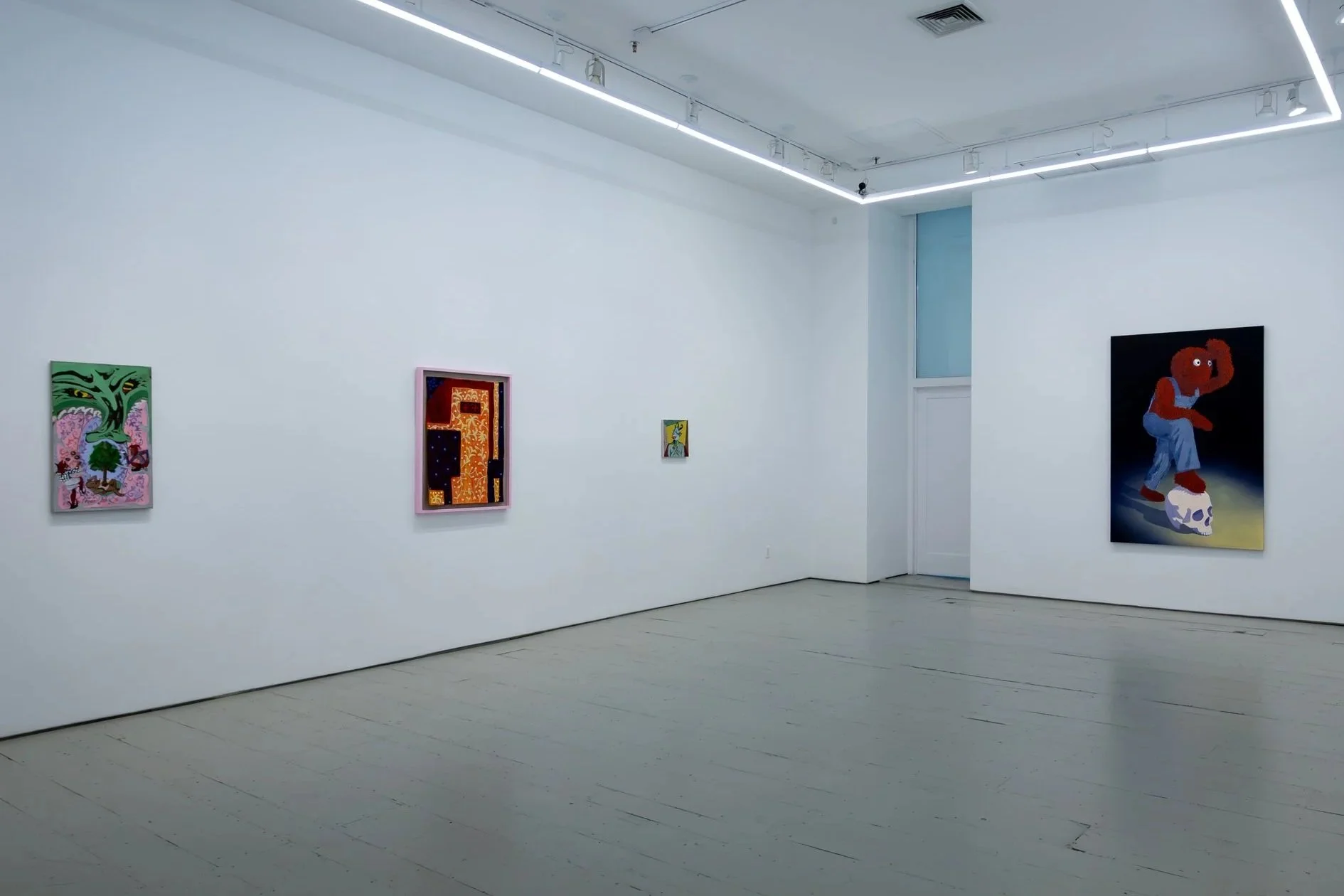
Another view of the *teks- exhibition with, from left, Chris Lloyd, Tamara Gonzales, Soheila Kayoud, and Alex Dodge.
Yeah. So you're taste-making.
Yeah, you're learning your taste.
...training your eye.
Exactly. And I do think that in any good gallery, you should be able to engage with the people working there. Ask questions, not necessarily from the point of view of a buyer, but just from the point of view of an interested viewer. Like, "What, what is motivating this artist?" or "How is this piece made?” “Where is the artist's studio?” “What is their background?"
All of these questions are totally legitimate things that any gallery should be really happy to explain because that's why we're here - to talk about and promote these artists.
Yes, to sell the work, but not 100%. That's not the only reason we're doing this - we're also doing it because we want people to know these artists.
One of the things that I didn't understand when I started collecting is what galleries do for artists that collectors may not be aware of, especially collectors like me, who didn’t grow up in the art world.
Well, it's a really important relationship between the gallery and the artist. In a lot of ways, we are partners and collaborators in the development of their practice and their career, and also in the development of the gallery program and the business of running the space.
So the artists that we have on our roster, which is… maybe that's even a bit of lingo there. We have a roster of about 20 artists that we represent which means that we work with them on a regular basis. In our space, it's about a two-year rotation. So if you're an artist that we work with, you can usually expect that every 2 years or so, we're going to want to do a new solo exhibition.
In addition to that, we're doing regular studio visits. Some artists in our program I talk to on a weekly basis. Some I talk to almost on a daily basis. Some I talk to every few months. It's different with every artist. But it is an ongoing relationship where I'm here to give advice. I ask them questions. I check in with them, see how they're doing in their studio. Sometimes I'm checking in to see how their family's doing.
It's a very close relationship, which is also based on trust, because we're working together.
In terms of what we do other than just sell their work, we give them the opportunity to develop shows here at the gallery. We also act as a sort of business liaison if they're given opportunities at other galleries… group shows or solo exhibitions in other cities with galleries that they might not know so well. We act as an intermediary to kind of handle a lot of the logistics and contracts and things like that for them.
So we're sort of like an administrative partner in that way too. We're also finding those opportunities. We have relationships with curators and collectors and other galleries, we go do art fairs, or we travel to other cities to see shows.
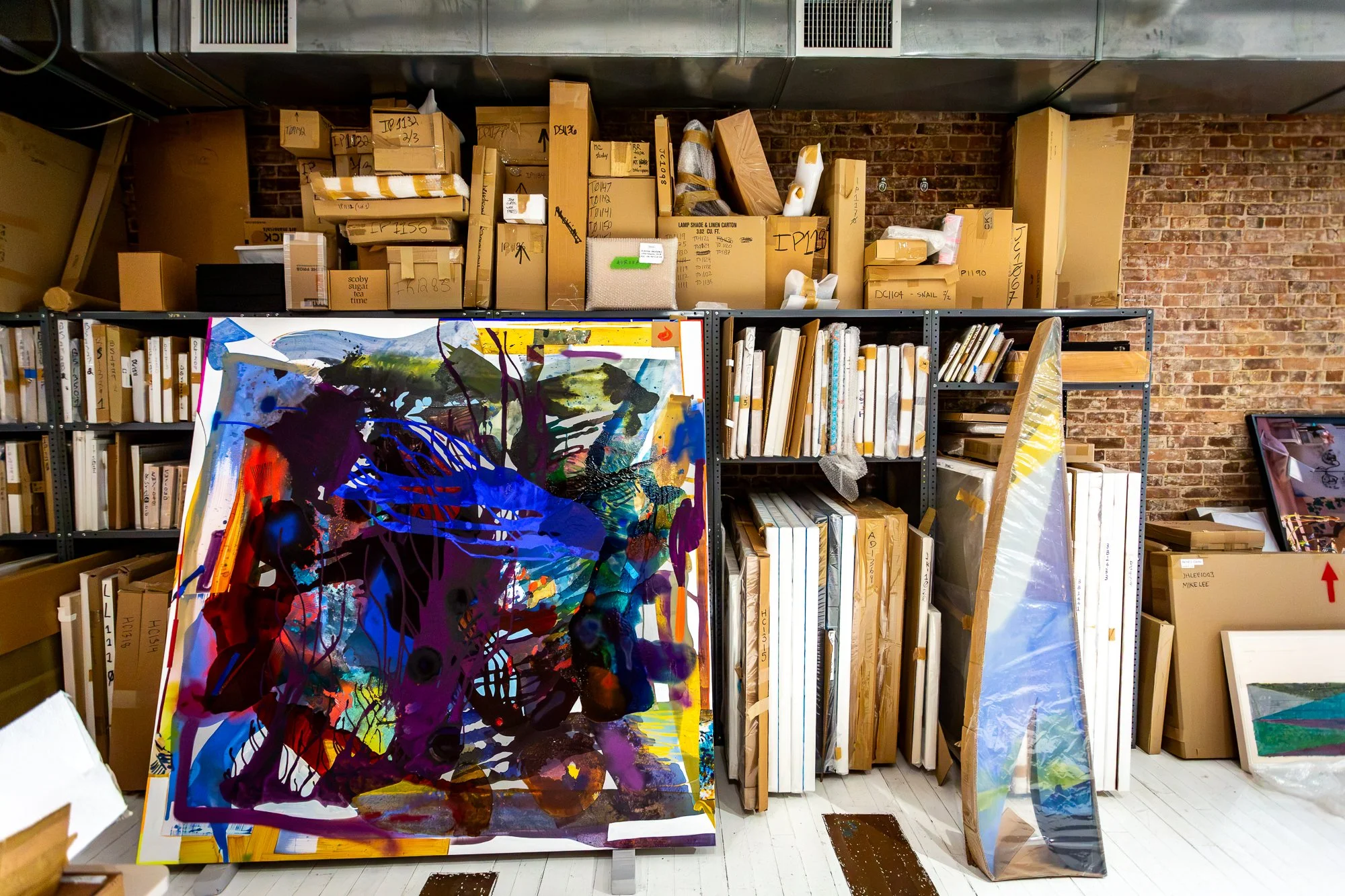
We also handle shipping and framing and all of those things, we have storage here… a lot of artists don't have room to store their work in their studio, so we can keep things here for them.
I had no idea. You are the... I don't know… “librarian” isn't the right word… but it's like a combination of PR, library catalog management, and understanding where the work is in the world…
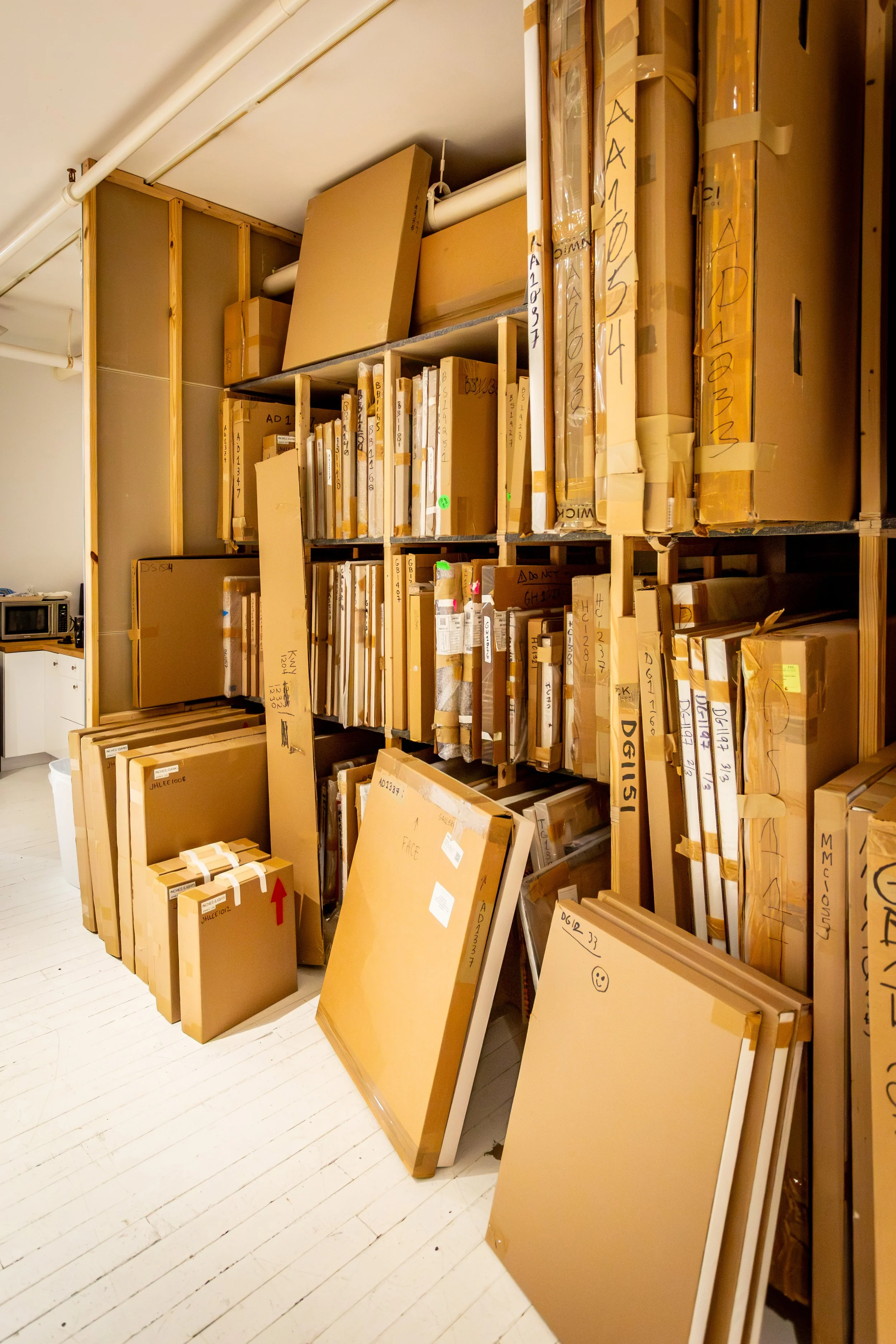
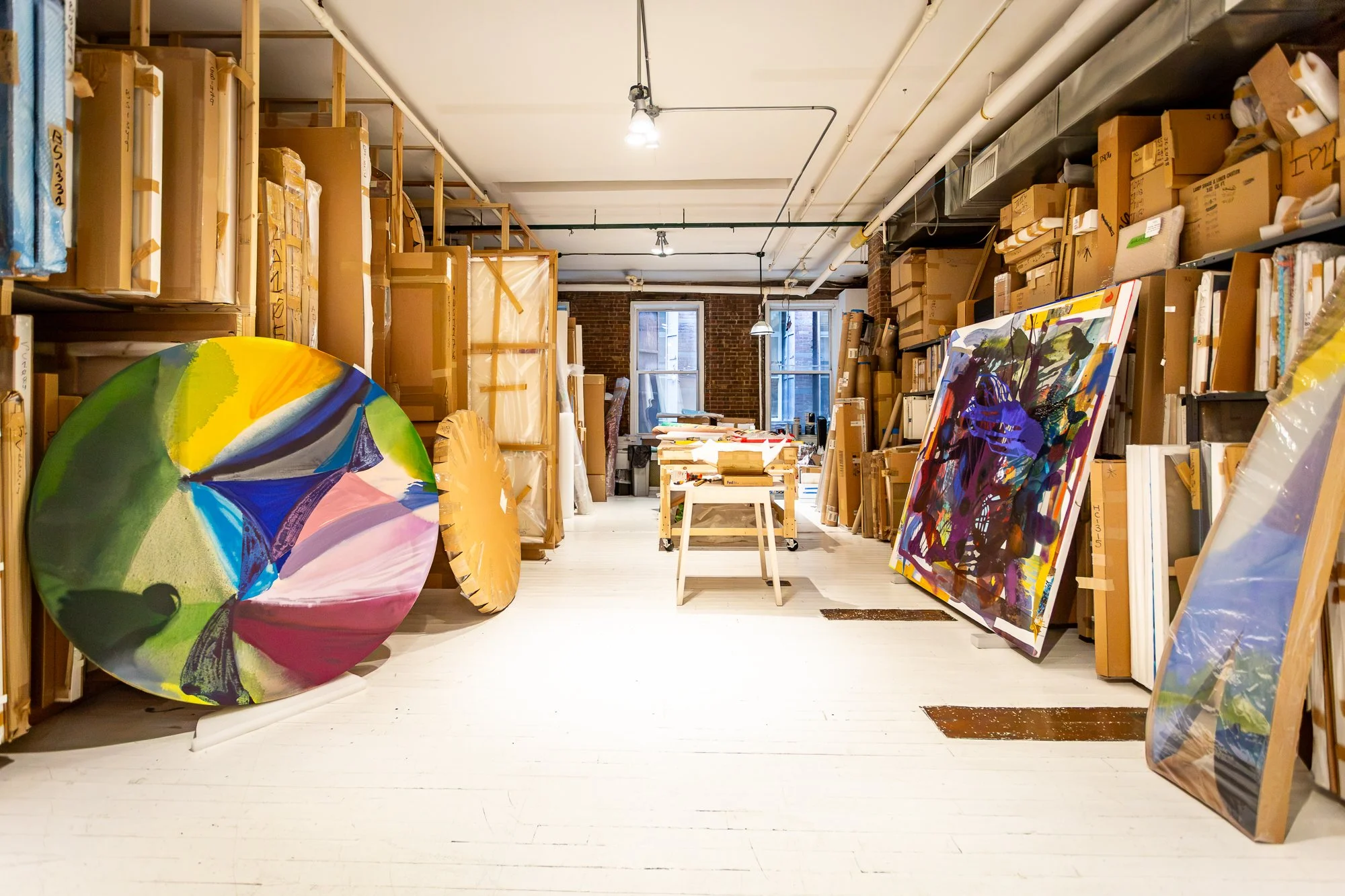
Scenes from the storage room where artists represented by the gallery can store off-display work, including work by Pamela Jorden and Erika Ranee.
Totally! That is one thing that we do. We track every piece that the artist makes. If it leaves their studio, it's in our database, whether it comes here to the gallery or it goes somewhere else and we try to have images of it. If there is a show at another space, we get the installation images for that show. Just the other day, one of my artists who was applying for a grant and said, "I can't find the images of my 2023 show at the gallery." And I was like, "Easy! Here's the folder."
We have a giant server that has every show that every artist has ever done here and elsewhere. We have all of their press clippings. We keep their bios up to date with shows that they've done and museum collections that they're in. It is sort of an administrative assistant because an artist can always contact us and say, like, "I need images of this piece." And we've got the high-res images, the detail images, the installation images. We keep track of the people who came to the shows. And if an artist is doing something really interesting somewhere, we'll do an email blast [to] help promote them in that way. We're sort of a repository for a lot of information.
And then on the flip side, what do you do for collectors?
We're a liaison between the artist and the collector. Collectors, likewise, can come to us and say, "Do you have high-res images of this piece?" "Do you have a copy of the invoice?” “Do you have the up-to-date bio for this artist?" "Can you give me an updated appraisal of the current retail value of works?" "Hey, have you talked to such-and-such artist recently? What are they up to?"
Or, "I need to tell my insurance company what's in my house."
We get that all the time. Just recently I had to liaise between a museum that wanted to show a work that was owned by a collector. The museum didn't know who owned the work, so they [came] to us and [asked] "Who owns this work? We'd like to borrow it."
And then I went to the collector and said, "Hey, this museum is interested in borrowing this piece. Would you be interested?" And then the collector was like, "Sure. I'm really busy. Can you fill out all the paperwork?"
So I'll do that.
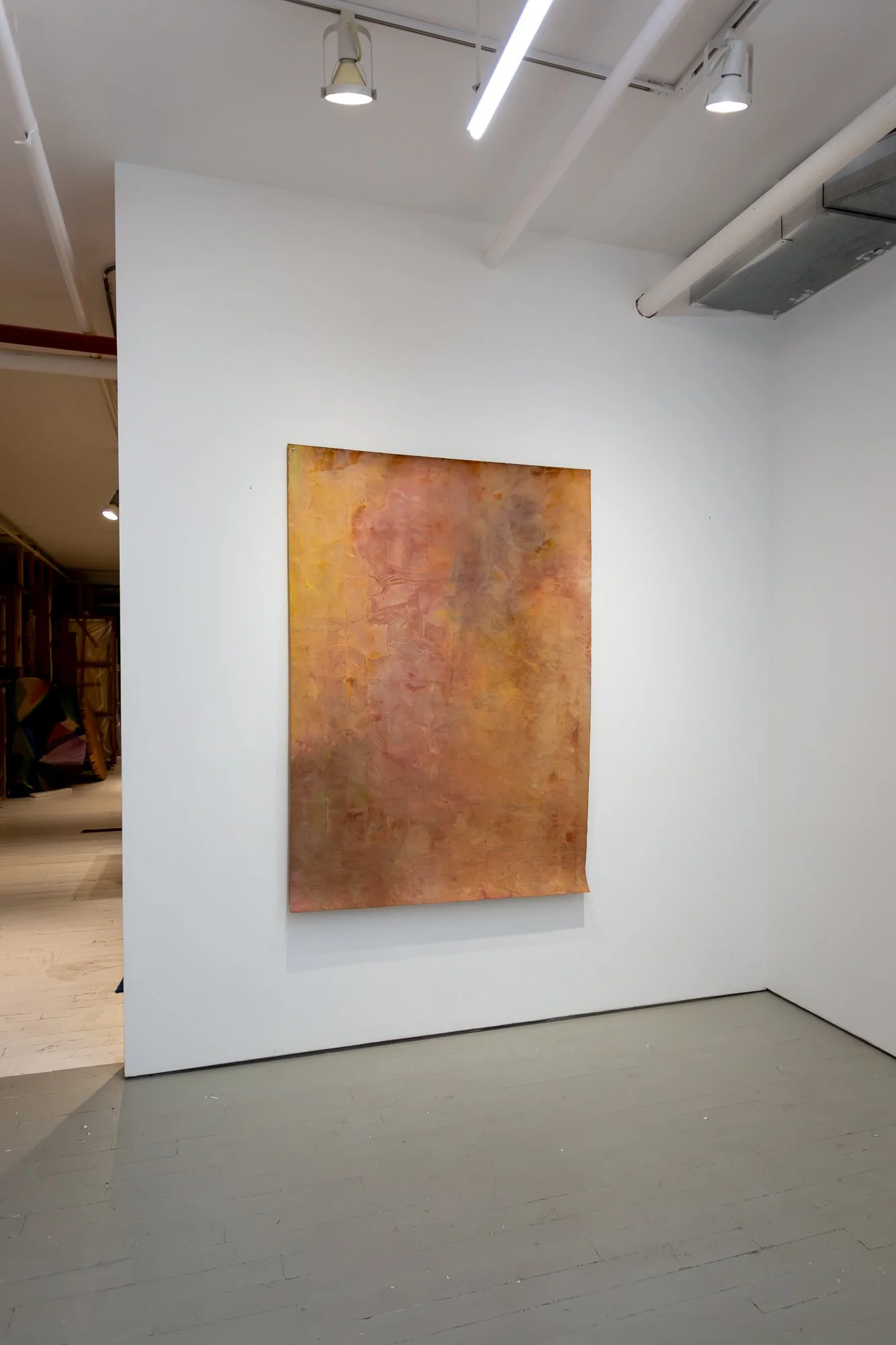
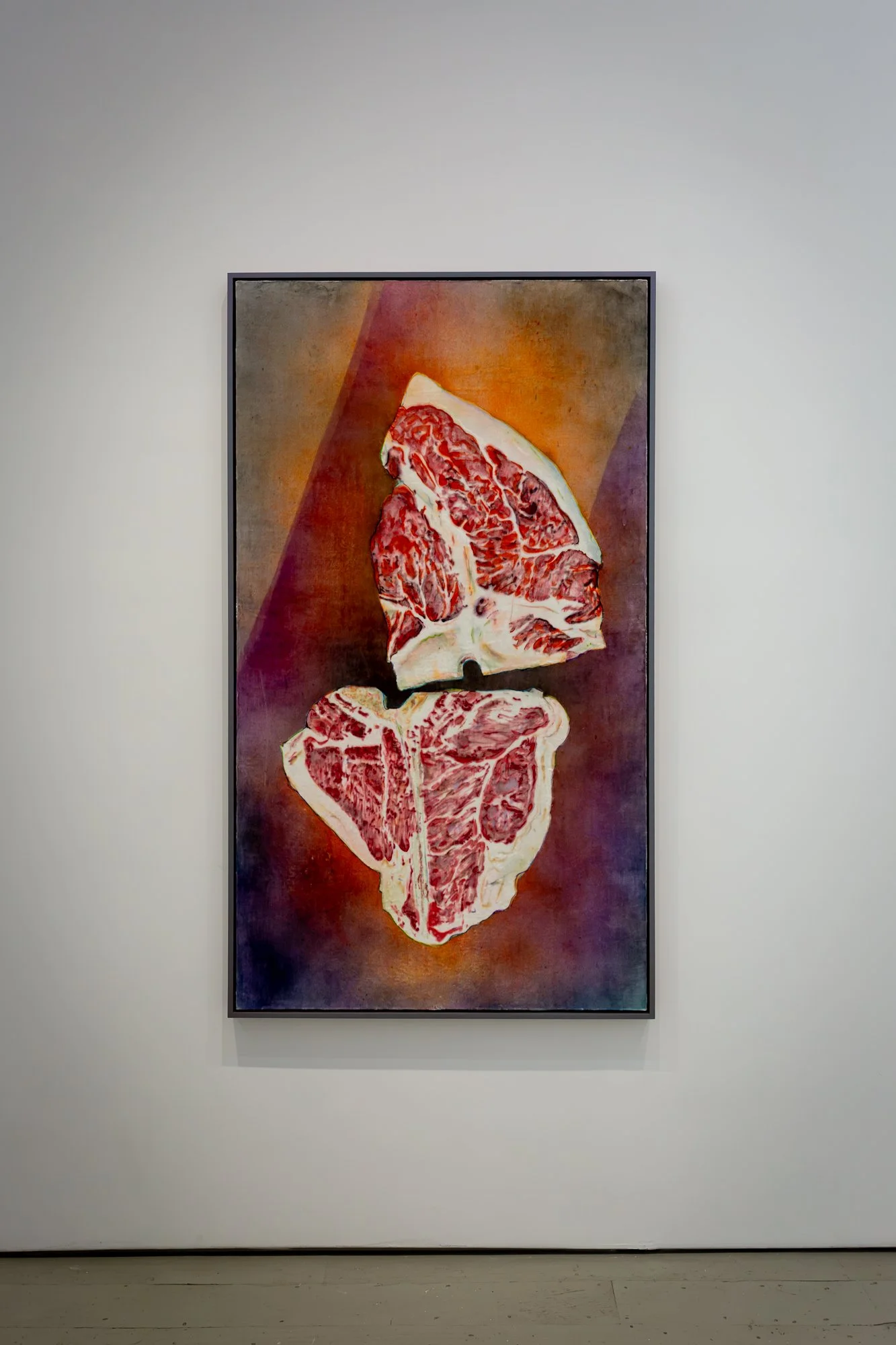
[Name] by Kemar Keanu Wynter
It's really interesting that even in this global, connected world, you go to these different places and you're like, "Wow, there's a thriving art scene here that is not what I'm seeing in New York." And I think that's a really cool, exciting thing about working with living, contemporary artists - you're literally seeing a culture built in real time.
And what about collectors? Is there anything exciting about the new generation of collectors?
I think it's cool that young collectors are interested in supporting the culture that they're living in. There was this mono media culture of the past, and now people can kind of pick and choose from this a la carte menu of where they get their news sources, where they get their entertainment. It seems like it was moving in this global direction… but I think it's actually moved into a very micro geographical, cultural space.
I know a lot of collectors who are really interested in supporting female artists specifically because they know that historically the canon has excluded women artists and they want to help correct that. So they're also similarly working in building the culture that they want to see and supporting the artists that they want to see be kind of canonized or uplifted.
I think it is really admirable that collectors, young collectors in particular, realize that they are not just buying something to hang on their wall or to live within their home, but they're helping pay the rent for an artist. They're helping develop their practice. They're helping them get broader recognition, get museum shows, things like that.
Like they get excited about the person as much as the collecting.
I didn't realize how office-y owning a gallery would be. Sounds like a lot of desk work. I always thought it was a lot of just talking and really forward-facing kind of stuff.
So.. what are you excited about with the current state of the art world?
There's something that [we were talking about in a previous conversation] that was about the regional ideas of artwork and how art is something that is still made up of infinite little ecosystems of artists in their communities making work. We were talking about Pamela Jorden who, as an abstract painter, in 2004 seemed like a bit of an outlier in the Los Angeles art world because she was doing something that other artists in that scene weren't doing, painting. But then her practice grew and matured. Over 20 years she kind of became an emblematic painter of the LA art scene.
I feel like when we started working with her, people thought, "Oh, it's so interesting, this abstract painter in Los Angeles. That's unusual. That's such a New York thing!" And then over time she's really known as an LA painter. And I think that's really interesting because artists are creating the world around them.
It sounds really cheesy, but they're creating the future of what people think of when they think of a particular time period or a particular geography. They're building on what's come before, but they're really creating what people are going to think of. You think of the '60s and you think of pop artists and Andy Warhol and all of that, but that wasn't necessarily what people were thinking of when they were doing it.
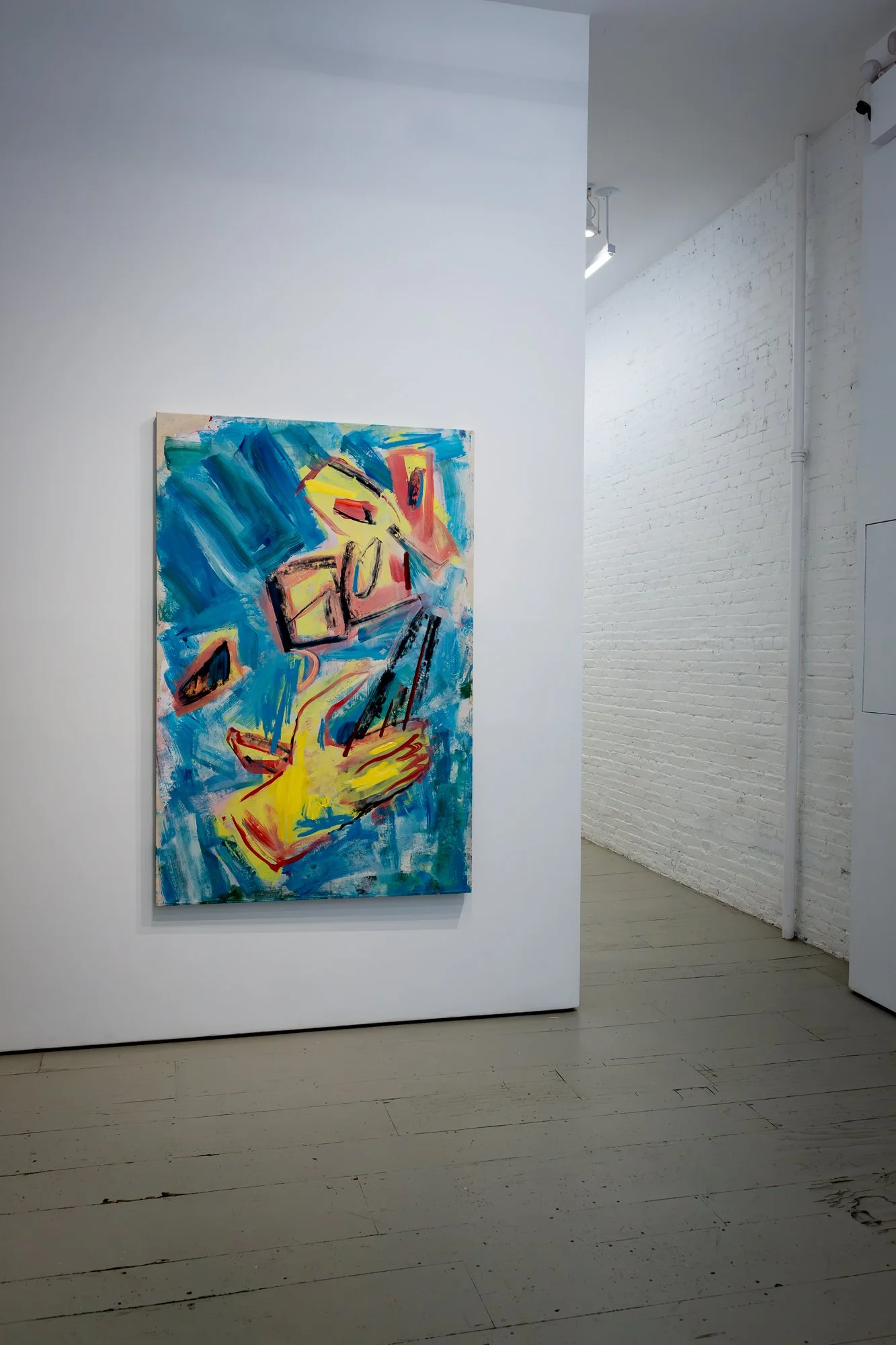
Meme 7 by Adam Stephen Novak
When people ask me, "What do you collect?" I say, "I'm collecting the stories behind [the art]." Do you feel like that's something that has come into play a little bit more?
I think that's always been the history of art. Yes, you're looking at an object or any artwork. You're looking at a visual experience, and that's the first read and I think that's a really important read. I think people have to be drawn to what they're looking at.
[But] in the same way that artists are asking questions and trying to find answers in their studios. I think collectors and viewers are also asking questions like, "What's going on here?" “Can you tell me more about this?" And that's where the story gets to be really important and additive.
That curiosity.
So the storytelling is incredibly important because it just enriches the experience.
And it means that if you live with a piece at home, you're not just living with a picture. Every time you look at it, you're thinking about that story.
You're thinking about that artist. You're thinking about their life.
If you had kind of one final piece of advice for collectors who want to start engaging with galleries but are intimidated, what would you tell them?
Don't let it stop you from going to galleries. You should just go!
You can walk in and out of [galleries] completely anonymously. There's no barrier to entry. They're free. There's a sign-in book at the front and you don't have to sign it if you don't want to. So that's number one. Just go to galleries… look at the work. You're not gonna regret it! You're gonna be happy that you're seeing things.
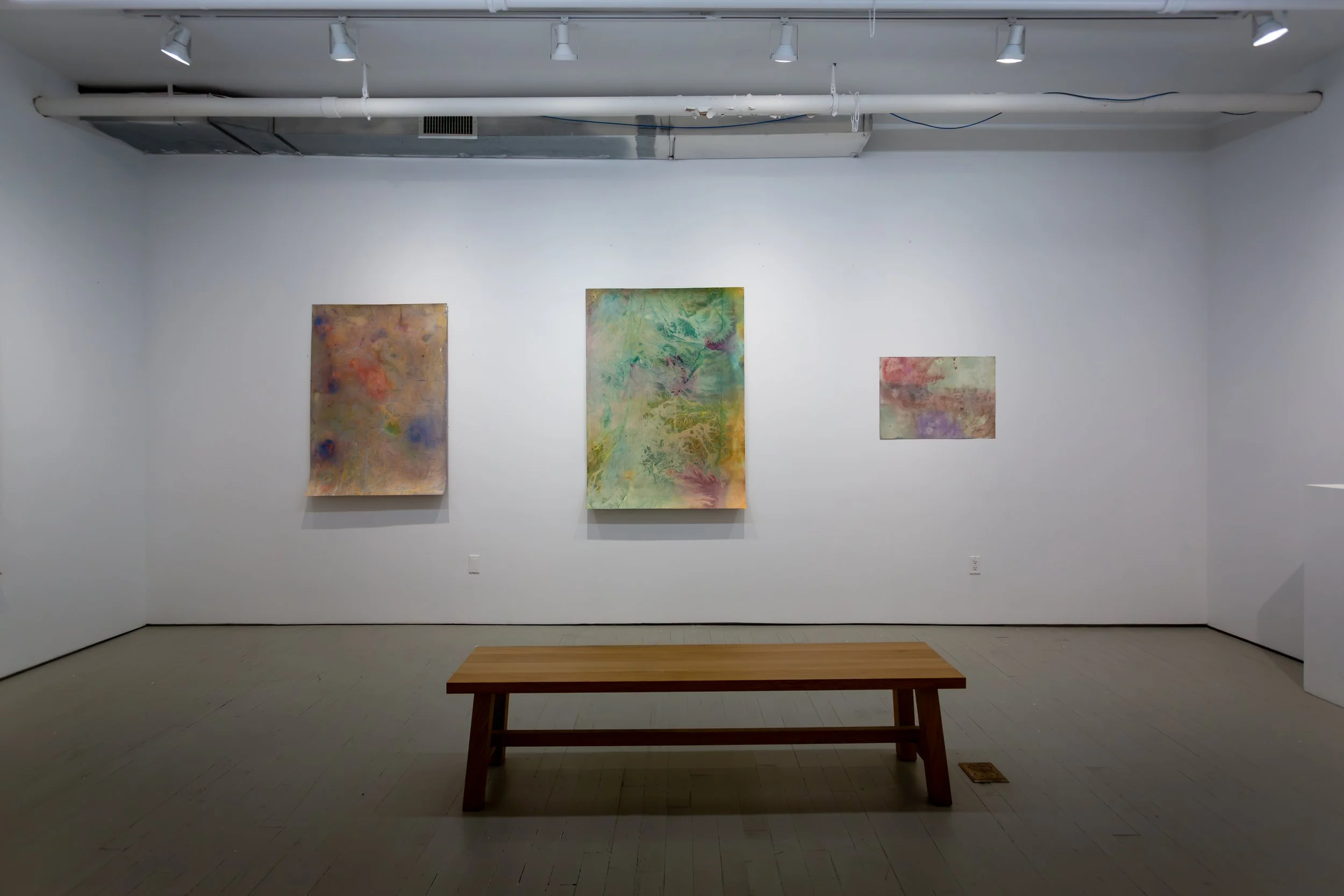
Three pieces from the Rücken- series by Kemar Keanu Wynter in the downstairs viewing room at Klaus von Nichtssagend Gallery.
This interview has been edited for clarity and length.
Elizabeth Royal conducted the interview and took the photographs August 2026.
Thank you to Sam Wilson and for his time, candor, and advice and for Klaus Von Nichtssagend for welcoming me into their space.