

Collecting Stories
Miss […]ubbs… or How I Learned to Stop Worrying and Love the Unknown
English
When Miss Ubbs came home for the first time, she was lying flat in the bed of an old, red rusted Ford F-150 that we stored in our back yard and used as a mobile dumpster for renovation refuse.
It was a ten-minute drive through Detroit—ten minutes that felt interminable. Anyone who knows Mack Ave knows that road is not kind to old trucks, nor to fragile eighteenth-century portraits with gilt and plaster frames and centuries of history clinging to their surfaces. At the time, though, none of that history was fully known. What was known was simpler: she had a face that felt kind, familiar, and impossible to leave behind.
Miss Ubbs was the first “big girl” artwork I ever owned. She wasn’t décor or something chosen to match a couch. She was my first real act of collecting.
The painting came with rough provenance. I had been told it came from the estate of a collector in the Hamptons but with ties to Detroit, where we were living at the time. Before that, she’d been stored in a church near my house, sitting in a room so cavernous that I completely misjudged her scale. It wasn’t until she arrived in our home that I realized just how much space she demanded both physically and emotionally.
We rearranged the entire room around her.
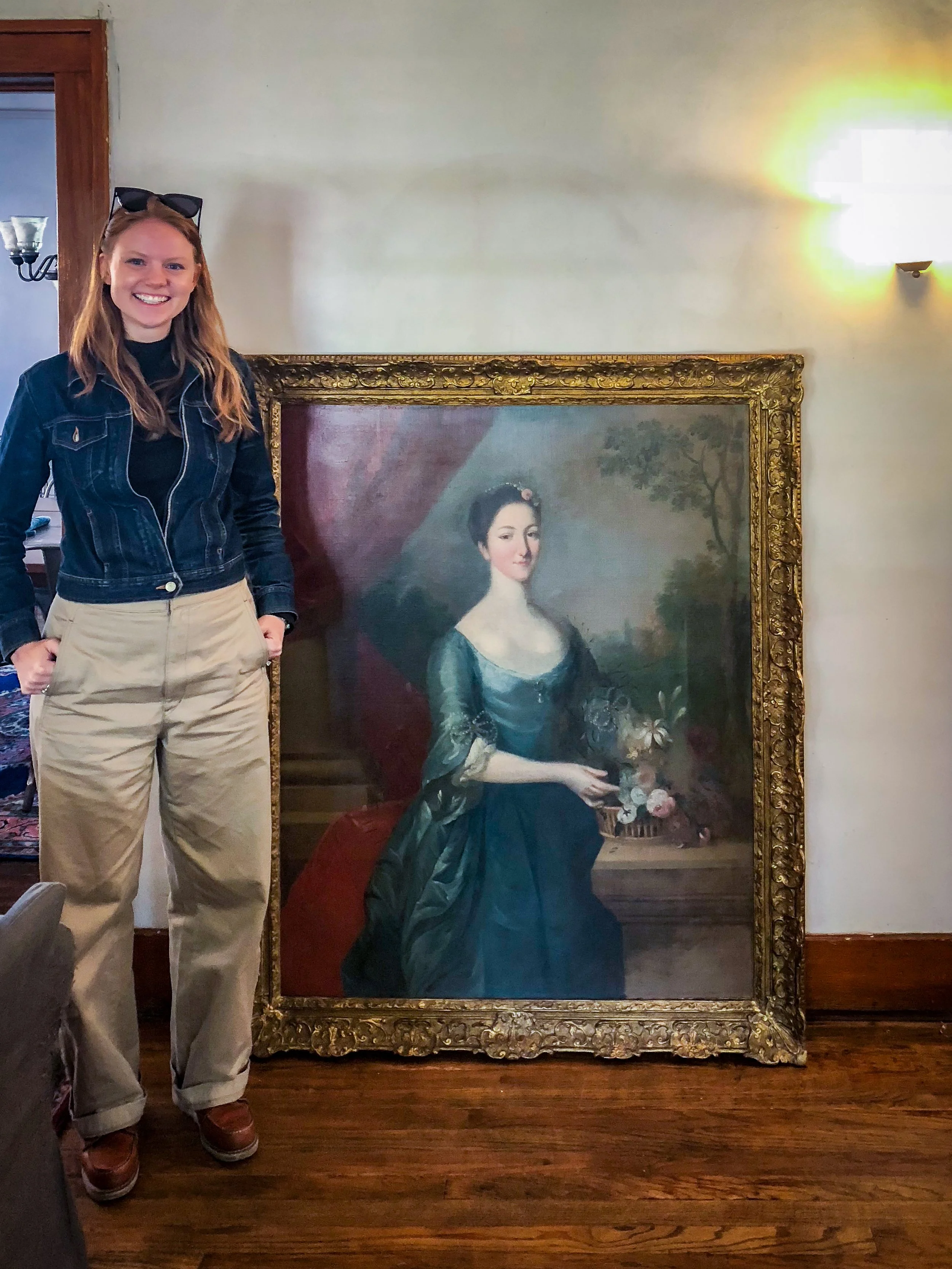
Miss Stubbs arrives at our home in Detroit.
At the time, spending a thousand dollars on art felt extravagant, maybe even irresponsible. I was working as a college administrator and my husband is in the trades. But suddenly this painting was on our wall, and something clicked. I realized that with research and planning and a little reworking of our budget, being an art collector was possible. Collecting wasn’t reserved for people with trust funds and art advisors. Mere mortals like me could play in the arena, too. And we quickly learned that original art didn’t just decorate a space - it made it feel alive.
Looking back now, it’s probably good that I didn’t know much about art collecting at the time. If I had, I might have walked away. It’s not a piece that I would ever buy now - it has significant damage: overpainting, loss, poorly executed repairs. Her survival is uneven. Her face is miraculously intact but everything else looks like it went a few rounds with history and lost. Her frame, a stunning period-original gilt and plaster piece with the best patina, may well be worth more than the painting itself.
As a practice of collecting, I keep meticulous files on every artwork I own—records, correspondence, research, provenance. This piece’s file was nearly empty, but it did come with just enough information glued to the frame to give the piece a name. The sitter’s name was missing its first two letters, leaving us with “Miss […]ubbs.”
For years, that was enough. I liked her. She lived with us. That counted for something.
But eventually curiosity won.
She was sentimental. She was first. And unlike many of my other unknown works, she had clues flaking off the back of her frame. So I did what any reasonable person does when facing an art-historical mystery: I went to Reddit and what followed was astonishing.
A group of deeply committed amateur and professional researchers took up the challenge with enthusiasm bordering on joy. A redditor participating in the thread suggested that “Ubbs” might actually be “Stubbs.” That single guess unlocked decades of history.
Suddenly, there she was: Miss Stubbs, listed in a Sotheby’s London auction catalog. January 29, 1925. Lot 133. Sold as “School of Gainsborough.” The catalog description matched - right down to the formatting - the fragment pasted to the back of the painting. When the label had been cut down and glued on, it had neatly removed the words “School of.”
A small snip. A very big implication.
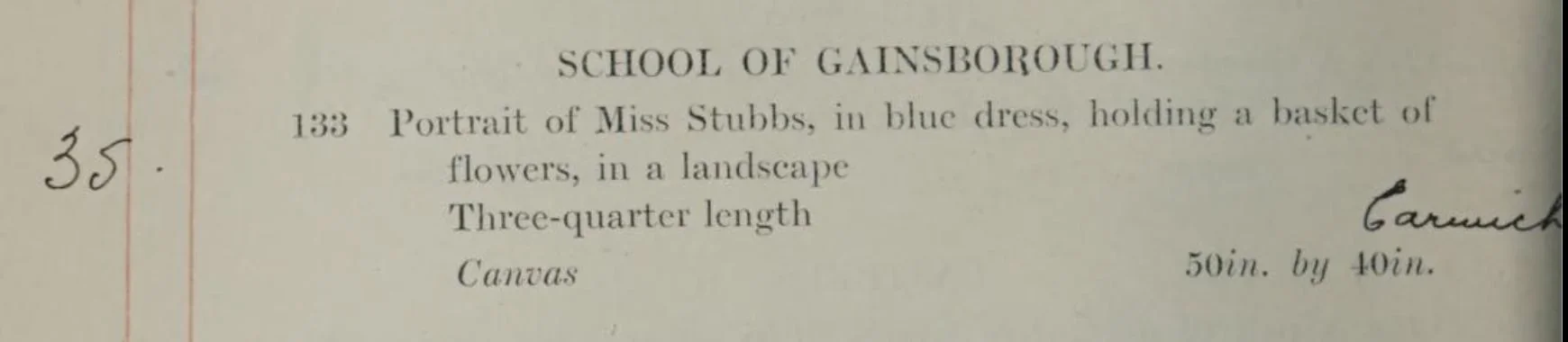
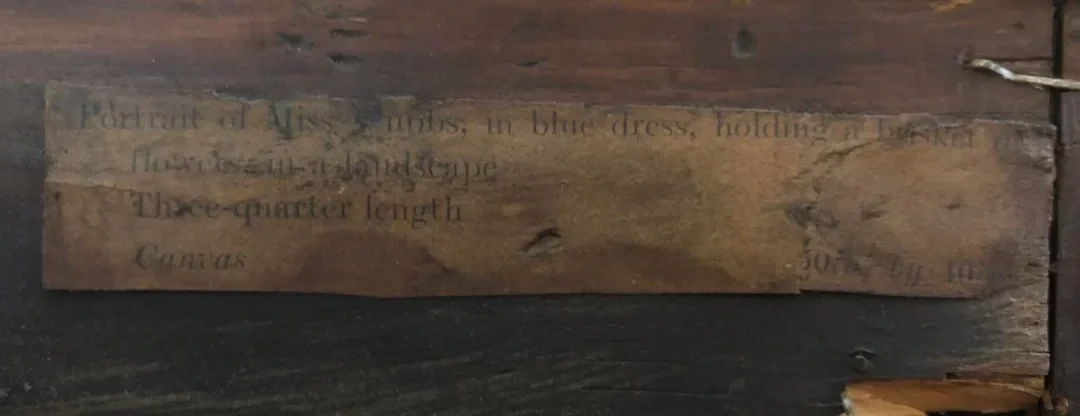
Scan of the Sotheby’s catalog compared to the tag pasted on the back of the frame.
She sold for 35 pounds, which is the equivalent of around $3,400 USD today.
For fourteen years, her history goes quiet, but investigators on the thread found a newspaper clipping and her trail resurfaces in 1941. The portrait of Miss Stubbs was hanging at the Rothschild Galleries in New Orleans, displayed not as “school of” but as an actual Thomas Gainsborough. Newspaper reviews from the time describe her in glowing terms, exhibited among Old Masters “from private collections in Europe.”
The shift from cautious attribution to confident assertion is one of the most fascinating parts of her story. Was this art fraud? A deliberate misattribution designed to inflate value while everyone politely looked the other way? Or was it something softer and more human—optimism, wishful thinking, a game of art-history telephone?
It’s worth considering the collecting climate in that era. At the time, Gainsborough was deeply in vogue. Attaching his name to a painting increased its desirability, and sometimes, desirability was enough. As one prominent Gainsborough scholar, Hugh Belsey, MBE, later explained to me via email, attribution standards were looser then, and market trends often shaped how works were presented. A narrative could elevate a painting’s status… and its price.
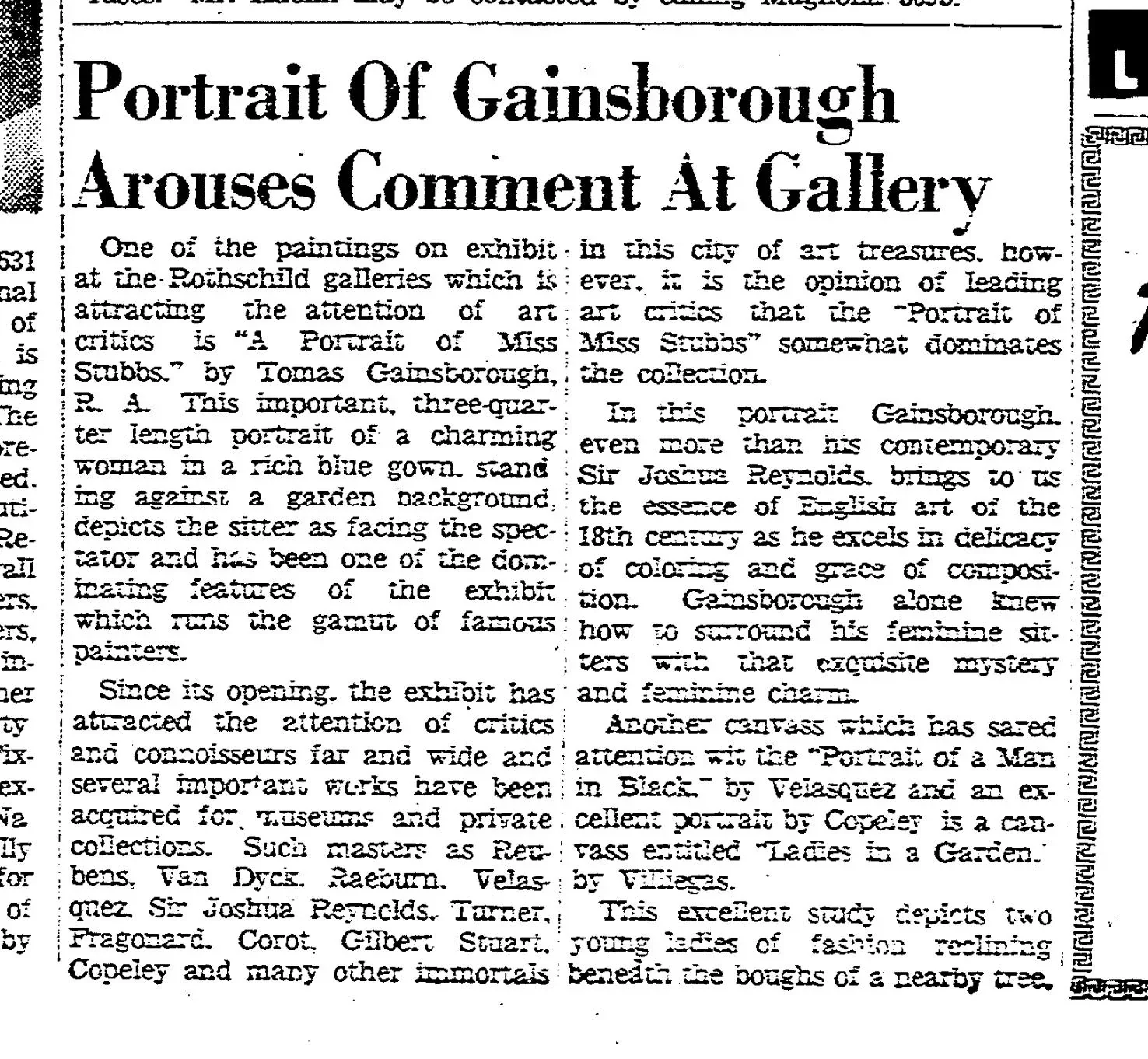
Newspaper article from 1941 attributing Miss Stubbs to Gainsborough.
Belsey explained to me that “The market for Gainsborough's works became very overheated from about 1900 until the great financial crash in the 1930s. A great many pictures were sent across the Atlantic by dealers and auctioneers that had ambitious attributions attached to them, no doubt this was in some cases fueled by greed as well as ignorance.”
By 1949, Miss Stubbs was sold again, this time outright as a Gainsborough, as part of a major California auction (1,2). She was noted as having belonged to the collection of Samuel P. Hosegood and was included in what newspapers described as a yet another “notable collection of paintings,” sold to partition assets among heirs of a prominent family. The sale was handled by the Curtis Gallery and Library in Pasadena, and the surrounding lots included works with impeccable pedigrees, some tracing back to the Huntington estate.

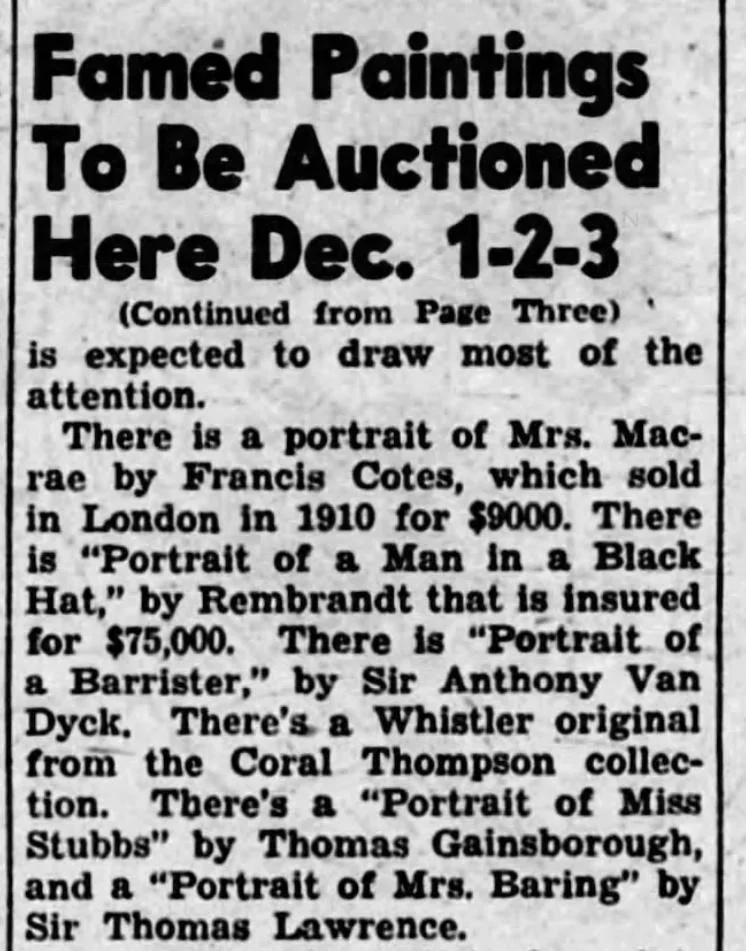
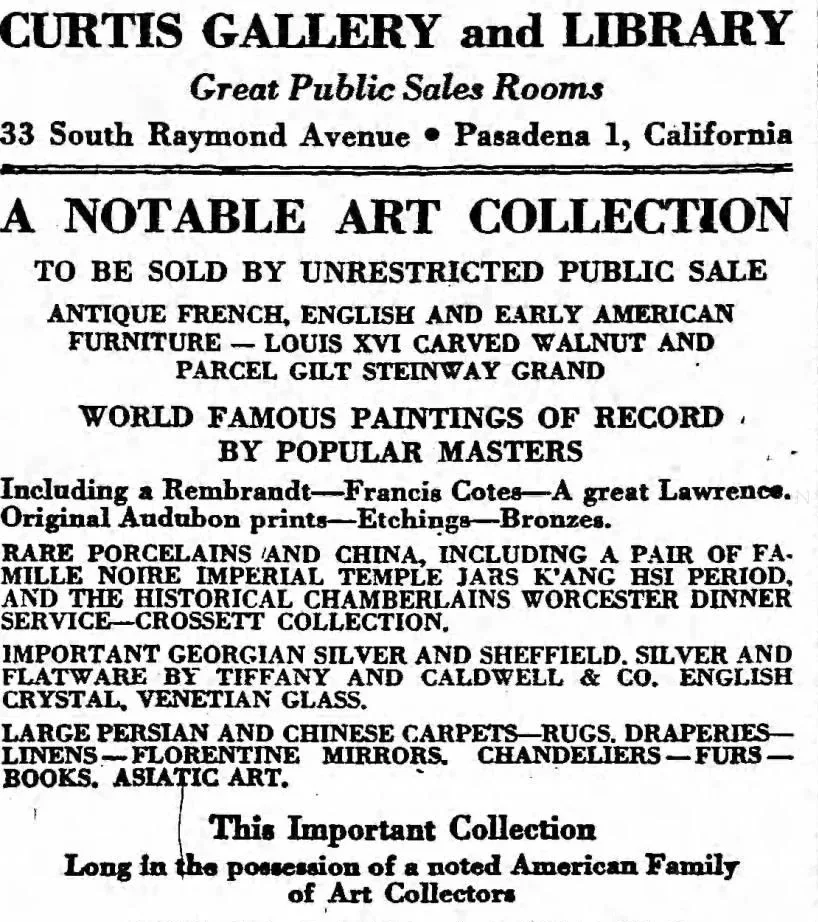
Articles and clippings advertising the sale of Miss Stubbs at a 1949 auction.
Miss Stubbs was moving in serious company.
At some point after that, her trail grows cold. She was badly damaged. When, how, and by whom remains unclear. Eventually, she ended up in a private estate, then a church, and finally, improbably, in the back of a pickup truck in Detroit.
Her story is incomplete. We still don’t know who the sitter truly was. We don’t know with certainty who painted her. There is a gap between her time in prominent collections and her reemergence into my life.
But perhaps that uncertainty is part of her appeal. Belsey confirmed that Miss Stubbs is not a Gainsborough, so her painter still remains a mystery.
People often think of historical art as an investment lottery… as if every old painting might secretly be a masterpiece waiting to make someone rich. In reality, that’s the exception, not the rule.

Record of sale listed in a record of sale prices held in the collection of the Boston Public Library listing Earwicker as purchaser.
What pieces like Miss Stubbs offer instead is something else: participation in the long arc of art history. These works may be out of fashion, undervalued, or unfixed in their attributions, but they are not meaningless. They are often very affordable and their value comes, in part, from being chosen again by each new collector who decides they matter. As they pass from hand to hand, their story builds, both for the collector and the work. Collecting them isn’t about striking it rich. It’s about saying, I see this. I care about it. I’ll take it from here.
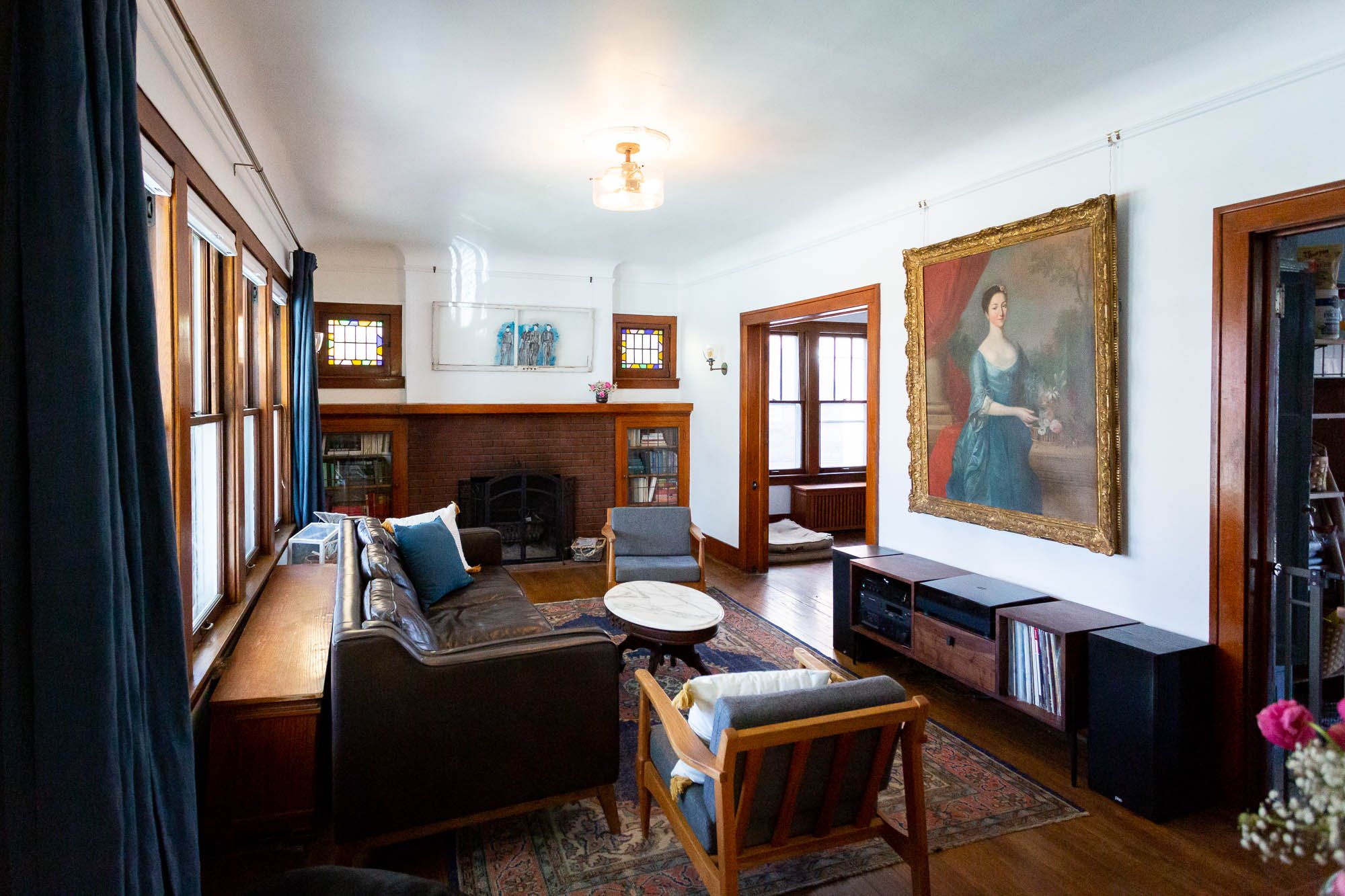
She hangs in our dining room, in a place of honor. My sister calls her “the patron saint of the house,” which feels exactly right. Someday, I hope to have her better restored even though it won’t increase her value. It’s simply because she deserves care and attention.
Miss Ubbs was my beginning. And like many beginnings, it was imperfect, mysterious, and far richer than she first appeared.
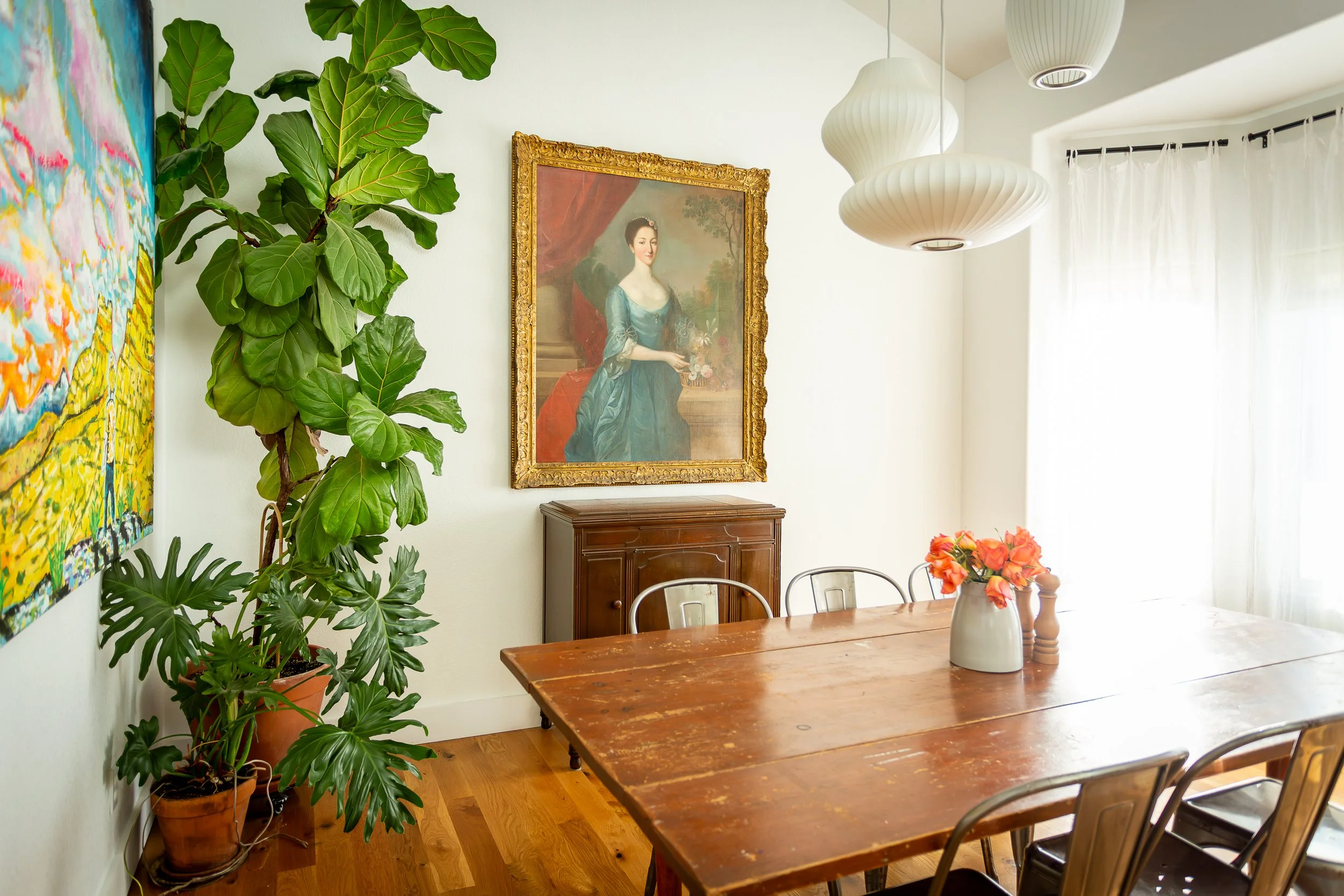
The Portrait of Miss Stubbs hanging in our dining room in Colorado.
This story was written by Elizabeth Royal in January 2026. Thank you to the art research community of Reddit and Hugh Belsey, MBE, who graciously agreed that our email correspondence could be included.