


Museum Visit
Octopus Initiative: inside The MCA Denver’s art lending program
English
I didn’t find the Octopus Initiative online, or through a press release, or even by recommendation. I walked straight into it. Tucked inside MCA Denver, it feels like a space where the usual rules of museum-going don’t quite apply. The Octopus Initiative is an art lending library that places museum-quality contemporary art into private homes, expanding access and creating new pathways into art collecting. By moving work beyond the gallery and into everyday life, the program reframes how people engage with contemporary art and what it means to become a collector. I sat down with Rebecca Gates, MCA Denver’s Exhibitions Coordinator, Registrar, and Collections Manager, to talk about the program’s curatorial vision, its role in accessible art collecting, and how living with art can shape both perspective and wellbeing.
Elizabeth Royal: I discovered the Octopus Initiative by...walking into it. It's a section of the MCA Denver that you can go into and as someone who is a museum frequent flier, the concept took me a little off guard. It's a pretty unusual thing to walk into an art museum and be able to leave with a piece of art. Can you tell me a little bit more about the curatorial goals behind the art lending library approach that puts museum-quality work into private homes?
Rebecca Gates: The program originated under former MCA Director, Adam Lerner in 2018. The idea has always been about finding a way to support local artists, while also making artworks more accessible to the average person. Many people find out about Octopus, much like you did, by finding it in person at the museum, but you don’t have to be a museum member or even visitor to interact with the collection. The whole process, with the exception of picking up the artwork if you win, is available on our website, and open to anyone with a zip code in the Denver and surrounding counties. We do a winners survey after each lottery, and while 50% of participants find the collection while visiting MCA, another 35% find it from the website alone.
I know the MCA Denver isn't a collecting museum, which is something I find really special because every exhibition there is ephemeral. There's an alchemy to it... and the exhibitions are time-specific visual conversations around ideas, people, time and place. In what way does the Octopus Initiative align with MCA Denver's broader strategy??
While we say we are a non-collecting institution, and for the most part that is true, we have a few exceptions in addition to the Octopus Initiative. The most obvious example is the LED heart and dagger sculpture, Toxic Schizophrenia / Hyper Version, by Tim Noble and Sue Webster, in front of our building. It’s pretty iconic for us, you can’t miss it when you visit MCA, and we’ve had versions of it on merch like stickers, buttons, and temporary tattoos since the Fries building opened in 2007.
So the Octopus Initiative fits in as one of the several exceptions to the rule, but it also leans heavily into some of our values, namely being Adventurous and Human-Centric. Adventurous in trying this new idea of lending art to the people in our community, and continually renewing and revitalizing it, even when challenges like the pandemic almost put an end to it. And at the end of the day it’s really all about our artists, and our visitors and giving something tangible though temporary to people who love art, just like we do.
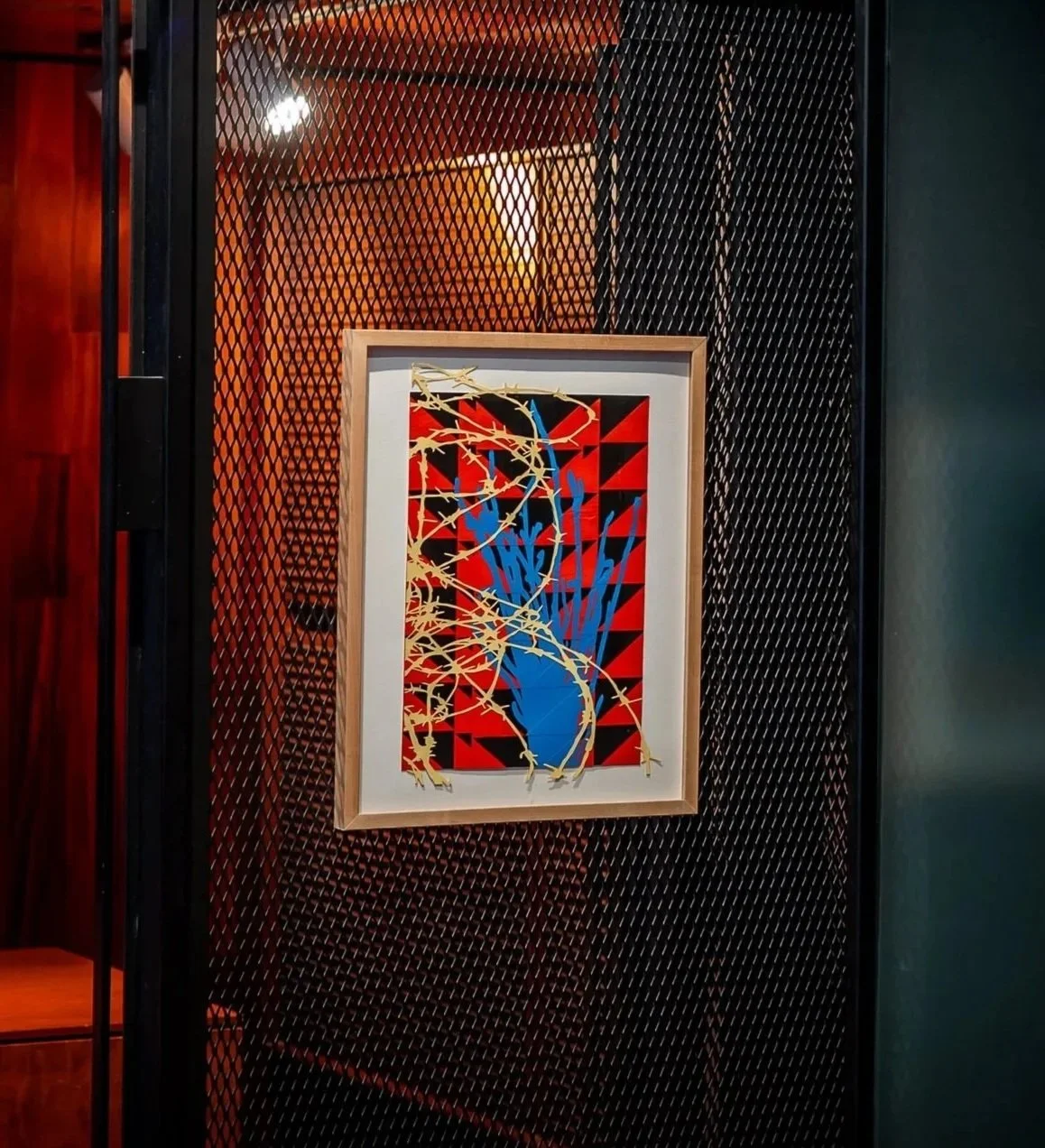
Frontera No. 6 by Jaime Carrejo
Out of curiosity, what kind of person usually participates in this program? How do you think participating in a program like this influences someone's understanding of collecting contemporary art?
Using statistics from our winner’s survey, slightly more women than men participate, and we are pretty in line with the overall ethnicity breakdown of Denver’s metro area. The largest age range of participants at 44% is ages 26-35. This is the age range when people start getting serious about their own spaces. They’re out of the dorms, maybe out of their parents homes, and they are building something of their own. The program is meant to give them the chance to have something unique and authentic in their homes, which hopefully make them realize that they can and want to have more of that, and then start to go out and get it.
Do you have any memorable stories you can share about how a piece loaned through the Octopus Initiative impacted someone's life or perspective on art?
As I mentioned, a lot of people reach out about buying the artworks at the end of the loan, and others just to say how wonderful the loan was and how sad they are to return them. It is hard, people get attached to seeing the artworks every day, but I will usually see these same people on the website hearting artworks for the next lottery.
I have a lot of conversations with people who want to collect - that’s actually what made me want to start Art Rookie. I was having conversations over and over telling people to just get out there and start asking questions, ask for prices, train your eye, and tell galleries up front that you’ve never done this before and maybe need some advice or coaching. But I understand the hesitation - for a long time I felt like I was just elbowing my way into these spaces and I dealt with a considerable amount of imposter syndrome. What advice would you give to collectors who want to start acquiring contemporary work outside of the initiative?
Denver’s amazing for its First Fridays (there were at least five different neighborhoods hosting open galleries and art events last summer) and we’ve got art fairs and markets happening all year round, so there are many ways to simply go out there and start seeing art. That’s really the first step to collecting. And buy what speaks to you. Buy something you’re going to want to see each day. There are so many artists out there at every level that make beautiful, meaningful works of art. Just get out there and start seeing, and when something strikes you, go for it.
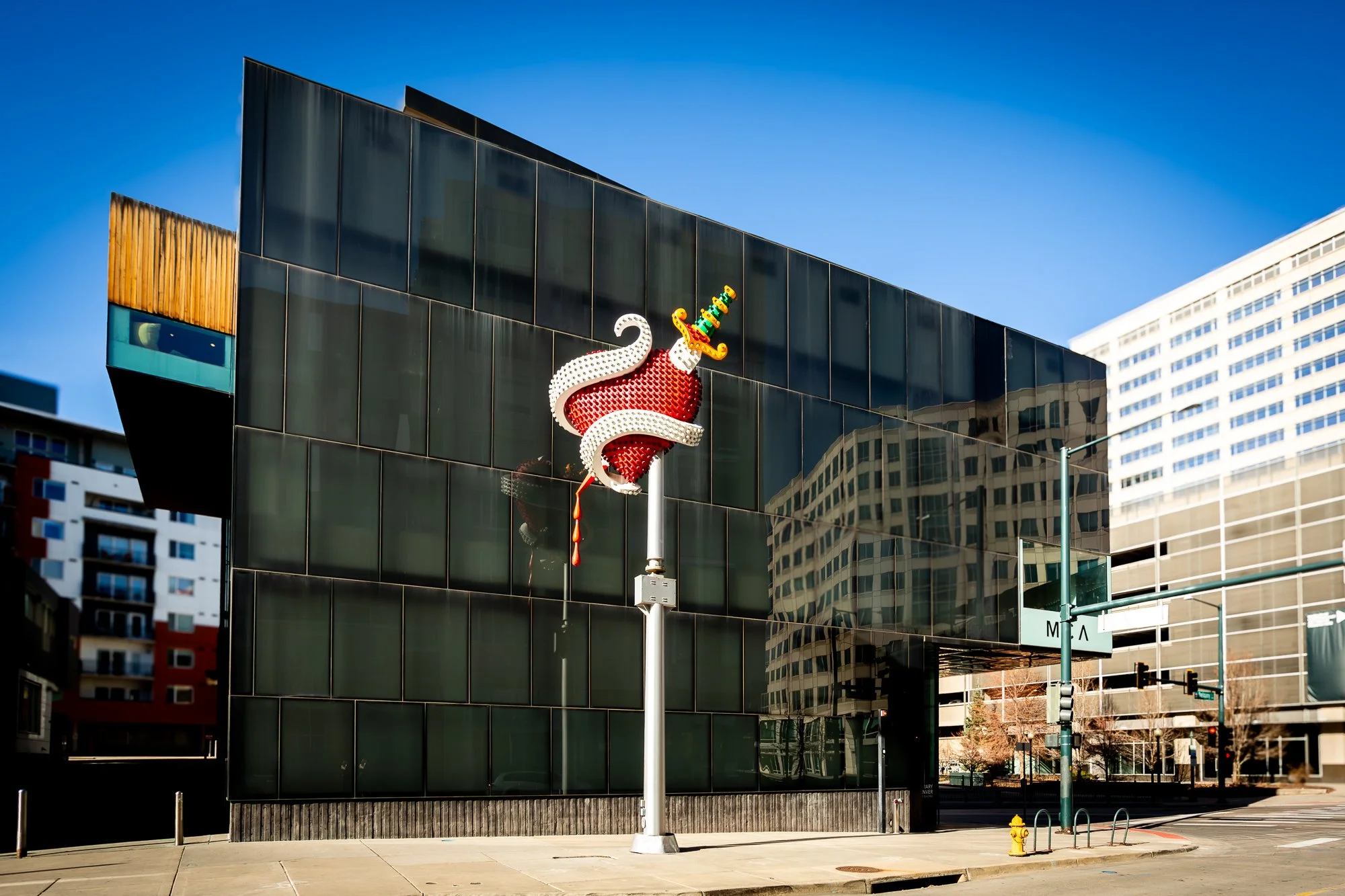
Toxic Schizophrenia / Hyper Version by Tim Noble and Sue Webster stands in front of The MCA Denver
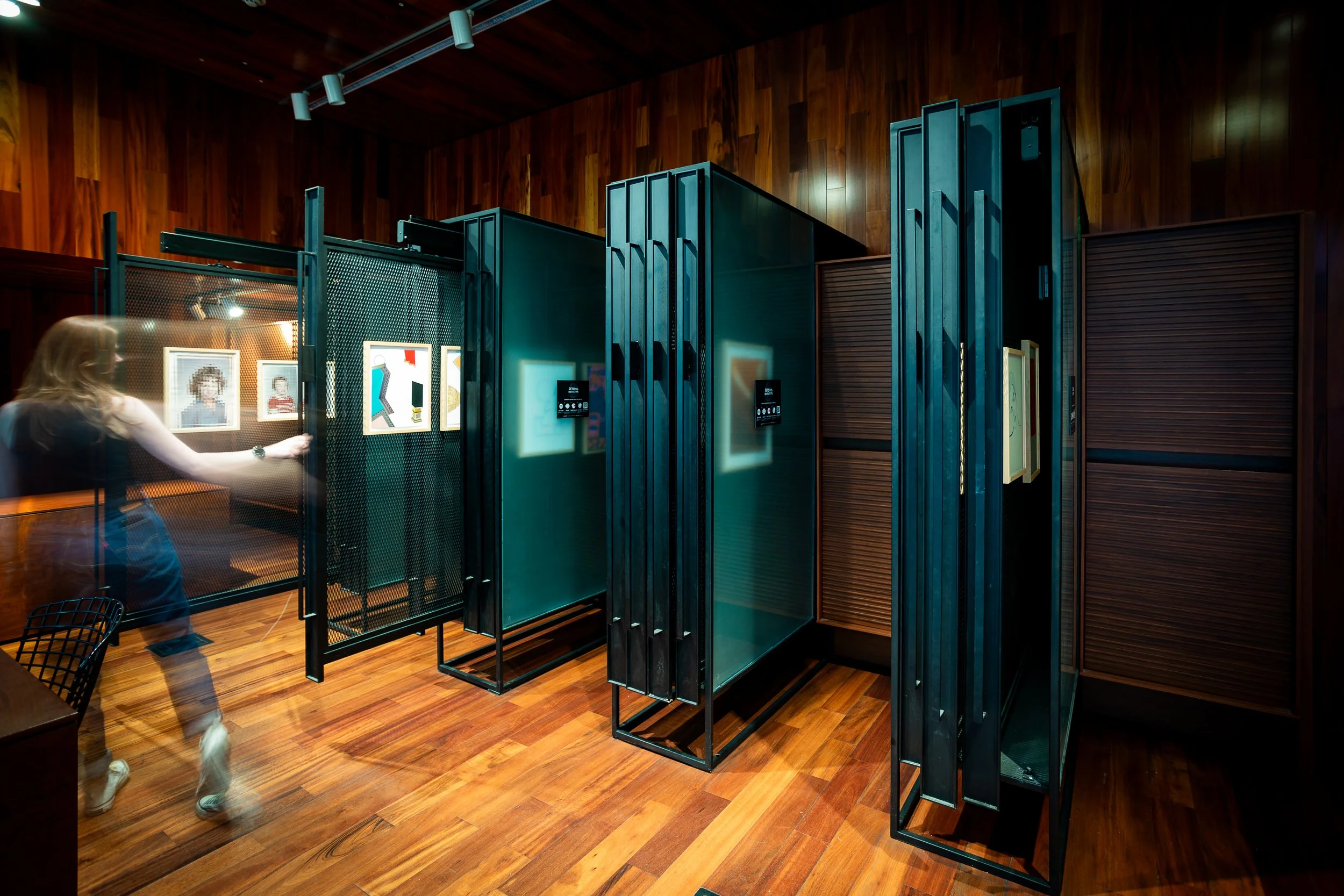
To view the art in the Octopus Initiative Library, visitors must pull sliding storage racks. The space is designed to get viewers and potential borrowers close to the pieces.
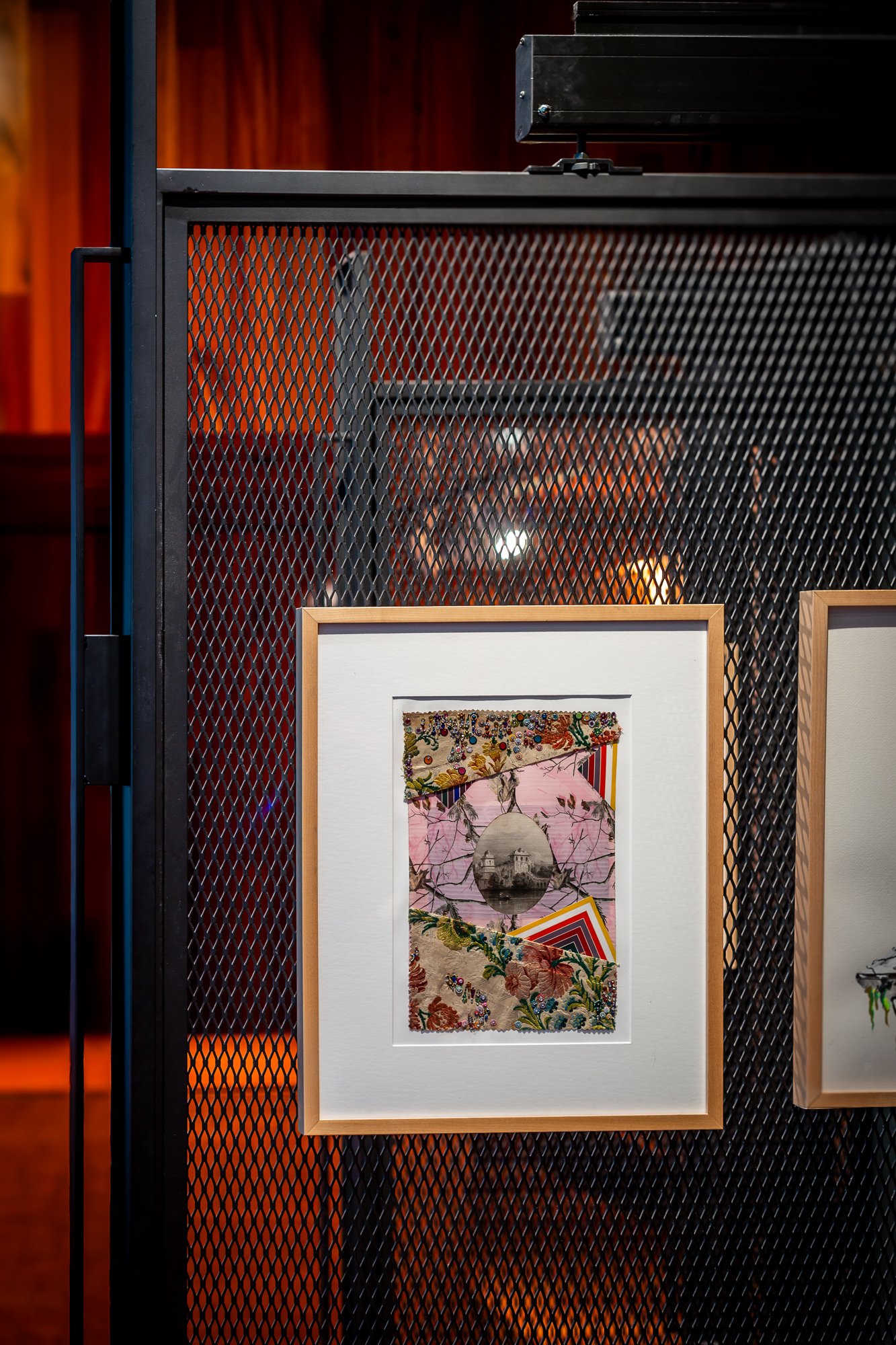
Bound III by Suchitra Mattai
I’ve come to understand that most art out there is a “tangible though temporary” experience. A few years ago, I started to think of art, especially art in galleries and museums, as something a bit like a concert - it’s a collective, ephemeral experience and somehow that always makes me take a moment to pause and really try to process the fullness of what is happening in the space - not just the art but how people are reacting, interacting, and the conversations they have around it.
I was lucky enough to photograph the library on a relatively busy day at the museum - in between photographs, people wandered in and out. They had to pull on the racks that held the pieces that were not on loan and I think the idea of having to interact with the library to view the work broke down the barriers - people were really leaning into these pieces and having full conversations about them with each other in a way I don’t often see in galleries and museums.
How do you select artists and art works for the Octopus Initiative collection?
Artists were first suggested through a peer nomination process and then selected by the MCA Denver curatorial team. Once commissioned into the program, each artist was paid not just for their artworks but also given a stipend to help fund their supplies and to pay for studio space for a year. We added artists in both 2018 and 2019, but the pandemic froze that process, like it did for so many things. Octopus is still on our minds though and conversations continue about the possibilities of eventually commissioning new artists and expanding the collection.
One of the things I find really interesting is that applicants favorite the pieces they'd like to enter to borrow. Have you observed trends or themes emerging from what people are more or less interested in over the time the initiative has been around?
I started at the museum after most of the people who were involved in the creation of OI had already left. The program was on a brief hiatus to deal with the turnover, and I was able to get my bearings on the program over several months by diving into its data. The amazing thing is all of these artists are loved by someone. I have my personal favorites and some biases, but what I’ve found from talking to people about the collection is that everyone has a different favorite artist, and a different favorite artwork by that artist. Art is subjective, especially contemporary art, so I suppose it’s not really that surprising!
Daisy Fancourt, a professor of epidemiology at University College London, has recently published a book that makes a scientific case that art is as essential to our health and wellbeing as movement, eating well, and so on. (Art Cure: The Science of How Art Saves Lives). So often we gravitate towards public art in that conversation...or experiential art you need to leave the house to engage with like theater and music. What's the broader benefit of placing these works into private homes and spaces?
I absolutely love the case Daisy Fancourt is making in her book and agree wholeheartedly. It’s wonderful how broadly she defines art too, making it something everyone can relate to in one way or another. Art is essential and it is wonderful when it drives people to leave their home and experience new things. But it is also important for people to curate their own spaces, to see something they love and picked out for themselves, each and every day.
We are surrounded by so many images in our daily lives that we can become blind, unable to even recognize when something truly special comes along. It’s almost meditative to bring something that speaks to you, find a place of honor for it, and then to get to see it all the time. We have a lot of people ask about buying the artworks after having them in their homes for a while, which shows how much they appreciate having them in their homes. While we can't sell works because the library would quickly be taken apart if we did, we do provide ways that they can connect with the artists through their websites and galleries. That way they have a chance to pick out a new artwork by that same artist to forever to fill that space. Or they can also enter the next lottery and see what happens!
This interview has been edited for length and clarity.
Elizabeth Royal conducted the interview and took the photographs February 2026.
Thank you to Rachel Grammes, Rebecca Gates, and the docents at MCA Denver for making this interview possible and being so generous with your space and time.